How to Master Relaxation in a Chaotic World

Photo by Esther Tuttle on Unsplash

New minimalists often make the mistake of thinking that minimalism is all about sparsity and getting rid of stuff. But once all of the excess is out of the way, it’s less about stuff and more about intentional living. 

By that, I mean that you have more time on your hands and you decide what to do with that time. 

One of the life-changing things I practised was incorporating a healthy dose of relaxation into my schedule. 

In today’s fast-paced society, many of us have lost the ability to relax. And I don’t mean sitting in front of the TV binging on Netflix or surfing the internet; I mean true, hardcore relaxation. No technology, no stress, just gentle, relaxing activities. 

At first, it was hard because I was so used to always being on the go cleaning, tidying, cooking, washing up, going to work and parenting. I was always in a state of ‘what next?’.

Even when I thought I was relaxing by playing my Playstation or watching TV, I wondered why I still felt wired.

You see, by relying on technology,  all I was doing was keeping my mind in a heightened state of arousal and chasing an endless stream of dopamine hits –  the complete opposite of relaxing!

But once you understand how, true relaxation is easier than you think. 

Below, are some of my most used relaxation techniques, which will lift the weight from your soul and leave you feeling like a gently flowing stream instead of a crashing tidal wave. 

Lighting a scented candle To create a calming atmosphere, there’s nothing quite like lighting a scented candle. It doesn’t have to be scented, though, and you can even buy natural beeswax candles if you’re sensitive to the usual ones you can buy. 

I like to dim all the lights, close the blinds, and indulge in the soft light cast by the flame. Never leave a candle unattended, though, or near a flammable source!

Play soft music I find chillhop and low-fi music can be especially calming and puts me into a zen-like state very fast. That’s because listening to music, especially of a relaxing variety, can lower your blood pressure and heart rate.

Combined with the scented candle, it’s a sure fire way to let your stress go.

Soft lighting I briefly mentioned lighting when talking about the candle, but to put your mind into a state of relaxation, it’s best to use soft, low lighting.

This is because leaving your lights on full will have a blue-light effect similar to the screens on our devices. It can suppress your melatonin levels (the hormone responsible for helping us to sleep) and leave you restless. 

Soft, comfortable clothes This one speaks for itself because feeling light and comfortable will help you to get comfier much faster. 

A hot bath with oils or bubble bath If you have a bath, I recommend some nice stress-relieving muscle soak or oils. And instead of treating it like a mission to get clean, just lay back and indulge in the warmth and tranquility.

Just be careful not to get so relaxed you fall asleep!


Photo by Roberto Nickson on Unsplash

A beverage of your choice My own beverage of choice is usually a herbal tea such as chamomile, which is known for its calming properties. Occasionally I’ll have a glass of wine.

However, while it can be tempting to top up with some sort of alcoholic beverage at the end of a long day, beware that it doesn’t become a habit. Relying on alcohol can turn into dependance so that you can’t feel relaxed without it, and will introduce all sorts of health risks. 

If you do have an alcoholic drink, stick to one and don’t make it a regular occurence.

Writing Writing is well known for having a therapeutic effect and is something I do regularly.

You can write about anything you like: a story, a diary entry, something that’s on your mind, a topic that you’re passionate about, or a letter to someone even if you don’t intend to send it.

You don’t even have to keep what you wrote if you don’t want to. 

A few words of advice,though. Don’t write a to do list or anything else which is likely to stress you out and remind you of life’s chores.

It’s also better to write on paper than on a device, not only to minimise your exposure to blue light, but because studies have shown that you retain knowledge better when you write or read physically, and you’re likely to be more creative. See https://uniball.co.uk/handwriting-better-typing/

Reading If you’re a bookworm like me, finding the time to put your feet up with a good book is precious.

Once again, it’s better to read a paperback rather than a digital device to minimise blue light exposure (although Kindles or e-readers that use e-ink to mimic paper are a good alternative).

Books are also great at whisking you off to another place and reality – perfect for when the real world gets too chaotic.

Meditation I can’t praise enough, the wonders of meditation to help you de-stress. Meditation can be done any way you like, in any position you prefer.

It’s a deep state of calm that is achieved by letting all of your thoughts go and being as present as possible. Meditation isn’t a natural state so does take practise! When you master it, though, you’ll wonder how you survived without it. 

Personally, I use a form of visualisation. I picture a beautiful place from my memories, and then I modify it by adding a gate which my worries and stress can’t get through.

I picture the worries and stress as little cartoonish characters beating (and failing) to get through, with me as the gatekeeper. After a while, all that I’m left with is my chosen internal setting.

Your way may be totally different. You have to find what works for you. 

Deep breathing Deep breathing combined with meditation can be incredibly powerful. Even on its own, it can be a powerful tool to relax you.

Once again, if I’m completely stressed, I use visualisation. I imagine I breathe out all the bad feelings (red), and breathe in all the positivity ( green), until all the negative is gone and replaced by the positive.


Photo by Indian Yogi (Yogi Madhav) on Unsplash

Colouring It doesn’t matter if you’re five or fifty. Colouring is a relaxing activity and has been proven to reduce stress and anxiety in adults. There are all kinds of beautiful adult colouring books out there, so there’s no excuse not to give it a try.

I love the ones by Millie Marotta and Johanna Basford, which are delightful to look at and a joy to colour on. 

Mandalas are also great for a session of mindful colouring. https://bebrainfit.com/coloring-stress/

Doing NOTHING That’s right. Nothing. Just sitting back and being in the moment. How many times do you do that? I bet the answer is never.

Let’s face it, these days people are always doing something, even when ‘relaxing’ whether that’s watching Netflix or idly browsing the net.

Because of today’s constant connection to technology and the non-stop bustle of our online lives, it seems that doing nothing has become a completely foreign concept. 

In fact, it seems to have become an enviable skill. Yet it’s a must in order to have optimal mental health and truly be able to relax.

Constantly being on the go, and busying yourself with online entertainment rewires your brain to rely on endless dopamine hits. That’s great for the companies that are making a profit off your attention, but not for you and your mental health.

You need to retrain your brain to see quiet, peaceful moments as they are, rather than as moments of boredom and non-productivity. 

The next time you’re sitting idle, or waiting at a bus stop, stop and take in the sights, smells and sounds around you.

Notice your child showing you the pictures they drew, smile at the human sitting across from you, listen to the birds in your garden. It’s amazing what you will notice once you master the skill of doing nothing.

Photo by Andrew Neel on Unsplash

Close doors to outside distractions When you’re relaxing at home,it’s best to close doors to outside noises and distractions if you can (provided you don’t have to worry about a baby or anything else important). 

It helps you to create a sort of ‘bubble’ of tranquility. 

No phones, tablets or other technology  I can’t stress this enough. If you want to relax you need to switch off, or at least silence your devices. As I said in my above point about doing nothing, our addiction to technology and the internet simply wires you up for chasing mindless highs.

Social media also has a way of stressing you out and making you feel inferior to others. How can you feel relaxed when you’re constantly comparing your life to others and checking your worth via one-second-clicks and likes? 

Please note: It’s perfectly acceptable to use a device simply to stream music – unless that music is coming off your phone which is within arms reach of your twitchy browsing hand.

As you can see, relaxation is easy if you’re willing to switch off and let go.

You may notice that a good few of the techniques do require some practise, but that’s because today’s tech-addicted society has conditioned most of us to forgo relaxation in favour of chasing the buzz of constant entertainment.

Reclaim your attention. Reclaim your right to relax. Reclaim your life.

Photo by Saksham Gangwar on Unsplash

Why You Should Minimise Your Photo Collection

Photo by ian dooley on Unsplash

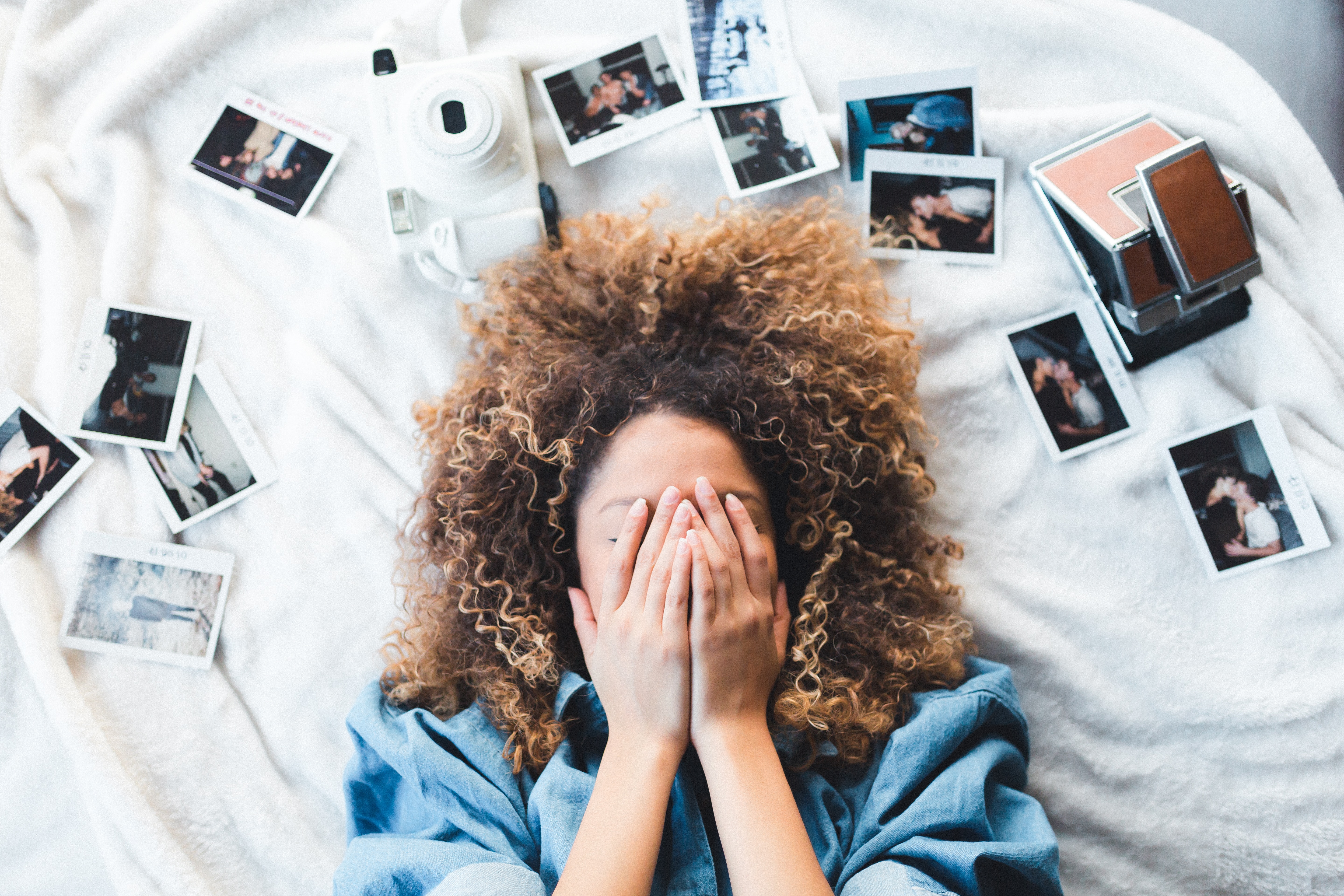
When we think about decluttering stuff, the last thing that comes to our minds are photos. Yet photos build up to the thousands, especially since the introduction of smartphones.

We click, snap and tap every moment and expression, now we not only have to keep up with physical prints but a forever growing digital hoard. 

Let’s be honest, phone cameras are now so good and we take so many photos that we have too many to enjoy. 

We see a beautiful sunset and the first thing that comes to our minds is not to enjoy it in the moment, but to snap the perfect image that we can enjoy years down the line, or can get the most likes on social media.

We receive a glorious plateful of food, and our first instinct is not to eat it, but to snap a photo for Instagram.

When we act like this, the moment we remember is not one of basking in the sunset, or of enjoying a meal, but of capturing the perfect photo, and obsessively checking our social media accounts for approval and validation. 

And when every moment is experienced behind a screen or a lens, it becomes almost impossible to discern which photos are the most important.

Photo by Aaron Burden on Unsplash

It’s like losing a precious stone on a beach: it was special to you but you’ll never be able to pick it out again among the rest and won’t even be motivated to try. 

I had the exact same issue, which is why I’m currently in the midst of sorting out years of digital and physical photos. And with there being decades of memories and sights, it’s no easy task. 

What spurred me on to tackle this monstrous task was the sheer joy I experienced of choosing photos to go in my wedding album. The photographer took over nine hundred shots, but every single one was a joy to reminisce over.

I realised I was experiencing none of that joy with my home collection of photos; many of them were random and meaningless. The precious ones were lost in a sea of memories transformed into gigabytes. 

Since that realisation, I’ve spent hours deleting meaningless photos taken on the spur of the moment: landscapes I no longer recognise, ten of the same photos from slightly different angles, photos that were downloaded from the internet, photos sent to me through Whatsapp, random images of animals and plants, blurry smiles, self-indulgent selfies, and meals I was in awe of. 

Sound familiar?

Despite all the hours spent deleting countless moments of the past, I’ve barely made a dent in my collection. But believe me when I say it’s a great motivator that a good few months worth of shots are now worthy of photo frame treatment.

More and more bytes are being freed, more memory to dedicate to the best and most meaningful moments. Byte by bte, stories are emerging. 

Deleting and disposing of so many photos has also been frighteningly sobering as to how many moments I’ve wasted snapping instead of experiencing. 

Since the start of the project, I’ve spent less time pulling out my camera and far more observing with my eyes. If something is truly awe-inspiring, I write descriptions instead, and sometimes use it for inspiration. 

If you’re considering minimising your photo collection, go ahead. It’s freeing. It’s cathartic. It’s revealing. Just remember to minimise your snapping, and maximise your moments, instead. 

Photo by Athena Kavis on Unsplash


How To Live With Someone Else’s Clutter

Living with a non-minimalist 

Photo by Luca Laurence on Unsplash

When you minimise your own possessions and you’re the only minimalist in a household, you will inevitably start to notice other people’s stuff. You will have all sorts of ideas in your head about what should go and what should stay. 

Why does your husband insist on keeping that set of weights when he hasn’t worked out in years?  

Why does your daughter have so many shoes?

Why can’t your room mate just throw away their bulging collection of ragged t-shirts? 

Surely they can see the mess they’re living in. Why won’t they understand the benefits of being a minimalist? If only they would stop and listen to you! 

Unfortunately, nagging, preaching or removing their stuff without permission will not only cause them to hold onto more stuff in an act of defiance and security, but can end up driving a wedge between you and the people you love. 

Everyone has possessions which are important to them for a variety of different reasons. Maybe it’s for security, perhaps they grew up with nothing, maybe they grew up drowning in stuff like I did. Whatever the reason, you should never badger and pester someone to get rid of something they’re not comfy doing so. 

My husband, son and I share a house with my parents. The only minimalist in the house is me, so for the longest time I felt frustrated by what I considered to be clutter from other people. 

It seemed that no matter how much of my own stuff I got rid of, they accumulated even more. I became hyper aware of everything that was coming into the home, especially since we all share a kitchen and bathroom. 

Where was I going wrong?

It’s embarrassing to admit, but I had turned into a preacher of minimalism. I was so encouraged by my new outlook on life that I wanted everyone else to experience the joy, and I wanted to minimise even more.  Suddenly, every marketing tactic was clear to me, every needless item on a store shelf, every meaningless trinket left on my shelves. 

It’s so easy to fall into this ‘I know best’ mindset when you’re feeling so renewed and energised from such a lifestyle change. But that attitude didn’t do me any favours, and it won’t do you any. 

It’ll strain your relationships and do the opposite of simplifying your life. 

Photo by Priscilla Du Preez on Unsplash

I had many disagreements with my husband and parents. Nothing I said seemed to work and I was getting fed up. But in the end, it wasn’t worth the heated arguments. 

Then I remembered that I was doing this for myself, and that pushing for results from others was stressful and counter-productive. Everyone around me had their own stories, and it wasn’t fair that I was interfering. So I stopped. And I realised how overbearing I had been and that the message of minimalism was being lost. 

To my surprise, after a few months, not only did my husband start actively supporting my new lifestyle, he identified some clothes he no longer wanted. Even my mum had a random clearout and filled several charity shop bags. 

Think about the last time you were shouted at or lectured. Were you angry? Did you feel inspired to do what the other person wanted? 

I thought not. 

But don’t worry. As human beings we’ve all been there.We want something from somebody who refuses to play ball and become desperate, convinced that we know best. Of course, all that serves to do is drive people away or cause them to rebel. 

The best way to persuade someone is to always be friendly and sympathetic, and to lead by example. Minimalism is one of those concepts that’s better observed over time. 

Once people see how much happier, lighter, and more relaxed you are, and how much more time and space you have, you’re much more likely to see a gradual change. The keyword here is gradual

If you’ve come so far in your minimalist journey, you’ll know that change doesn’t happen overnight, or even in a few months. 

It’s a learning process where decision-making skills are sharpened and mindset is improved or altered. 

You’re even more likely to persuade the ones you care about by spending that extra time doing something you love, or spending time with them.

Photo by S&B Vonlanthen on Unsplash

Everybody wants more time in their day, and everybody wants to feel important. 

Whatever you do don’t pester someone or suggest to them what should be kept and what shouldn’t be. How can one sharpen their own decision-making skills and feel empowered if the decisions are being made for them? 

When I was a child, there were times my mum despaired at my toy and magazine accumulation, but when she screamed and shouted at me about it, I held on even tighter because I felt like my stuff was important to me. As a spoilt only child, I was defined by my stuff. 

In the end it doesn’t matter if you’re twelve, twenty-eight, or sixty; if you get spoken to badly, nagged and preached at, there will be rebellion instead of results. 

Put yourself in the other person’s shoes and try to understand them, but most of all, live happily with your own values. If people like what they see, they’ll soon follow. 

Just remember, that not everybody wants to be a minimalist, and your goal shouldn’t be to convert them, but to demonstrate a simpler way of life and bring out the best in yourself and everyone you meet. 

To Summarise:

Don’t nag

Don’t shout

Don’t remove other people’s stuff

Don’t preach 

Don’t forget what minimalism is all about

Do be understanding

Do be friendly

Do be patient

Do be sympathetic

Do lead by example

Do focus on you

Do remember the true meaning of minimalism 

The meaning of minimalism? To remove excess stuff in your life so that you can enjoy an abundance of whatever is important to you

Photo by Simon Maage on Unsplash


The Glow of Gratitude

‘Gratitude’ is one of those words we see everywhere nowadays in self-help books and even in planners which have sections for listing the things you’re grateful for. Yet people don’t realise how incredibly important the concept is. It’s become like white noise in the background, yet it has the potential to turn someone’s day around, and to completely change the way you see your own life. 

Recently, I personally delivered a load of thankyou cards to the people and services who had contributed to my wedding in some way: the man who made our beautiful cake, the lovely ladies who styled my hair, the hotel staff who hosted us,the lady who did all the makeup, even the lady in the perfume department who helped me to choose the perfect scent.

And let me tell you, the radiant smiles on those people’s faces was worth a thousand times more than the glow from treating myself or buying something new. 

Photo by Lesly Juarez on Unsplash

People often say to me “But you paid for that, so it’s to be expected. You don’t have to go out of your way to thank them”, which I think is really sad.  

After all, we all have a finite amount of time on Earth. Whenever somebody does something for you, they are giving up a fraction of their time on this planet. 

Taking the time to personally thank someone who has done something for you, even if it’s mundane, like serving you on a checkout, is one of the kindest and most thoughtful practices you can adopt in your everyday life. 

Expressing gratitude doesn’t even have to cost a lot of time and energy. A small, cheerful conversation, or a big smile and a thankyou, can go a long way to help someone who has had a rough day. 

When we see someone in customer service frowning and sighing, it’s so easy to think, “Huh, what a miserable attitude, they shouldn’t even be serving!”. But we’re all human and sometimes all a person needs is some compassion and gratitude. 

I’ve noticed that smiling at someone who looks fed up, complimenting them, or making a point of thanking them, can light up their eyes and turn the frown upside down! Positivity and kindness is light and uplifting, negativity is heavy and depressing.

Photo by Sharon McCutcheon on Unsplash

But what about when the light has dimmed in our own lives and we’re the ones wearing the frown? 

That’s when it can be a huge help to write a list of all the things you’re grateful for in your life. 

For me, a list didn’t quite cut it, so I chose to write about each thing I had listed, and in no time at all I was feeling as light as air and supremely grateful for everything in my life. I listed having great friends, my family, my house, my job, and everything else I felt I was fortunate to have. 

One thing I noticed by writing such a list, was that almost none of it was about the stuff I owned. Everything I needed for happiness was already there.  You can do this exercise for loved ones who have upset you as well (depending on the situation, of course). List the things that you like about the person rather than the things that annoy you, and you’ll soon feel much lighter.

I understand that many of us struggle to think of things to be grateful for, especially if life is on a bit of a downer, so here are some things you might be grateful for that you might not even consider, and that others might not have. Please note, I realise that not everything on this list will apply to everybody, but I’m hoping that there will be something on there for everyone. 

  • Family
  • Friends
  • Shelter/home
  • Clean, plentiful food
  • Clean water 
  • Clothing
  • Healthcare
  • Good health 
  • A paying job
  • A flushing toilet 
  • An education

There’s one more thing I would like to share with you that’s too obscure to list with the above, but I feel is well worth mentioning.

Years ago, I was in a bad place with my education, my career and my health. My college placement as an ICT technician was going so terribly that my tutor paid a visit to the place and I almost got finished. Thankfully, my mother in law who worked there took me under her wing as a teaching assistant. And as a teaching assistant I thrived. 

I loved the kids, I loved the teachers, and I loved that I was (and still am) helping to make kids lives in the classroom more bearable. 

I’d never considered being a teaching assistant before, and had spent the past few years working in retail and studying the wrong thing, which for me was ICT. To discover something I loved, I had to follow what seemed like the wrong path. For that , I am now grateful. I was even able to use the skills I had learned by supporting in ICT classes. 

So, even when everything seems to be going wrong, look for the hidden meaning. And when it’s all over, you might even find something to be grateful for. 

Photo by Gabrielle Henderson on Unsplash

Gratitude will lighten your heart. Gratitude will brighten the world. 

Practice gratitude today. 


Packing Like a Minimalist – How to Travel Free and Light

Photo by Edgar Chaparro on Unsplash

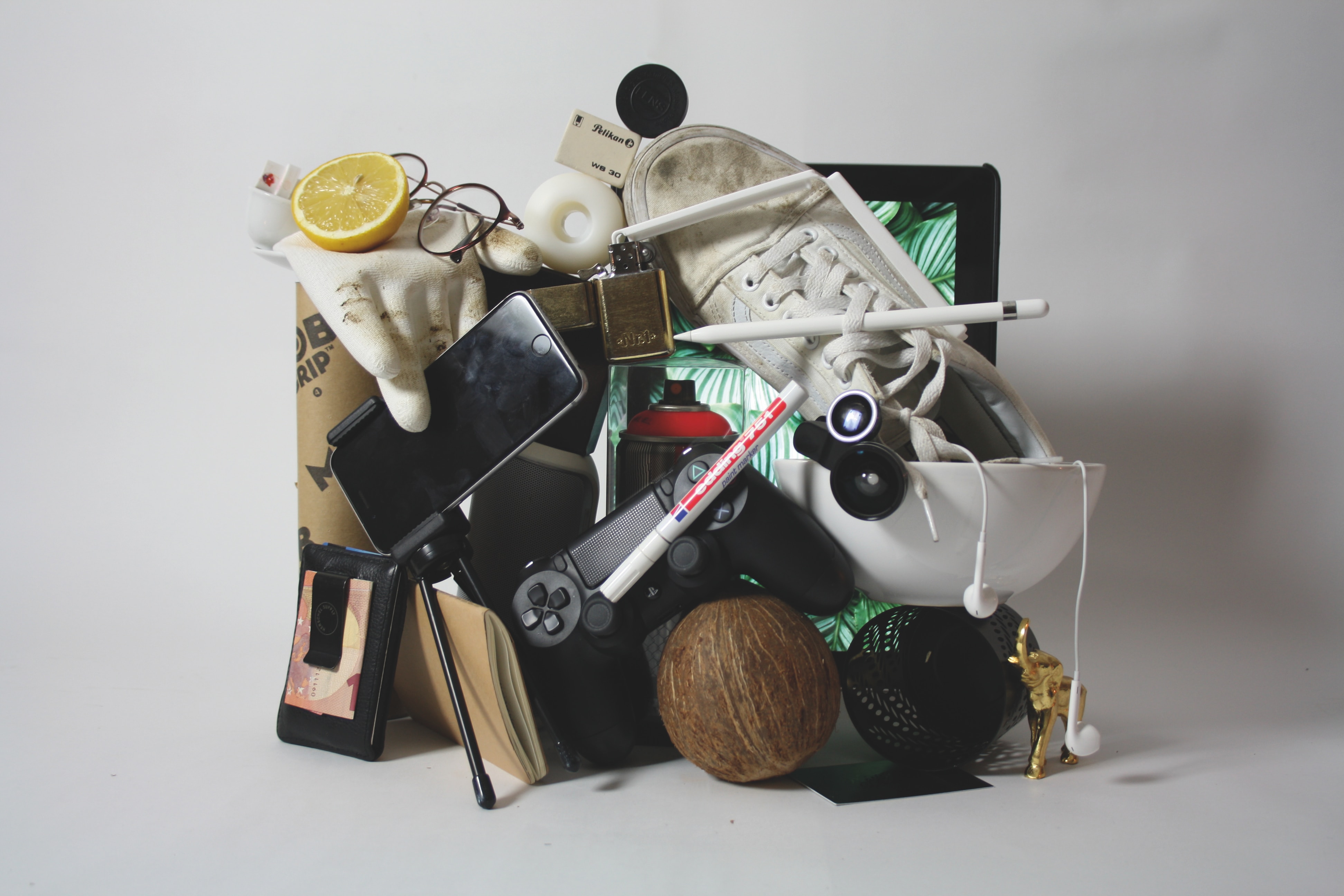
Living a minimalist lifestyle doesn’t stop at having a minimalist home. Bags and wallets also weigh us down as we go about our daily commutes or travel to destinations.

Until recently, I would wander around town like a donkey, my bag hanging off my back like a sack of cement. And whenever I went on holiday, or even to my in law’s house, I’d pack for every conceivable scenario and emotion. Even at work, my bag was fit to burst with entertainment for break times.

Boredom was covered by my 3DS, my Gameboy Advance, my laptop, my notebook, and the latest book I was reading. I also packed snacks ‘just incase’, as if I might starve if I went half an hour without eating. Sometimes, I even packed a spare pair of shoes in case the weather changed or I changed my mind (even if we weren’t planning on going out and about) .

My wallet was the same; filled with cards I hadn’t used in years, and rammed with old receipts.

All this excess packing lead to the stress of getting home and having to unpack it all when all I wanted was to flop down with a cup of tea. It also made it difficult to find what I wanted, without rooting through my bag like a dog digging a hole in the mud.

Since those heavy days, I’ve learnt to only pack the things that I know I will need, and no more. Although, when I got married last weekend, I over-packed for my stay at the hotel and by the end of the day, the room looked as if a cyclone had spun through it and threw my clothes into every conceivable corner (less than half of it needed).

The problem was, I was packing out of fear. Fear of being bored, fear of being hungry, and fear of being unprepared. For feather-light travel, you must let go of those fears and realise that most scenarios in your mind are highly unlikely.

It’s not just your mind and your time an overloaded bag can weigh heavy on- it’s not good for our shoulders or backs, and I frequently found myself with a sore back and shoulders after a trip.

Packing lightly not only makes it effortless for you to find the things that you need, but is kinder to your body and posture, and you will experience much calmer travel.


Photo by Angelina Litvin on Unsplash

Here’s how you can transform from feeling like a pack mule, to as light as a butterfly:

Only pack what you need on any given day. For example, on days where I go out to write,  I pack my laptop, notebook and my wallet. And on days where I’m just walking around town, or going out for a drink, I take a smaller bag with just my wallet and keys. Ultimately, what you need depends on who you are and what you do.

If you’re going somewhere for a week or so, pack all-purpose clothing, and try to wear some clothes more than once. It’s surprising how full a suitcase can become when you pack for sun, rain, snow and blizzards, all for a summer holiday. Or when you pack a cocktail dress and several pairs of boots when you’re mainly going to be on the beach. Instead, pack a few tops which can be paired with a single coat, hoodie or cardigan for cooler days, and shoes which look great in both the daytime and evening.

If you’re staying at a hotel, find out what they already have in the room. Most will contain a hairdryer, and small bottles of shower gel and shampoo. If you must pack your own shampoo and conditioner, buy an all-in-1. There are even all-purpose soap bars which function as both body wash and shampoo, and take up very little space.  

Don’t wear a larger bag for casual trips. For example,if you go into the city for a browse with a bigger bag than you need, it can tempt you to splurge on stuff you don’t really need. If you don’t have the space to carry it, you’re more likely to think twice.

For wallets and purses, only carry the cards you need on the day. These days, you can even use a smartphone to pay by linking your bank card with related apps and services. Trash old receipts and scan the ones you think you’ll need. You can also reduce receipt clutter by allowing shops to email them to you, instead.

Instead of carrying boredom beaters, opt for interesting experiences. The lighter you travel, the easier it will be to move around and do what you want. Experiences are always better and more fulfilling than material stuff.

Allow yourself to sit and be ‘bored’. Too often, we carry things around to entertain us, but miss out on opportunities that are right in front of us, or pass us fleetingly. Smartphones and tablets have trained our minds to be permanently switched on, seeking dopamine hits and being constantly entertained. Slow down.

If you’re an avid reader, consider an e-reader.  With an e-reader, you can have hundreds of books to hand without the extra bulk and weight of a single paperback.

The next time you pack your bag, remember: Travel light, be free.

The Many Benefits of Minimalism

I’m getting married at the weekend, dear readers, so this post is a little earlier than normal. I’ll also keep it short and simple.

This week, I am here to tell you some of the many ways that minimalism can benefit you.

Before I discovered minimalism, it wasn’t just my home that was cluttered, but my entire life. My mind, my emotions, my relationships. I only worked part time, yet somehow I was still always ‘busy’. I barely had time with my family and would come in through the door, immediately start the dinner, tidy up, wash clothes, and passively scroll through Facebook.

Then I’d start again the next day. And the next.

The next thing I knew, my son was four. Where had the time gone?

In our always-connected world, we speed through our days faster than we can take a breath. We rush past the beautiful summer flora, heads buried in our screens, brain miles ahead of our bodies as we plan to tick off the next box. We get in from work, dump our keys on the table and barely look at our partners or kids. There’s just so much to do and so little time!

There’s dinners to cook, a house to clean, clothes to wash and emails to answer, food shopping to do, homework with the kids, that birthday to remember, that favour to return…

Stop.

Breathe.

Feel.

As technology has raced ahead, so have our lives, and most of us seem to have forgotten how to do the above three things. By racing to keep up we are forgetting to live.

But there is a simple and elegant solution.

By embracing minimalism you can learn to stop and smell the flowers. You can regain lost time and reconnect with not just your family, but yourself.

As my donate pile grew and my space expanded,I started to see and experience so many benefits that I can’t even imagine going back to how life was before.

Below, is a list of the ways that minimalism has enriched my life and will endlessly benefit yours.

  • Regained floor space, shelf space and mind space. My space feels light, airy and full of potential.
  • An always tidy house. No more panicking about guests and wasting time tidying. This also helped me to pace myself and cope with chronic illness.
  • Less time spent cleaning because it is quicker and easier. Less cleaning means more time doing fun or meaningful activities. I now have far more writing time and time to just sit and chat when I get home from work.
  • Cheaper shopping days because I no longer feel the urge to buy shiny new things.
  • Being far more aware of the environment. Before minimalism, I had too much stuff to notice what else was around me and what was happening behind the scenes.
  • Being much more aware of the people around me. Once you’ve cleared the excess stuff, suddenly, people take the spotlight instead of the trinkets lining your bookcase.
  • Improved relationships . Having more time for others and being more mindful has lead to closer relationships in my life. There’s more time to talk and the important people in my life take priority.
  • Feeling more creative and inspired . Once I cut out digital distractions and regained so much space in my home, I could think much clearer. No longer did I take walks with my face glued to my screen, or sit on a bench updating my status. As a result, my notebooks are brimming with observations, ideas and insights. Some of the sights, interactions or snippets of conversation were fleeting. I would have missed them had I had my head down or been speeding along like a wind up toy.
  • A clear purpose in life . Clearing the clutter and adopting a minimalist mindset lead to me completely reevaluating my life and what was most important. Most importantly, there is now the space to achieve whatever I want.  
  • Space to grow. Minimalism has made me grow as a person and realise that I won’t ever stop growing. I can see clearly what needs improving, what I need to contribute to, and what I need to let go of.

As you can see, the benefits of minimalism are powerful and extensive, and I know that the list will only grow longer, because minimalism helps your values to grow in the same way the sun helps a flower to bloom.

Stop. Breathe. Feel. Live.

There’s Always More

Sometimes when we think about improving our lives, it’s ridiculously easy to fall into a trap of consumerism. This is because no matter what walk of life you come from, or what profession you’re in, there’s always a product out there to ‘perfect’ your life and make you into the person you’ve always dreamed of. There’s always one more thing you’re sure will make you happy this time around.

Today, there’s a never-ending choice of products to make you more sexy, more elegant, more productive. A better parent, a better partner, a better gym goer. Famous, successful, irresistible.

If you’re a new parent, you might convince yourself you need the perfect diaper bag, perfect bottle set or perfect nappy dispenser.

If you struggle to get your life in order, there’s a huge variety of attractive planners which claim they’ll make you into a master of productivity and success.

If you’re a writer, then maybe that perfect pen, notebook, laptop, or software will help you write that book that’s been on the backburner.

If you’re single and looking, there’s a perfume or cologne out there which will draw every male or female within a ten-mile radius.

Once you’re ensnared in this trap, it’s hard to get out of because there’s always just one more thing you can add that will surely make your life complete. But you and I both know, that ‘satisfied’ feeling is as fleeting as the time it took you to take the item to the checkout or click it into your basket.

It’s not long before you’re looking for the perfect desk for that perfect notebook , or the next perfect laptop, because the other one you bought didn’t help you to start that book, afterall.

The cycle continues.

And it will continue until you realise that you already have everything you need – and it isn’t fancy software and material products.

You don’t become a better writer by buying a better laptop. No fancy software, hardware, notebook or pen will get your words down for you, or make your ideas better. Only the act of writing will do that.

You don’t become a better parent by buying every toy in the bestsellers list, the best diaper bag or the trendiest pushchair. You do that by offering unconditional love, security, and a healthy environment for them to learn and grow.

You don’t become a better teacher by buying a bigger desk, you do that by consistently teaching quality content and connecting with individual students.

Admittedly, I’m a sucker for great writing software, beautiful planners, and fun toys for my son. But none of those things get me further ahead in life, and none of it adds to the relationship between me and my son. Only spending time can do that.

It’s my consistent actions that make me into a better person than yesterday, not stuff, and it’ll be your consistent actions that transform you into the person you want to become.

Once you understand and apply this concept to your own situations, your life satisfaction will skyrocket. And if you constantly act towards the life that you envision, you’ll see progress every single day, no matter how small.

Less stuff, more action!

The Trap of Perfection

I’m getting married in a couple of weeks. I’d just had a long day of shopping with my mum, looking for my son’s page boy shoes and preparing for perfection on the big day. I felt pretty good. I had the perfect table decor, the perfect hanging heart, and ordered the perfect shoes for my son. But, even after all that, I felt very upset after my chosen wedding hair got bad reception from family.

With just two weeks to go and feeling hopeless and ugly, I felt a deep sense of dissatisfaction, and suddenly found myself questioning all of my choices. Perhaps the cute jars I had ordered for my flowers were too small. If only I’d ordered bigger. I should have paid for welcome drinks, even though it was going to cost hundreds of pounds extra.


Photo is my own

My wedding wasn’t going to be perfect and neither was I.

That evening, as I sat downstairs with my husband-to-be, thinking about what else I could buy, and what else I could do to perfect myself on my wedding, a TED talk came up on Youtube and started playing in the background. For those of you who aren’t sure what a TED talk is, it is a inspirational talk usually done by successful people, or people who have an important story to tell others.

This TED talk re-opened my eyes to my perceived ‘problems’. It was as if it was put there for me to see, as if some other force was trying to give me a good shake and wake me up.

In it, a guy was telling his story about his battle with throat cancer, and his ailing relationship with his wife and daughter. All this guy could only think about was how awful his situation was and how his success had been jeopardised. He was angry and bitter.

One day, he met a homeless guy, who he originally hated looking at because he thought ‘how dare he, he should get a job’.This homeless guy turned out to be his mentor, or perhaps, his guardian angel in disguise, because he ended up teaching him a valuable lesson about what life is really about and how he was treating others. At the same time in his life, a little girl who was being treated with chemo in the same hospital as him, taught him about his flawed outlook on life.

After those very sad, touching and inspiring life lessons from the most unexpected sources, he was a changed man. The whole way through this TED talk, I felt a lump in my throat, and realised I had been straying far off the path that minimalism was teaching me about.

Photo by Franz Harvin Aceituna on Unsplash

Life’s not about money, fame, or perfection, but about being there for others, giving people the time of day, and not judging people on first sight.

Here I was getting upset about my wedding hair, and acting as if it was the most terrible thing in the world- and it really isn’t. It doesn’t even register on the scale of ‘problem’. It is something I will be throwing more money at to fix, for a single day,  to look perfect in front of dozens of others and my husband-to-be. Yet just doors down from where I am getting wed, and going to be eating like royalty, sleeping in crisp sheets and bathing in a hot tub, there are homeless people in filthy clothes who nobody stops to help.

The real deal in life is to help others, to have great relationships and to get over our egos. Not to be concerned with status or pursue endless material gains.

I realised, when I was listening to that man, that even though I am minimalist and talk about helping others, I had the same mindset as he did, “I will earn more than them one day and then I will give them the excess’. But what they also need is human connection and to be shown humanity. They need time from others.

We run away and aim to be as far away from that situation as possible, even though the pursuit of fame, money, and stuff is empty. At the end of the day, stuff is meaningless, and beauty comes from within, not from the most perfect hairdo or most porcelain skin.  

It’s frighteningly easy to sleepwalk through life with this blindfold on, listening to the expectations and the imaginary chatter of others, getting pulled downstream with the rest of the fish and forgetting what’s important.

Weddings can quickly become about beauty and perfection instead of the main reason for getting married in the first place, just like life can become about obtaining shinier and shinier stuff instead focusing on the people around us.  

I was forgetting that the most important thing would be waiting for me at the end of the aisle, and not on a store shelf or in bridal hair magazines. The most important thing for my wedding day will be the person I am marrying, and the journey we will share together.

Photo by Everton Vila on Unsplash

For those of you who are interested, here’s the link to the TED talk https://www.youtube.com/watch?v=g72SmMdFBpk


Managing Chronic Illness With Minimalism

If you have a chronic illness I can’t stress how beneficial a simpler, minimalist lifestyle can be for you.

I was diagnosed with both Fibromyalgia and M.E in my early twenties- conditions that cause chronic pain, fatigue and other debilitating symptoms. Before I became minimalist, cleaning and tidying was a nightmare. So was making decisions. I was frequently exhausted, burnt out, and upset. I couldn’t keep on top of the housework, devote as much time to my son as I wanted, or even see friends. All of my energy was going on maintaining my stuff.

You want your higher energy days to be focused on the things which are important to you such as career, hobby, family, and self-care.

Photo by Jonathan Borba on Unsplash

When you have an energy-sapping condition you want to make the most of the days where you have more energy, and not waste it on all-day cleaning and tidying marathons. Neither do you want to be burnt out with your schedule or with endless decisions.

Since adopting a minimalist lifestyle, it has changed my life for the better and helped me to manage my condition much more easily. While minimalism isn’t a cure, I now live a slower, more peaceful life and have less bad days than before.

Below are some of the minimalist ways which helped me to conserve energy and live life at a much slower pace:

Remove your excess of trinkets, books and other miscellaneous objects. By having hardly any trinkets to dust under and cutting my books down by 85%, dusting is now a cinch and takes five minutes as opposed to half an hour cleaning under and around everything. Downsizing the amount I own has also made some furniture redundant which has given me lots of floor space and made vacuuming much simpler.

Owning less also means that rooms rarely become messy, and when they do, it’s quick and easy to go around and put things back where they belong. You’ll never need to worry about your home looking a mess for visitors, or turning people away because you’re too embarrassed.

Decorating in soft, simple colours reduced the assault on my senses, which frequently get overwhelmed. Whites, greys and soft pastel shades are far easier on the senses than bright, bold colours. When you choose more neutral colours, it’s also easy to match objects and stick to a colour scheme.

Downsizing and curating your wardrobe will decrease the amount of laundry as well as make it easy to put clothes away and see what you own. It also means less decision fatigue and spending minutes in front of the mirror unsure if to wear the blue bag or the grey, jeans or cargos, and whether red suits you afterall.

You’ll only be left with those clothes that you love, for who you are now in the present.

Consider a simpler hairstyle which will be easier to maintain. When you have a chronic illness getting washed or maintaining your hair can be difficult. You can also buy 3 in 1 shampoo and body wash to save you time, space and the number of times you reach across for different products. You’d only need to use it once, rinse and be done.

When you go out, take a very light bag with only the things you need such as keys, wallet and phone. My personal haul I need when I go out is my wallet, phone, keys and laptop (my laptop is very light and portable). As a parent, I remove my laptop when I’m with my son and put in spare clothes and wet wipes instead.

Consider the type of bag you take out. I’ve found that I’m more suited to backpacks as they distribute weight evenly and reduce the chances of a pain flare up. By getting a backpack, you don’t have to sacrifice style or look overly casual; there are loads of backpacks out there from leather, to chic, to simple and elegant.  You can even buy 2-in-1’s that change from backpack to handbag on more formal occasions.

Minimise your wallet and spend less time fumbling around at checkouts, and looking for receipts. We live in an age where an app exists for almost everything, so if possible use an app instead of a physical store or loyalty card, and throw away unneeded receipts. In fact, with the invention of services like Apple and Google Pay, you don’t always have to take your wallet and can rely on your phone, instead.

Order shopping online instead of going to the shops. This might mean you miss out on cheap and reduced foods that have minor defects or are close to the sell by date, but it will save you energy and time.

If you go shopping, make a list and stick to it. This will prevent you from wandering up and down random aisles, draining your energy and buying more than you need.

Declutter your schedule. If you’re one of those people who says ‘yes’ to everything or can’t say ‘no’ to friends, it’s time to learn how to decline. People are more understanding than we imagine, and if they aren’t, you should think about what value these people are truly bringing to your life. I’m not saying to never do anything for anybody (that would just make you selfish), but looking after yourself is paramount.

Remember, the things you do for others don’t have to be physical. Being a good listener or taking the time to call someone can make a big difference in someone’s life.

Photo by Estée Janssens on Unsplash

Declutter toxic people from your life. By that I mean, people who only take from you without giving back (not talking about physical objects here), people who’re never interested in your feelings or what you have to say, and people who consistently bring you down or make you feel guilty.

If you know anybody like this, I recommend evaluating your relationship with them and either reducing the time you spend with them, or phasing them out completely. This is by no means, easy. You attract the kind of people you want in your life, only when you love and respect yourself and your time.

Consider altering your job or career. I could no longer cope full time, so I made the painstaking decision to only work part time. If you’re chronically sick you may have to reduce your hours or talk to your boss to reduce the number of or sort of responsibilities you have.

The financial implications of this kind of decision are huge, even if you have a supportive partner. However, when you’re living with less and become more mindful about your buying habits, you only need worry about the true necessities such as food, rent, and other essentials.

And when you realise you don’t need stuff to make you happy, it will be much easier on your mind and soul.

Cut out social media and delete all distracting apps from your phone. I fully deleted my Facebook account and put far more value on speaking to my friends face-to-face instead of my screen. As a result, I found I no longer needed an expensive phone contract where I was paying £38 a month.  Instead, I now pay less than £5 a month- the price of a tea and a cake.

It helps when you realise you don’t need the latest model of phone to live a happy life, because we aren’t what we own. We are what we do and how we act.

Take time to sit in pure silence and read a book or just enjoy doing nothing. With the ‘always connected, always busy’ culture, too many people have lost this vital skill to take advantage of being idle and in the moment. It’s amazing how much digital noise, constant exposure to screens and constant busyness can drain your energy and wreak havoc with mental health.

Once you adopt this practice you will realise how rejuvenating it can be, but it takes practice. This is because constant exposure to stimuli such as screens and digital devices will rewire your brain for the need to be doing something at all times.

Take time to show gratitude. It’s so easy when you have a chronic illness to see all that is wrong in your life, but if you take the time to appreciate the things that you do have, you will find you feel much happier and need far less to be happy than you originally thought.

Photo by Brigitte Tohm on Unsplash

Take charge of your relationships with your stuff. When your stuff no longer owns you, you can put more energy into relationships with people. With improved relationships, the people in your life might also learn to understand you more – this is even more important when you have a life-altering illness.

Realising you don’t need lots of stuff to be happy and that you don’t need to earn thousands to live a comfortable life can reduce your stress levels and in turn, reduce the number of flare ups.

Simplify meal times by buying versatile ingredients that will go with most foods, and preparing meals the evening before. Investing in a slow cooker can save you effort, as can swapping cooking days with other members of your family. Choose simple meals over complex, gourmet events and prepare meals the day before.

Be careful that you don’t get caught up in ordering takeaway meals every couple of days. Not only is it incredibly unhealthy, but a major drain on your finances.

Photo by Sharon Pittaway on Unsplash

Now, be aware that the list above is not exhaustive and not everything in it will necessarily apply to your situation. Everyone is unique with individual circumstances, but I assure you that by adopting at least some of the aforementioned minimalist ways, you will start to notice a difference.

If you need to talk to me about chronic illness or have some nuggets of wisdom, please leave a comment and I will reply within 24 hours.


Decluttering Memory Lane

It’s time to take a trip down memory lane; this time to confront the emotional and sentimental objects in your life.
Sentimental objects are things which typically have memories attached or represent a happy or sad time in your past. For example, you might be keeping your old prom dress, a trophy you won back in school, or jewellery from an ex.  The hardest ones to deal with, however, are those you obtained from departed loved ones.

Before we go ahead, I would like to point out that there’s nothing wrong with keeping one or two objects of sentimental value to you, but once you own more than you can count on one hand, that’s when it starts to become emotional clutter which can keep you from moving forwards.

Most sentimental objects end up in attics, crammed to the back of drawers or line our shelves with an aura of wistfulness and guilt. Mine were mostly in the attic, hidden away in boxes which were buried under other boxes.

Last month, I started thinking about my old typewriters I kept as a kid because they reminded me of the time I first started writing. At the time they were painful to get rid of because of the words I had punched onto paper, but I’ve since realised that getting rid of my typewriters never made me any less of a writer, nor did I need an object to remind me of who and what I am.

However, I kept other piles of sentimentality stashed away.

I kept old school work because I liked to look back on positive teacher feedback to be reminded that I was a capable human. I also couldn’t bear to throw away years of work.

I kept boxes of old Christmas and birthday cards, some of which I didn’t even remember the names written in them. I even kept cards from where I was first called ‘Sister in Law’, and ‘Daughter in Law’, because it felt amazing to be accepted into my fiance’s life.

I kept objects from past relationships, even old jewellery which had long since tarnished.

I kept a Dick Turpin mug which once belonged to my uncle and which I was terrified of as a child. We made it into a constant joke as I grew up which is why I kept it – to remember the smiles and laughter we always shared.

I kept my old Woolworths uniform because I had been so sad when it shut down.

I kept my old school shirt from when I left school. It had yellowed with age and gone damp from being kept in the attic. School was not a place of happy memories for me, yet I clung to the memories with this top.

When I became minimalist and finally confronted my sentimental items, I felt so light inside that I could have floated away. For the most precious objects I ordered a beautiful ,small memory box to keep them in.

With a small memory box, I would be far less inclined to fill it with every passing moment instead of the warmest, most treasured memories.

Here’s how you too, can release the anchors of the past, and let go of the guilt:

Cards and letters

We tend to keep cards and letters because they remind us of the people we care about or once knew in our lives. Some even remind us of significant milestones in life such as moving house, having a baby, or passing exams. Others might be written by people who have passed away.

We imagine we will revisit and read them in years to come, but of course, we never do. Over the years these written treasures stack up and take up lots of space in your home and your heart.

With cards and letters the best thing you can do is to go through each one slowly. If you no longer remember the person whose name is in the card, or they’re no longer relevant in your life, recycle them.

It’s amazing how fast time passes and how our lives change so dramatically in that time, not just with circumstances but with people and feelings.

You don’t need to keep cards from milestones in your life such as passing an exam or moving house. They would’ve made you feel great at the time, but if you got rid of them, does that mean you’ll no longer have your qualifications or the roof over your head? Of course not!

If, however, a specific card or letter warms your heart, you can do what I’ve done, and keep them in a photo album alongside photos of the person or happy times. Not only will they be protected, they will present beautifully for your pleasure in the future.

You can also keep them in a memory box for those days you’re feeling especially nostalgic.

A nostalgic, yellowed pile of old letters and photos

Photo by Joanna Kosinska on Unsplash

Objects from loved ones

Objects from loved ones can be some of the hardest things to deal with, so if you struggle, take your time to evaluate each once. Don’t rush and don’t feel as if it all has to be dealt with in one day (unless that’s how you operate and you know that leaving it would lead to procrastination).

Accepting that part of your life or that a person is no longer in it is difficult, but when you let go of the objects that are tethering you to those times, you will instantly feel as light as a passing cloud.

For the longest time I kept an old teddy bear keyring that my childhood best friend had bought me from holiday. We grew apart once we went to secondary school (which upset me a lot at the time) and I held onto that bear until I was in my late twenties.

As soon as that bear was donated to the charity shop, I found I didn’t even think about it or feel the guilt I imagined I would.

Stuff from people who have passed away will require deeper contemplation. In my previous post, I talked briefly about furniture belonging to passed away loved ones.

If it’s kept in an attic, it will eventually get warped by heat or damp and mildew, so if you don’t plan to use it, it’s better to pass it on rather than waiting for that inevitable moment you find it damaged.

Like with cards and letters, we cling onto such objects because of the memories and the people we associate with them. There’s nothing wrong with keeping a few objects like grandma’s sentimental necklace or aunty’s favourite teacup, but if you aren’t mindful you can end up with a shrines worth of stuff accumulating in your attic and other parts of your house.

When this happens, your home can end up becoming a portal to the past rather than a place to be present and aim for the future.

Rest assured, by letting go of the objects you’re clinging to out of guilt or fear of losing those memories; you won’t lose the memories and you aren’t dishonouring the person by passing their things on to people who could give them a second chance.  

What would be sad would be to hide it away, unused, unloved and with an aura of stress and guilt attached. Objects that mean a lot to you should be being used or displayed in some way, or stowed in a small memory box, and if they aren’t they’re serving as nothing but an anchor which others will have to deal with when you’re gone.

You can preserve memories of sentimental objects by taking photos and either putting them in an album or storing it digitally. That way you can look back on the sentimental stuff and instead of taking floor or cupboard space it takes up data.

Remember: people aren’t their stuff just like you’re not your t-shirt or your CD collection. Strip your favourite things away, and you’re still the same person you always were, with the same traits, same people you love and same values.

You wouldn’t suddenly forget your uncle because they gave away their thirty-year-old vinyl collection, so why assume you will lose memories of them if you do so? The true memories are in your heart.

Family heirlooms

Family heirlooms are similar to dealing with objects from people who have passed away. That antique mirror may have been in your family for generations, but if you don’t like it or will never use it, try asking others in your family if they would like to take ownership. If not, that’s a sure sign that it can be donated or sold on.

Don’t keep the object out of guilt, just waiting for it to be passed on to the next generation who may feel obliged to keep it and continue the cycle of guilt.

Old hobby equipment

As the years pass our hobbies and interests can change. I used to be obsessed with fossils as a child and kept a tin of them along with some pretty stones I had collected on the beach with my parents.

I no longer collect fossils, and know that if I wanted to see some, there are plenty of museums near me to satisfy that itch.

With the pretty stones, I repurposed them into an eye-catching display on the window ledge in my hobby room. It just so happened that their pastel shades matched my colour scheme perfectly, as well having joyful memories attached.

Letting go of collections for old hobbies is freeing because it allows you to let go of your old self to fully embrace the present you.

For example; I used to like working out and applied for a gym membership, but my diagnosis of Fibromyalgia and Chronic Fatigue Syndrome meant I had to treat my body much more gently. So I eventually let go of my workout clothes and now take weekly walks, instead.

You might simply lose interest in a hobby and that’s perfectly normal. If you’ve owned the related stuff for over a year and can’t see yourself going back to it, pass it on so it can be useful to someone else with that hobby.


Photo by Justin Bashore on Unsplash

Old clothes

When I was doing a clear-out of my attic last year, I discovered bags upon bags of maternity wear and baby clothes. In a strange effort to hold onto the memories of carrying my little boy inside me, I had kept those clothes, and then kept the clothes he wore up to his first year.

The sad thing was, some of them were too damp and smelly to pass on, even when put through a wash. And it wasn’t as if I’d ever gone up to look back on them, or that either of us would be wearing those clothes again.

You might keep sentimental clothes for similar reasons, or you might keep clothes as a reminder of when you were a certain weight, or attended a memorable event.

Clothes take up a lot of space and if they aren’t stored correctly, end up getting damaged or unwearable. Not to mention, they can cause endless frustration when stowed away and mixed up with all your current wear.

The bottom line is, if you don’t wear it, donate it. Make space for the new and the current.

And if there’s a special t-shirt you simply must keep but no longer wear, why not iron it and put it in a frame? It would make a deeply personal and unique decoration in any room you desired.

On a similar note, if you’re especially creative with crafting, you could cut up and repurpose old clothes into new objects.

The purpose of this article isn’t to get you to give up everything you love, but to help make the space in your heart and your home for the things that you do.


Photo by Giulia Bertelli on Unsplash

If I’ve missed anything or there’s something you would like advice on, don’t hesitate to leave me a comment. It may even end up in the next post. Next week, I will talk about sheds and garages.