I was reading Bing to my son the other night, when I asked him, “How come you still love the books but don’t watch it anymore?”
He replied, “I’m too old for Bing now, mummy, I like to play my games more now.”
I was shocked, but it wasn’t the first time he’d told me he’d outgrown something. Apparently, he’s also too old now for his Paw Patrol wallpaper and wants Spider-Man, instead.
Why am I telling you this?
Because time is precious, and it passes by faster than a falling raindrop.
Despite that fact, many of us fritter that time away behind phone screens, behind ‘busyness’ and working to accumulate bigger, better stuff. All the while, our children grow up under our noses, our friends and family age or move away, people pass away. But it happens so subtly that we don’t see these things until they’re suddenly upon us.
I was chatting to a colleague the other day, and they said “At the end of the day, once you’ve retired, you’re just another person.” That stood out to me because so many people base their lives on having a particular status, or working all hours to afford stuff that bring them more status.
Some people work so many hours, or place so much emphasis on acquiring more stuff and staying busy, that they’re shell-shocked when they finally stop and see the changes in their reality. Some even forget to look after their health in the process.
Like with my son growing up in a few blinks, it’s the same with other milestones in life. They’re here before you know it. And if you’re not mindful of how you spend your time, you’ll look back wondering just where the hell it all went, like you’ve passed by on an out-of-control rocket.
One of the most prominent incidents in my life that have shown me the importance of time was when I visited my uncle in the hospital.
He was a popular and well-loved man, always laughing and making others laugh until their faces and sides hurt. We were close, but then the day came when he was an old man and ended up ill in the hospital. Even then, he was laughing and joking around. The nurses loved him.
While I was visiting, I did talk to him and laugh at his jokes – but it felt forced because I wasn’t fully present. At the time, I was going through a terrible drama in my young adult life, my mind kept drifting, and I was texting on my phone every few seconds, trying to sort it all out.
I didn’t see his time on Earth flickering like a dying candle. I didn’t see that our time together was shortening to a stub.
Some naive, childish part of me thought he would be around forever because, to me, he was invincible. Nothing seemed to get him down.
The next time me and my family visited him he was in an old people’s home. He was upset from losing his independence and it was the first time I’d ever saw him cry.
My uncle with the spirit of an excitable child, who was the embodiment of joy itself, was having to come to terms with how frail he now was, while I stood there surveying the surroundings, feeling dumbstruck and helpless.
I never got a word in during that visit. And that was the last time I saw him before he passed away.
That’s when I got my first taste of how precious time really is, and of how important it is to give people your all when you visit them. Show them how important they are and make memories because you never know how much time is left.
Although I grieved for a long time, what tore me apart the most wasn’t his death itself, but the immense guilt from not being fully present with him in the hospital room that day; the last time we would laugh together.
When I got the news of his passing, suddenly, the life issues I’d had while I was visiting him seemed as important as whether or not I was out of teabags. I would have thrown my phone into a pit of fire and never owned one again if it meant I could relive that day how I should have done.
The thing is, you can’t change how you’ve spent your time and you can’t get a refund on it like with an impulse purchase. So don’t waste time worrying about how you’ve used it in the past. Instead, be mindful of how you spend it from this moment forth.
The sad thing is, that all too often it takes a sad or shocking event, or a big slap in the face from the universe to wake us up to what’s in front of us.
So, if you’re one of those people on that rocket, just remember you can get off and walk at any time. You can stop and see the sights.
This week, I finally completed a videogame I’ve had for years called Alien Isolation. For years I would make a certain amount of progress, only to get stuck, scared out of my wits, and quit.
It’s only in the past few months I plucked up the courage to restart it after a friend said, “don’t let your fears rule you”. I realise how cheesy that sounds, but that’s exactly what I was doing. I was acting the same way I used to in real life.
In the end, I pushed through that fear, and my failures when the alien killed me again and again. And in doing so, I finally reached the end credits. I was successful.
But most people don’t keep on pushing through when they fail. Like I once did with Alien Isolation, they give up at the first few hurdles. So many people stay stagnant.
They won’t go for that career opportunity, or start a new business, or ask that guy/girl out, or attempt to learn a new skill, or travel somewhere new, or stand up for their beliefs.
Life is tedious but safe. Unfulfilling yet secure.
At work I stayed in the same old position for ten years, despite many opportunities for growth. Why? Because I was too terrified of failure to try anything else. My life was on autopilot. Go to work, get paid, buy new shiny stuff to feel more alive, dream of winning the lottery, dream of writing, rinse and repeat.
Because of turbulence in my life as a young adult, I felt that I should be grateful for even having a job. My mother often drilled the last part into me.
The message was clear: Stay where you are. Don’t try anything else. Don’t push your luck. Don’t even think about it.
And I didn’t. I fought the symptoms of undiagnosed chronic illness, and when I finally got diagnosed, I thought, This is it. My cards have been dealt. Now I need to fight to keep going, to keep my job. It was the first job which I genuinely loved (and still do).
Supporting students was highly rewarding, and I grew over the years. I became a better TA, better able to build relationships, gained more empathy than ever before, and a wider view of the world.
But there came a point where I started longing for more. Dreaming about creating content that would help and inspire adults. Fantasising about becoming an author. About helping people with their life problems. And I stayed like that for many more years.
Just dreaming and wishing.
Whenever I saw somebody else become successful, it was like looking through a telescope from across a vast, raging ocean. Success was something that only happened to gifted people. Whenever students left the school with their grades and a blank slate, I longed to go back to the past.
If only I had chosen the right courses (journalism or creative writing). If only I hadn’t been so scared to pursue what I really wanted. If only I didn’t have a chronic illness.
All of that was faulty thinking based on limiting beliefs I had at the time: That I was now too old to chase my dream. That I was a crap writer and had nothing worthwhile to say. That I was dumb and didn’t deserve better.
The truth is, if I had made different choices, and if I was free of illness, I wouldn’t have learned the things I have. I wouldn’t have met my husband, and most likely, would be a completely different person. I wouldn’t be writing my first book which is all about coping with chronic illness, and I probably wouldn’t have discovered minimalism and grown as a person, so I wouldn’t be writing this blog.
It doesn’t matter what stage you’re at in life, or how old you are, you choose how you play the cards you have been dealt in life. You choose if to keep playing or surrender your hand.
It’s only over the past year I’ve wrestled back control of the steering wheel and have a clear aim. Minimalism helped clear my vision. And once I had a clear view of what I wanted and how I was going to get there, I just went for it.
I made this blog and carried on writing even when the writing gremlin told me I was crap. I applied for a BACP counselling course, even though the sneering voice of self-doubt piped up, Pfft. You? You’ve spent years on the wrong path. What makes you think you can help others to find theirs?
I could have listened to that voice and not applied for the course. But I remembered that it was because I had gone down the ‘wrong’ path that I came to the revelation I did.
It’s the people I met along the way. The lessons I’ve learned by teaching others, and by overcoming challenges in my relationships. Relentless studying and reading every book on success and communication I could get my hands on.
Slowly but surely, as I kept reading, applying what I learned, and clearing more clutter from my home, my old limiting beliefs fell away.
I had proved that I could become minimalist, even though I was a hoarder for most of my life. Why couldn’t I work for myself when there are people who have overcome massive adversity and still achieved their dream?
Reading about some of these people, I realised there was always a common thread. They all had a clear vision of what they wanted. And they all worked their asses off to get there. They all kept pulling themselves out of the quicksand. They stopped drowning and kept kicking their legs until they started swimming.
It turns out that some of the world’s most successful people had also been told they would get nowhere in life. Often by teachers, other authority figures, and by the attitudes of the people they were surrounded by at the time.
Arnold Schwarzenegger’s parents noticed his affinity to physical labour and suggested that he could become a furniture maker, or a mechanic. But what he wanted was to become a famous body-builder. His friends at school thought he was weird for his strong desire to go to America, because he talked about it all the time.
Do you think any of that stopped him?
Can you imagine if Arnold had played it safe, instead? If he had only done what others expected him to do?
One of my favourite authors, Bryan Hutchinson, struggled throughout his education, and was told he would never be a writer. He was even humiliated in front of a whole class once by a tutor who didn’t believe in his abilities. Eventually, he pushed through his limiting self-beliefs and the remarks from his past. Now he owns a successful blog and has published several books.
Once you start believing, and you put in the hard work, the life you envisioned materialises bit by bit, like the sun after a heavy storm.
I decided I was never again going to let myself be told that my dreams were ‘unrealistic’, or that I was being ‘ungrateful’. Of course, I’m grateful. Gratitude is important. The problem was, I took being grateful as meaning to always stick with what you have.
I never took risks because ‘realistically’ I could fail and look like a fool. I could see people saying “told you so,” with a satisfied smirk. I could see readers making fun of my writing. But being realistic and safe was making me miserable and unfulfilled.
Not too long ago, I put all talented people, or people in a higher position than me, on a pedestal. I know it sounds ridiculous, but I was so fascinated by these people that I saw them like a celebrity. In my eyes, I saw a mystical human before me and felt privileged just to be around them.
You can imagine how I saw myself.
I didn’t see the seeds they had planted in the past. All the years of grafting and climbing the ladder, while feeling just as insecure as most other people.
After chatting with these people for a while, I started to notice how different their attitude was. They didn’t complain or hang around in cliques. But they avoided negative people and meaningless tasks as sure as a cat avoids showers.
I was one of those negative people, and I didn’t even realise it. So it was no wonder these more successful people didn’t talk to me for too long.
You attract who you are.
You’ll notice that gossipers tend to hang around and attract other gossips, that toxic people are never far apart. But the successful ones are well out of the way, hanging with positive people and doing whatever it takes to live the life they want.
These people still treat everyone with respect, even if they’d rather be elsewhere in that moment. They understand the importance of positive relationships, and that what they say reflects who they are or who they are becoming.
I’m not talking about people who are in a successful position, but who then abuse that power to make others feel small. You could argue that they’re not successful because their power plays come from a place of deep insecurity and fear. They haven’t mastered their fears and perceived shortcomings, so project them onto others.
Truly successful people are living the life that they want to live, never stop growing, are humble, and treat everyone with respect. They aren’t perfect, because nobody is perfect. But they know that the best way to live a sub-par life is to bring others down, brag about their life, and stop learning once they’ve reached a certain point.
Notice how I never said that successful people are all walking around with high-paying jobs and a briefcase? That’s because it’s nothing but a stereotype. An idea sold to you via the media, through marketing, and by the rest of society.
Success isn’t about having a certain job and wearing a custom-fit suit. It isn’t the amount of stuff you own, or the amount of money you have in the bank. It isn’t the amount of friends you have or the sexual conquests you’ve had.
In fact, there are some obscenely rich and popular people out there who are drowning in misery and can’t quite figure out why.
Success is living the lifestyle you want to live, with the job you want, with quality friends, and continuing to grow as a person.
If happiness, to you, is working a 9-5 while voluntarily working at homeless shelters, and that’s what you do with your life, you’ve been successful.
If it’s about having a happy marriage, and you have many joyful married years behind you, you’ve been successful.
If you’re a stay-at-home parent who values raising children, and you have happy kids, you’ve been successful.
Be careful not to mix happiness up with mediocrity- that is staying safe and settling for less than your potential.
It’s important to know that there are many areas of success which add up to a whole: job, marital, friendship, financial, parental, spiritual…
And you can be successful in as many areas as you want. Not perfect. Successful.
Owning a big house just because you can is meaningless. Owning the latest gadgets wears off fast. Wearing a suit to work every day and earning hundreds of thousands a year is meaningless if you’ve got no plan but to chase more.
People who tie happiness to possessions, or success to a suit and briefcase are destined to become mere shells of themselves.
Some people get caught in the trap of waiting to become a certain way before they go after what they want. But they forget one important thing: It’s our experiences that help shape who we are and how we think.
Without failing, you can’t grow. You can’t know what you need to do to improve, to move further along.
Yes, hone a positive growth mindset. But don’t wait for perfect. Because perfect never comes, and success never comes to those who sit and wait.
Always remember your values. Don’t stray from them. And value yourself highly.
Decluttering is good for the soul. Not only does it create more space and lessen stress, sometimes you can find unexpected treasure.
One of my closest friends was telling me how they were having a decluttering session, and that it made them feel so good that they were going to carry on the next day. But what they didn’t expect was to find was a soft toy that used to be cuddled by a much-loved relative who had passed.
Coincidentally, during one of these sessions, my friend happened to be having a terrible day. Finding this toy brought them a lot of comfort and found a new special place in their heart.
If it wasn’t for decluttering, that treasure might have remained hidden for many more years, unable to offer the comfort that was so desperately needed.
How many times have you tidied or had a spring clear out, only for your jaw to drop and you to shout , “So that’s where that went!”
How many times have you discovered something which warmed your heart, but was found among meaningless objects?
When was the last time you felt guilt for finding something special tucked away in a cold, dark place or buried under piles of clutter?
That’s because through minimalism, you can discover what’s important to you, which can, in turn, help you realise that maybe those other things aren’t as important as you first believed. Sometimes, the recovered space might be your treasure.
On the flip side of the coin, you might also find objects which trigger pain or sadness: a letter or gift from an ex, for example. If you find anything which makes you feel bad, consider letting go to carve a path to the future rather than treading back over the past.
If thoughts about finding and dealing with such objects make your stomach churn, then this post on decluttering sentimental objects is for you.
In the meantime, here’s a simple list of things you can start decluttering today. Perhaps you will find a hidden treasure…
Living room/Office/Junk drawer
Old paperwork
Junkmail
Old magazines (unless you happen to be collecting a certain one)
An excess of books – keep only the ones you love or are definitely going to read. Beware of ‘someday’. If ‘someday’ creeps into your mind, donate.
Pens – they multiply like rabbits, disappearing and reappearing in random places seemingly at will.
An excess of notepads
Old receipts
Bathroom/Bedroom
Out of date medicines
Out of date makeup
An excess of cleaning supplies or half-used ancient products.
Half-empty but unused toiletries
Freebies that never got used
Out of date toiletries
Bedroom/Clothes storage
Jewellery you’ve fallen out of love with
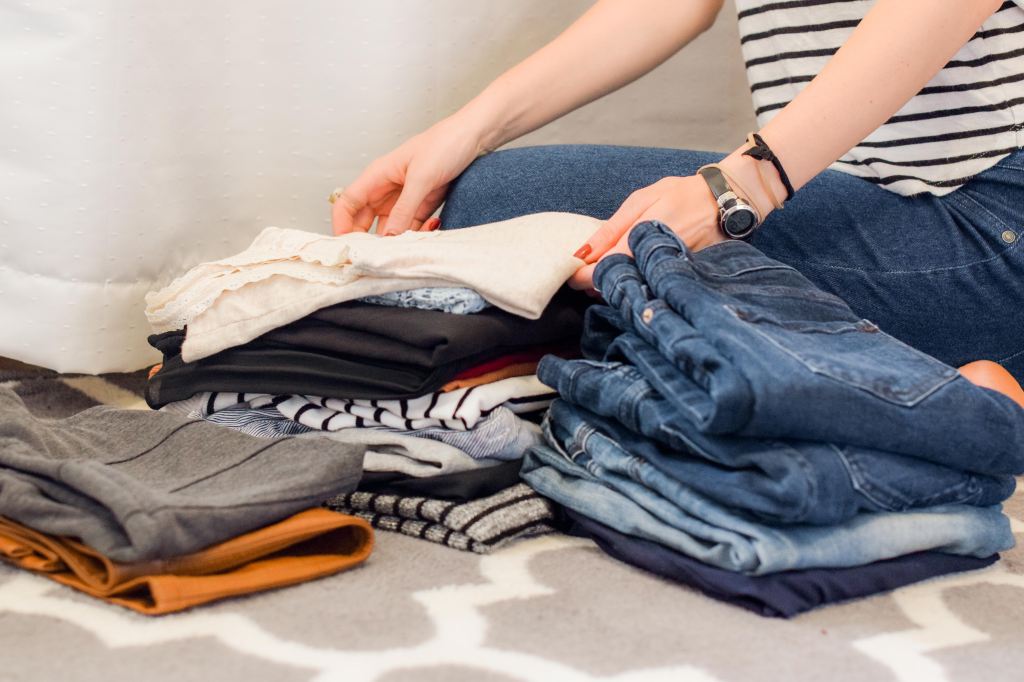
Clothes you’ve fallen out of love with or that no longer fit
Handbags – do you really need one for every outfit?
Shoes – too many lead to decision fatigue and lack of space. My shoes are nice enough to be useful both for evenings out, and for a casual summer day in town. I also have a pair of Vans I use purely for casual wear.
Coats and other outerwear (if you’re one of those people who has a coat for every outfit in their wardrobe and at slightly different thicknesses for every type of weather)
Electronics/Technology
CD’s you no longer listen to or that you own digitally
DVD’s you no longer watch or prefer to just watch digitally
Videogames you no longer play, or that you own digitally (unless you’re a collector)
Cables – do you really need 20 USB cables?
Broken or extremely outdated technology that’s useless
Kitchen/Dining area
Plates and dishes
Cutlery and other utensils – watch for duplicates
Cups and glasses. These tend to build up over the years until you could run your own cafe/bar
Out of date food and condiments, or food that people don’t seem to eat. Certain types of food can be donated to foodbanks as long as it’s all in date and unopened.
Airing cupboard/Under bed
Old towels – animal centres often need these
Old bed sheets, or an excess of bed sheets- once again, an animal centre or homeless shelter could make use of them.
Miscellaneous
Old school work
Old toys your children outgrew
Gifts that you’ve never used or secretly didn’t want or need
Photos – ones that trigger bad memories, are bad quality, or have a hundred duplicates
Anything broken that you said you would fix ‘someday’
An excess of tools such as screwdrivers, hammers, spare screws etc. Watch for duplicates.
Souvenirs from holidays that mean little to you (often, it’s the actual memories that bring you joy, not the mug with the landmark or country on)
Keyrings (I used to have about 6 on my house key, plus a few more to choose from). Now I have one for my key, and another on my favourite bag. That’s it.
An excess of ornaments and trinkets. These can be a source of hidden stress without you even realising. They take up loads of space and make cleaning tasks take double or triple the time than if that surface was clear.
I talk about some of these things in more detail here
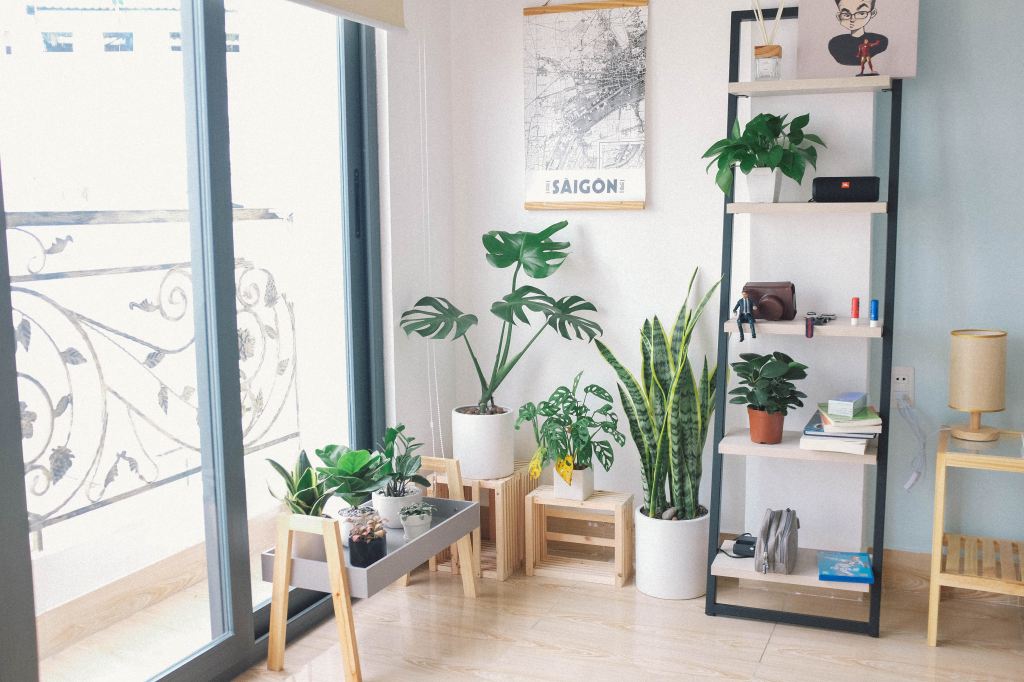
But what if I actually want to refill my space, or bring life to that empty corner?, I hear you panic. In that case, let me tell you; It’s far more uplifting to get plants, instead. House plants give you a sense of being in nature and will help to filter and oxygenate the air. Just don’t be like me and forget to water them.
It was a sunny Sunday at the tail end of summer. I was at home on my computer, when my husband suggested we walk our dog, Yuki, together. We’d already been to town earlier, but something made me say yes. And I’m glad I did.
As we walked in the sun we talked about our desires for the future, our goals in life, and things we wouldn’t have spoken about at home where responsibilities often get in the way and then, exhausted, we go off to do our own thing.
Anyway, we walked to the field that is usually overgrown with grass and wheat. I call it The Blackberry Field. It holds a special place in my heart because it’s where dad used to take me blackberry picking as a child and is also where we used to walk the family dog I grew up with.
This time, the grass and wheat had been cut down, leaving a wide, open expanse of rolling hill on which the blackberries were still growing down one side. The view from the top was breathtaking; all greens, yellows and browns topped with the crystal-blue sky.
You see, we live in a town that is undergoing heavy development. Everywhere you go there are new buildings springing up and huge cranes looming over the streets. Hammering, clanging, and sweating. But here, in The Blackberry Field, there was none of that.
The sky was clear, save for a few interestingly shaped clouds that seemed to stretch to infinity. From the top of the hill, we could see rows of trees, a village in the distance, and other fields that were miles away. I watched as the shadow of a cloud passed over one of those fields like a curtain. I’d seen nothing like it before. I’d never taken the time.
It was such a relaxing, and awe-inspiring sight that we sat down at the top of the hill and took in the feeling of complete freedom. It was as if time didn’t exist.
And here’s the important part. We hadn’t taken our phones or even a watch.
Everything was just as it was in the moment.
Just us and nature.
We let Yuki off the lead and she ran around the field like a wind-up toy while the grass blew gently around us in the breeze. It felt like we had entered a dimension cut off from the hustle and bustle of the world. All we could hear were the birds tweeting from the surrounding bushes, and Yuki as she panted her way back up the hill towards us.
We were present. We were at peace. And we were connecting with each other.
Seeing the fields stretching before us and houses the size of thumbnails made me feel like I was part of something much bigger. A tiny person in this massive world of infinite possibility.
My mood sky-rocketed. I felt happy and at peace, even when I had to go home and prepare dinner (I hate cooking). When you consider the tonne of scientific research which shows how beneficial and therapeutic nature is to humans, it’s no surprise that I returned home feeling renewed. Being in nature also has positive effects on depression and stress, as well as being a great way to practise mindfulness.
Too many of us fly through life not stopping to feel the ground beneath our feet or experience the surrounding calmness. We’re used to infinite busyness, the endless buzzing of notifications, and hurried conversations. Rinse and repeat.
Before we know it, we’ve gained a few more grey hairs and have accomplished nothing. Relationships are strained and people are more stressed than ever before .
There’s pressure to always be available online, to perform at work, to check our notifications, to look a certain way, to be a perfect parent, to be more successful, to make more money, to own the latest stuff, to keep up with the hottest trends and all the latest news. Feel exhausted yet?
There’s only so much of us to go around, and we can only focus on the most important things in our lives.
But if we learn to stop. If we take the time out to enjoy the present, even if it’s only on a weekly basis, it will boost mood, alter perceptions, and give way to clarity for the direction we are heading in life.
You will find yourself thinking about things you probably didn’t think about in the chaos of everyday modern life. See things in a way you had, perhaps, never considered before.
I’m sometimes guilty myself of being so focused on cooking dinner, cleaning the house, and being eager to escape at the end of the day, that I barely look at my husband when he gets in the house from work.
I cook dinner straight away, wash the pots, get my son ready for bed, then we’re exhausted and anticipating more of the same the next day. On days where both of us are working, we can both end up too eager to escape to distractions instead of each other.
It’s too easy to pass each other by like cars on a motorway.
In the field where time stood still, I remembered why we put rings on each other’s fingers.
But I also remember back when we were renting a house together for the first time. We were a very close couple for years, but somehow got into a routine of getting home from work and completely ignoring each other. I thought living together would strengthen what we already had. I was wrong.
I got immersed in writing or playing a game while he was busy playing an online game with friends. Then I would get up to cook dinner, and somewhere along the line we stopped eating at the table together, eager to get back to whatever distraction we were at before. We started arguing about silly little things and before we knew it; we were talking about calling it a day.
Our once perfect relationship was almost destroyed, all because we didn’t take the time to connect with each other. Away from technology and away from ‘busyness’. Away from our own self-absorption.
Know what fixed it?
Spending time at the dinner table again. Putting down the distractions to talk face to face.
The more we talked, the more we realised that conversation was moving away from hints about splitting up, and more about what we loved about each other, and where we wanted to be in life.
We realised what had happened and decided from that moment on to always eat at the table together, and to go on occasional dates, whether that be a walk into town, an evening at the pub, or a night spent watching our favourite anime together – no phones or tablets within arms reach.
I’d be so confident as to say our relationship became even stronger than before.
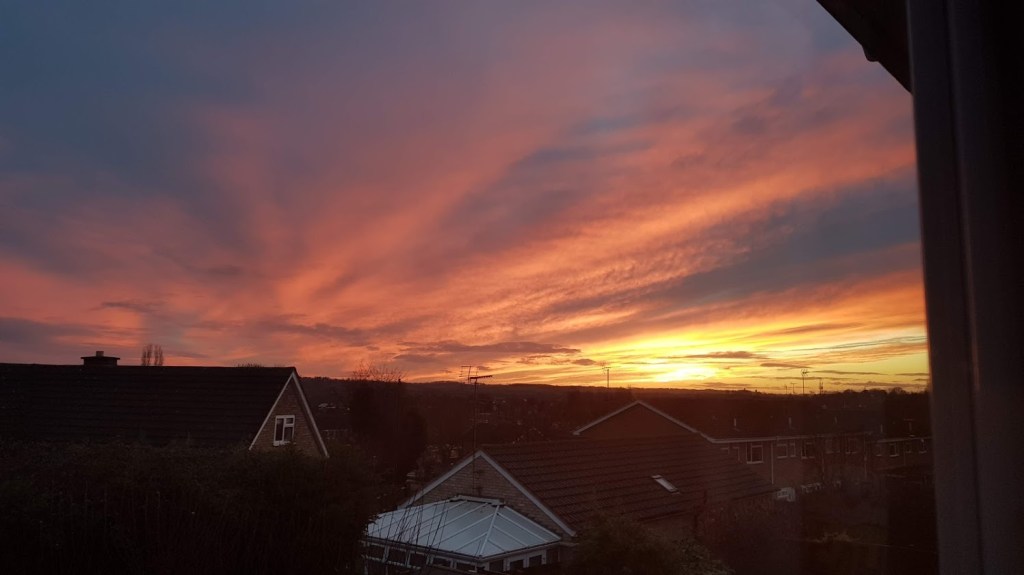
The other day, I was chilling on my computer and my son said, “Mummy, come off that for a minute,” and took my hand. I followed him and he took me to the window and showed me the most beautiful sunset, then he smiled and gave me a kiss. That moment will stick in my memory for a long time, but it’s one I would have missed out on had I stayed glued to my computer.
A sunset outside of one of our windows
It’s not just our relationships with others that are in danger of being extinguished if we don’t take the time to nurture them. We are in danger of losing ourselves. And it can be hard to find again. In fact, it can be so hard to get back, that many people give up and wonder why they’re as unfulfilled or as miserable as they were ten or twenty years prior.
In trying to impress others or keep up with the constant rush of life, we forget who we are. We forget our values, what we like, what we dislike, who we love, who we admire, what our dreams are, why we want what or who we do.
We become part of the fast-flowing river, doomed to enter the sea of mediocrity before repeating the same tired old cycle again and again.
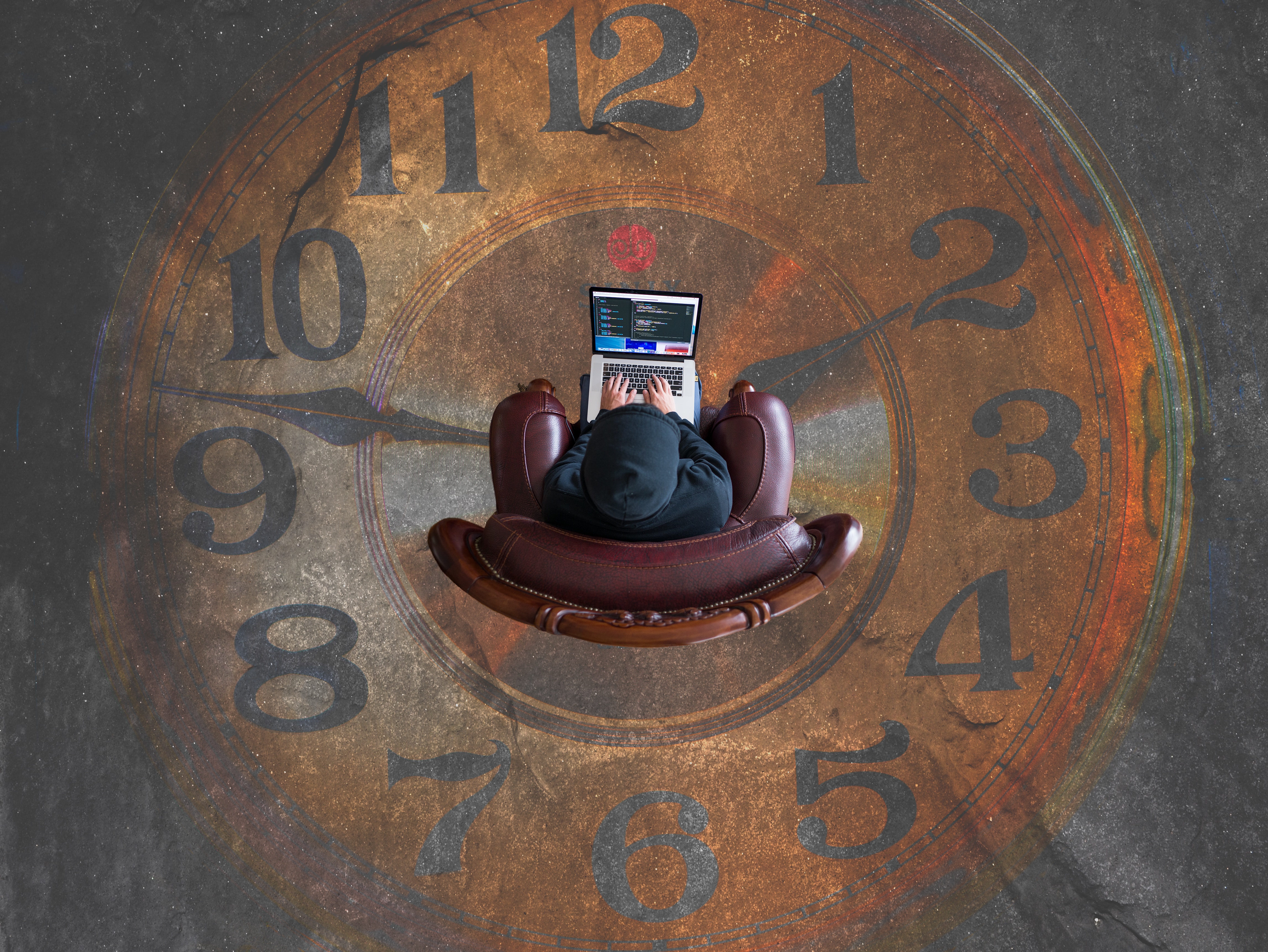
So, instead of worrying that the battery is running out on your phone, worry about your time on Earth running out faster than the sand in an egg timer. Instead of slaving over notifications on your screen, take notice of the real life things right in front of you. Instead of ticking off one task after another, take the time to rediscover yourself and rekindle, build, or make new relationships.
Make time for today.
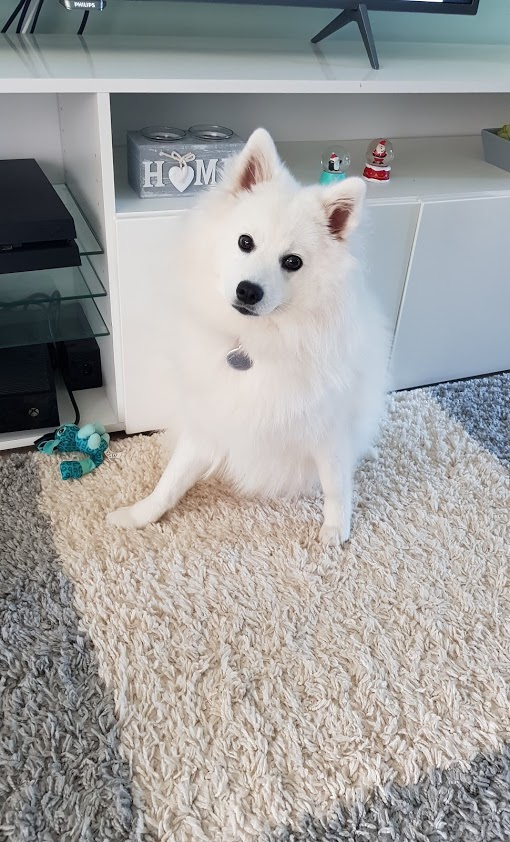
For all you dog lovers out there, here’s a picture of my dog.
One of the greatest things about being a minimalist, is that it forces you to think about the things in your life which are most meaningful to you. That’s no easy feat because at first glance it might seem like everything you own deserves a spot in your heart and your home.
In the not-so-distant past, I thought the same way. Every keyring, every old party invitation, and every trinket felt significant.
But once I figured out what was causing me to hold on to these relics, I felt lighter than I’d ever felt in my life. And after moving house a few years later and having to unpack all my stuff from a larger house into a smaller space, I discovered minimalism.
I thought that I had decluttered all I possibly could, that I had minimised to the max. So imagine my surprise when I was struck with a question which highlighted even more excess in my home.
My husband and I were sorting out home insurance, but we didn’t want to overpay to cover the cost of our stuff. We got asked, “If your home and all its possessions got destroyed tomorrow, how much do you think it would cost you to replace?”
Now, while most people would frantically start estimating the worth of the entirety of their possessions at this point, I altered that question in my mind so it was now asking, ‘If your home and all its possessions got destroyed tomorrow, what would be most important for you to replace?’. Minimalism has trained my mind to ask those questions of myself, but I had only ever asked on a room by room, and drawer by drawer basis.
What would be so important to me that I would have to replace it if it were destroyed? My adult colouring book that I rarely touch? My ornaments which are just there as shelf filler? And if they aren’t that important, should I use up valuable shelf space for these items which I have to clean and worry about being broken?
If I were to have a fresh start, should I replace every book, every mug, every piece of furniture, every cable, every gift, every utensil?
Just the other day, a heart with a rhyme on it that was bought for my wedding to remember my nan, went flying to the floor and smashed. I was upset for about ten minutes, then the feeling passed and I realised that it was simply something bought from a store which didn’t represent her, but my feelings about her. And when it broke, my feelings didn’t vanish along with the rubbish bag the heart ended up in. After all, she resides in my real heart – not some pretty piece of acrylic.
The item itself was meaningless, but I hadn’t considered that until it smashed.
Imagining starting from absolute zero is an entirely new and sobering thought process.
It’s an overwhelming question for most, and one which would have shocked and terrified my past self to think about. When I imagined starting from scratch, I looked around my living room and started noticing things that I wouldn’t waste the time, energy and money replacing.
Then I noticed the things that were special to me (not including necessities such as our dining table), and they included things like my trusty laptop, and some favourite hardbacks which I regularly revisit. Above all of that was my husband and son.
When you challenge yourself with the concept of starting from scratch, it’s terrifying, I know. It’s even scarier to consider it as a consequence of some sort of disaster. But it forces us to think about what we really need and what truly makes us happy. That, in turn, makes us think about who we are beneath our stuff.
Are you a party animal like your wardrobe suggests, or more of a Netflix binger? Are you an avid reader like your shelf suggests, or do you find yourself exploring the world instead? Are you really a fitness freak, or someone who classes a trip into town as exercise?
Once you become clear about who you are and what you stand for, it enables you create space for your true self to shine, and it allows you to easily discern the most important things in your life. This can save you money when it comes to things like choosing house insurance, or when you shop more mindfully. It can even lead to you making big life changes such as career, or relationship.
Minimalism gave me the space and clarity to think about why I was still in the same job position as ten years ago, despite many opportunities to climb the ladder. I was too comfy, too secure, and too preoccupied with acquiring shinier stuff, instead of listening to what my heart was saying (which was that I’m only fulfilled when I’m writing, growing, helping people with their issues, and inspiring adults to live up to their true potential).
So, if you could start all over again from now, with nothing but yourself, what would you need? What things would you buy all over again? What would you do with your life? What would you be? Who would you spend your time with?
If you struggle with those kinds of questions, turn them around. What wouldn’t you need? What wouldn’t you buy again? What wouldn’t you do with your life? Who wouldn’t you spend time around?
Last weekend, my husband and I went on a major clothes purge. It wasn’t that we hadn’t done so before. We found ourselves revisiting the task after several arguments about me not having washed any of his clothes. The reason? I perceived that he had plenty left because the drawers were always full to bursting with his t-shirts, boxers and socks.
“But I don’t wear any of those!”, he would argue, when I told him he had more than enough.
So, after deciding enough was enough, we joined forces and I emptied all the drawers and the wardrobe so it was all laid out on the bed. Seeing the hoard in it’s entirety was even more of an eye-opener than just picking it randomly out of storage.
Even though I mimimised my clothes collection significantly in the past year, I still found myself getting rid of a dress that didn’t feel like me, and a top that I used to wear on drunken nights out (that I have very few of these days).
The rest was all my husband’s. There were shirts and sweaters he had long since fell out of love with, clothes that he never liked the style of, clothes that were too big or too tight, and those that were seriously worn out.
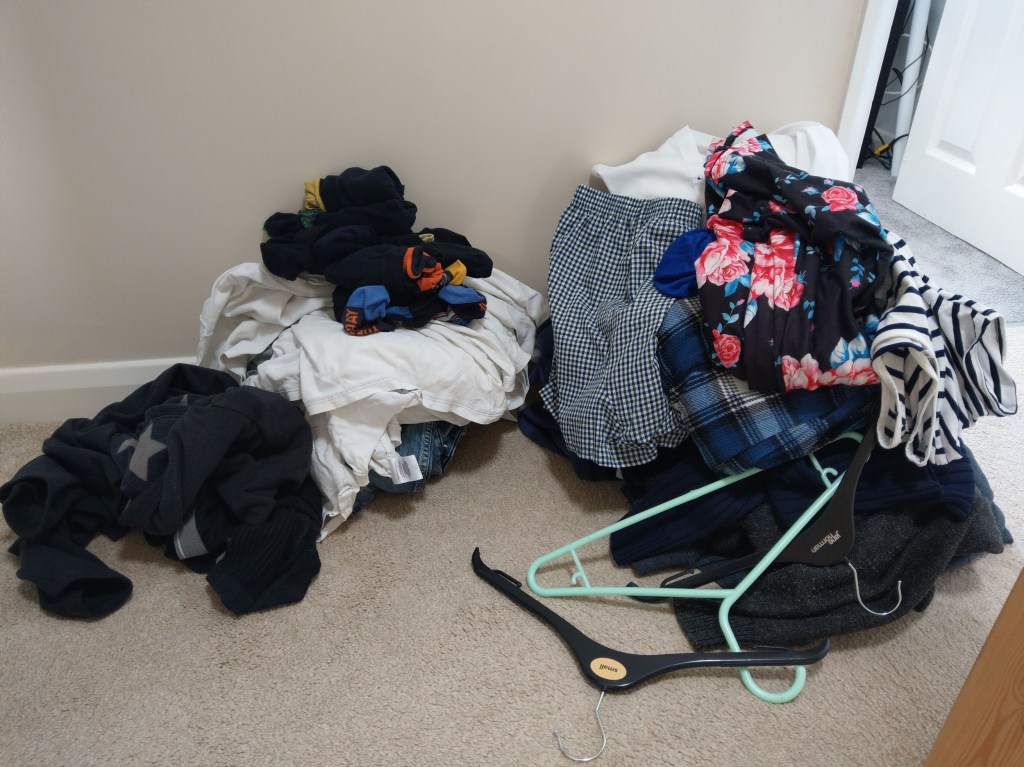
In the end it filled three bin bags! One of those bags was destined for the trash, and the rest got put in the donation pile.
The mass of clothes that piled up in our hallway as we tossed them
You can imagine the difference it made to our storage.
Clothes in the wardrobe hung freely and were able to breathe again, and the drawers could close without me having to kick them shut or squeeze everything down. And I’ve not been in doubt about when I need to do some washing because everything in our bedroom now only consists of the things we wear often or are fond of.
Our wardrobe after the session. I wish I had taken a photo of it before it was decluttered.
If you don’t keep a regular check of your wardrobe, it can and will overflow until you find yourself faced with yet another mammoth decluttering session. These sessions take up a huge chunk of time and patience, so it’s always best if you keep on top of it by being mindful of the clothes you purchase, and to immediately donate or trash ones that are worn out or that you fall out of love with.
That being said, you’re far less likely to fall out of love with your clothes if you don’t fall victim to keeping up with fashion, which changes faster than the seasons themselves. Instead, buy clothes that make you feel fantastic when you wear them, and that resonate with who you are.
And remember, the person you are now might well be completely different to who you were a year before.
And donating them to charity shops doesn’t necessarily save them from that fate because quite often, charity shops don’t know what to do with your used clothes, or flat-out fail to sell them.
Buying fast fashion contributes to the issue massively because countless heaps of clothing get worn once, then end up clogging landfill. Not to mention that the people who make them are often severely underpaid and work in dangerous conditions.
If you’re ready to get hardcore with minimising your clothing, you can also try out Project 333 which aims to save you masses of time and space, while still making you look fabulous every day. Check it out, it’s not half as scary as it sounds!
Meanwhile, if you’re at a loss with your stuff, and have lost sight of what’s important to you, stay tuned for next week’s post about the importance of stuff.
When thinking of minimalism, it’s easy to think about everything you own, the things you will keep and space you will create. But there’s something even more suffocating than an excess of physical possessions, which has integrated into every aspect of everyone’s lives: a permanent connection to the online world.
Social media, in particular, is a major leech on people’s time and energy.
I think of social media as being like the world’s biggest mosh pit. Every so often you get hoisted above the crowds and passed along in a viral wave of shares and likes. And when you get dropped, you crave the experience again and again, eager to be seen and heard amidst millions of other voices all vying for validation.
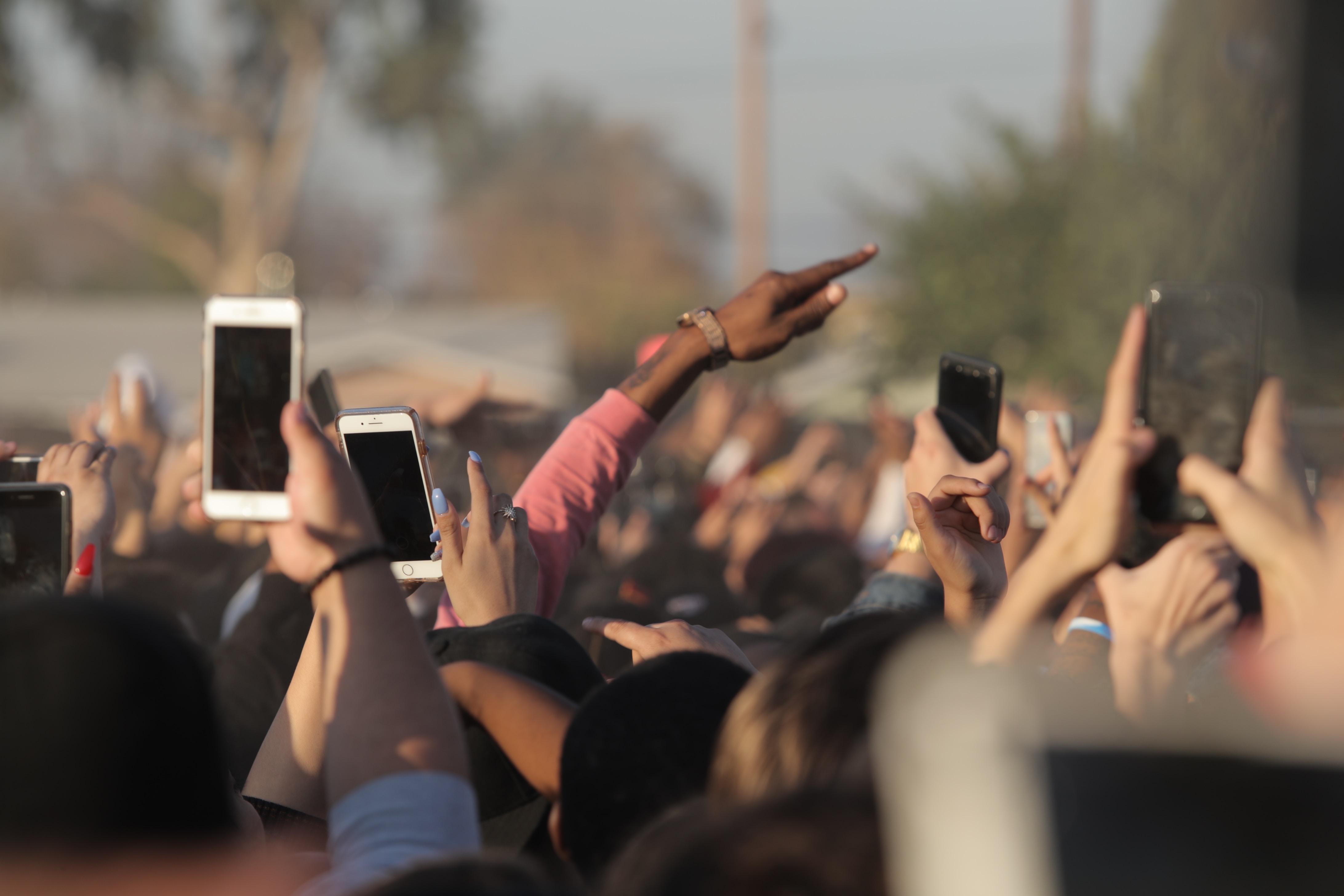
One day last year, I sat at the window of a city cafe which had a wide view of the shop-lined street. And I was both shocked and saddened to see that there wasn’t a single person outside whose head wasn’t bent over their phone screen. Mothers with pushchairs, businessmen, teenagers, older men and women…
It’s one thing to see someone at a bus stop or in a queue scrolling away, but there’s something profoundly disturbing about seeing an entire street like it.
With a dawning sense of horror, I realised that before entering the cafe, I had been a part of that crowd, so disconnected with the people around me that I may as well have lived on a different planet.
From that moment on, I decided to apply minimalism not only to my physical life, but my digital one as well.
I had tried many times in the past to regulate my usage of Facebook, including deleting the app from my phone. I thought that if I took extended breaks I could get myself under control. I was wrong. No sooner than I gave it another chance, it ensnared me like a Venus Flytrap, stewing me in likes, love hearts, and bastings of dopamine.
But it wasn’t just Facebook I was addicted to. Email notifications and free-to-play games conditioned me to pick up my phone to compulsively tap and scroll my life away. Every time I pulled my phone from my pocket I would check social media, then email, then news, then I’d ask Google some obscure question that popped into my mind.
I vividly remember the time my toddler son was sitting on my lap talking to me, and because he was watching Peppa Pig for the millionth time, I was absorbed in my phone. “Mummy, you’re not listening to me!”, he whined.
I was about to snap back at him, annoyed, but then I saw his eyes swimming and his lips quivering. “What are you doing on your phone, mummy?”, he asked. To which I had no acceptable answer and replied “Nothing, sweetheart. Mummy should put her phone down. I’m sorry”.
My son’s voice was being lost amidst an ever-rising crescendo of digital noise.
It doesn’t sound that much to start with, but weeks turn into months which turn into years. Over time, those hours spent tapping, typing and swiping add up to staggering amounts.
When you consider that so many of us complain of having so little time, imagine what could be achieved if we clawed back the months spent on social media, apps, email, and other attention-sapping services.
You could write a book, visit a new town or city, see friends and family, discover a new hobby, learn a new skill, learn something about yourself, set your life in a new direction, rekindle a relationship – the possibilities are endless.
There were a few instances I actually forgot to take my phone out with me, and I can say without a doubt that they were some of the most peaceful, and most productive times.
To my surprise, during those outings, I forgot about my phone. I had no desire to check notifications, know what the news headlines had changed to, or to share what I was seeing with digital strangers.
When I first took a hiatus from social media, I went one step futher and downgraded to a dumb phone for a few months. Like is the case with many addictions, I couldn’t trust myself to not fall back into the clutches of digital dependency.
The people close to me were shocked and clearly uncomfortable. I got asked “How will I send you photos when I need to?”, “How will we keep in contact as much now that you don’t use Whatsapp?”, “How will I know what you’re up to?”. The funniest thing I got asked was “How will you know where you’re going without GPS?”. Yet I don’t even drive.
I documented my whole experience of going dumb (which I will share with you some other time), but I can tell you right now that my relationships improved, my stress levels dropped, and my writing sky-rocketed.
There was more to talk about with my friends because I hadn’t already shared everything. And I started to notice what was right in front of me. Not just people, but natural beauty and interesting occurrences.
I discovered a version of myself I hadn’t realised was possible until I looked up from my screen.
Once you leave the cultural norm, people will be shuffle their feet and often try to justify their own habits, or try to tempt you back. A few people told me that although they wanted to, they couldn’t leave social media due to having family many miles away. Yet most of the time, there’s nothing to stop people from writing letters, sending emails, or, even better, making a phone call.
An over-reliance on social media is rewiring us to fear the intimacy of live, face-to-face conversations, as well as setting us up for a life of comparing ourselves to others, and missing huge chunks of our lives.
I mean, think about it: we’ve been walking the Earth for thousands of years, communicating with each other via grunts and cave drawings, then by spoken language, and later, via books and TV. But all of a sudden, we don’t have to talk face-to face anymore. An app can do that for us.
We don’t have to be vulnerable in front of others, or share our true feelings, or even our real appearance. Instead, we craft masks online and forget who we really are.
And like any skill that goes unused for long enough, social skills start to fossilise. Then anxiety sets in. But we are still social creatures, so we desperately try to keep the illusion of connection going, all the while getting lonelier and lonelier.
Of course, social media isn’t all bad.
It can be great for meeting new people, and communicating with people on the other side of the world. It can be invaluable for disabled people who might find it more difficult to meet up with people, and it’s perfect for finding others who share your interests. It can also be a great business platform.
The problems arise when being used as a main source of contact. It’s extremely poor at forming truly deep and satisfying bonds with people.
Trying to plug social voids with excessive social media usage is like trying to fill a sieve with sand. The sense of connection and satisfaction quickly drains away, so you check and click like again and again and again.
Services such as Facebook and Instagram, and any other time-wasting app you can think of have been designed to be as addictive as slot machines. Companies are profiting from our attention, our memories, and the loss of our souls to our screens.
Currently, I’m back on social media, and back to using a smart device, but with a reversed relationship. I’m the master of my device and the services I use, not the other way around.
To stay in control, I began by minimising the apps on my phone.
I deleted everything I rarely used, started to embrace digital minimalism, and cleared everything off my screen that would serve as a temptation to open. I unsubscribed from news apps, turned off all notifications except for texts and phone calls, and started leaving my phone out of my bedroom at night.
I also started to leave my phone in my bag when talking to people, instead of in easy reach where it could dampen my conversations and remind them to reach for theirs.
You don’t have to go as extreme as I did and downgrade to a dumb phone, nor do you have to delete your social media accounts. All you have to do is become more mindful of the time you spend on your phone, or on other devices and services.
There has been an explosion in apps dedicated to helping you keep track of the time you spend on certain device activities, or to aid you in blocking yourself from distractions.
As you can see, minimalism is no longer just applies to our physical lives, and by integrating it into our digital lives, we can find peace and deep connections in a rushed and distracted world.
New minimalists often make the mistake of thinking that minimalism is all about sparsity and getting rid of stuff. But once all of the excess is out of the way, it’s less about stuff and more about intentional living.
By that, I mean that you have more time on your hands and you decide what to do with that time.
One of the life-changing things I practised was incorporating a healthy dose of relaxation into my schedule.
In today’s fast-paced society, many of us have lost the ability to relax. And I don’t mean sitting in front of the TV binging on Netflix or surfing the internet; I mean true, hardcore relaxation. No technology, no stress, just gentle, relaxing activities.
At first, it was hard because I was so used to always being on the go cleaning, tidying, cooking, washing up, going to work and parenting. I was always in a state of ‘what next?’.
Even when I thought I was relaxing by playing my Playstation or watching TV, I wondered why I still felt wired.
You see, by relying on technology, all I was doing was keeping my mind in a heightened state of arousal and chasing an endless stream of dopamine hits – the complete opposite of relaxing!
But once you understand how, true relaxation is easier than you think.
Below, are some of my most used relaxation techniques, which will lift the weight from your soul and leave you feeling like a gently flowing stream instead of a crashing tidal wave.
Lighting a scented candle To create a calming atmosphere, there’s nothing quite like lighting a scented candle. It doesn’t have to be scented, though, and you can even buy natural beeswax candles if you’re sensitive to the usual ones you can buy.
I like to dim all the lights, close the blinds, and indulge in the soft light cast by the flame. Never leave a candle unattended, though, or near a flammable source!
Play soft music I find chillhop and low-fi music can be especially calming and puts me into a zen-like state very fast. That’s because listening to music, especially of a relaxing variety, can lower your blood pressure and heart rate.
Combined with the scented candle, it’s a sure fire way to let your stress go.
Soft lighting I briefly mentioned lighting when talking about the candle, but to put your mind into a state of relaxation, it’s best to use soft, low lighting.
This is because leaving your lights on full will have a blue-light effect similar to the screens on our devices. It can suppress your melatonin levels (the hormone responsible for helping us to sleep) and leave you restless.
Soft, comfortable clothes This one speaks for itself because feeling light and comfortable will help you to get comfier much faster.
A hot bath with oils or bubble bath If you have a bath, I recommend some nice stress-relieving muscle soak or oils. And instead of treating it like a mission to get clean, just lay back and indulge in the warmth and tranquility.
Just be careful not to get so relaxed you fall asleep!
A beverage of your choice My own beverage of choice is usually a herbal tea such as chamomile, which is known for its calming properties. Occasionally I’ll have a glass of wine.
However, while it can be tempting to top up with some sort of alcoholic beverage at the end of a long day, beware that it doesn’t become a habit. Relying on alcohol can turn into dependance so that you can’t feel relaxed without it, and will introduce all sorts of health risks.
If you do have an alcoholic drink, stick to one and don’t make it a regular occurence.
Writing Writing is well known for having a therapeutic effect and is something I do regularly.
You can write about anything you like: a story, a diary entry, something that’s on your mind, a topic that you’re passionate about, or a letter to someone even if you don’t intend to send it.
You don’t even have to keep what you wrote if you don’t want to.
A few words of advice,though. Don’t write a to do list or anything else which is likely to stress you out and remind you of life’s chores.
It’s also better to write on paper than on a device, not only to minimise your exposure to blue light, but because studies have shown that you retain knowledge better when you write or read physically, and you’re likely to be more creative. See https://uniball.co.uk/handwriting-better-typing/
Reading If you’re a bookworm like me, finding the time to put your feet up with a good book is precious.
Once again, it’s better to read a paperback rather than a digital device to minimise blue light exposure (although Kindles or e-readers that use e-ink to mimic paper are a good alternative).
Books are also great at whisking you off to another place and reality – perfect for when the real world gets too chaotic.
Meditation I can’t praise enough, the wonders of meditation to help you de-stress. Meditation can be done any way you like, in any position you prefer.
It’s a deep state of calm that is achieved by letting all of your thoughts go and being as present as possible. Meditation isn’t a natural state so does take practise! When you master it, though, you’ll wonder how you survived without it.
Personally, I use a form of visualisation. I picture a beautiful place from my memories, and then I modify it by adding a gate which my worries and stress can’t get through.
I picture the worries and stress as little cartoonish characters beating (and failing) to get through, with me as the gatekeeper. After a while, all that I’m left with is my chosen internal setting.
Your way may be totally different. You have to find what works for you.
Deep breathing Deep breathing combined with meditation can be incredibly powerful. Even on its own, it can be a powerful tool to relax you.
Once again, if I’m completely stressed, I use visualisation. I imagine I breathe out all the bad feelings (red), and breathe in all the positivity ( green), until all the negative is gone and replaced by the positive.
Colouring It doesn’t matter if you’re five or fifty. Colouring is a relaxing activity and has been proven to reduce stress and anxiety in adults. There are all kinds of beautiful adult colouring books out there, so there’s no excuse not to give it a try.
I love the ones by Millie Marotta and Johanna Basford, which are delightful to look at and a joy to colour on.
Doing NOTHING That’s right. Nothing. Just sitting back and being in the moment. How many times do you do that? I bet the answer is never.
Let’s face it, these days people are always doing something, even when ‘relaxing’ whether that’s watching Netflix or idly browsing the net.
Because of today’s constant connection to technology and the non-stop bustle of our online lives, it seems that doing nothing has become a completely foreign concept.
In fact, it seems to have become an enviable skill. Yet it’s a must in order to have optimal mental health and truly be able to relax.
Constantly being on the go, and busying yourself with online entertainment rewires your brain to rely on endless dopamine hits. That’s great for the companies that are making a profit off your attention, but not for you and your mental health.
You need to retrain your brain to see quiet, peaceful moments as they are, rather than as moments of boredom and non-productivity.
The next time you’re sitting idle, or waiting at a bus stop, stop and take in the sights, smells and sounds around you.
Notice your child showing you the pictures they drew, smile at the human sitting across from you, listen to the birds in your garden. It’s amazing what you will notice once you master the skill of doing nothing.
Close doors to outside distractions When you’re relaxing at home,it’s best to close doors to outside noises and distractions if you can (provided you don’t have to worry about a baby or anything else important).
It helps you to create a sort of ‘bubble’ of tranquility.
No phones, tablets or other technology I can’t stress this enough. If you want to relax you need to switch off, or at least silence your devices. As I said in my above point about doing nothing, our addiction to technology and the internet simply wires you up for chasing mindless highs.
Social media also has a way of stressing you out and making you feel inferior to others. How can you feel relaxed when you’re constantly comparing your life to others and checking your worth via one-second-clicks and likes?
Please note: It’s perfectly acceptable to use a device simply to stream music – unless that music is coming off your phone which is within arms reach of your twitchy browsing hand.
As you can see, relaxation is easy if you’re willing to switch off and let go.
You may notice that a good few of the techniques do require some practise, but that’s because today’s tech-addicted society has conditioned most of us to forgo relaxation in favour of chasing the buzz of constant entertainment.
Reclaim your attention. Reclaim your right to relax. Reclaim your life.
When you minimise your own possessions and you’re the only minimalist in a household, you will inevitably start to notice other people’s stuff. You will have all sorts of ideas in your head about what should go and what should stay.
Why does your husband insist on keeping that set of weights when he hasn’t worked out in years?
Why does your daughter have so many shoes?
Why can’t your room mate just throw away their bulging collection of ragged t-shirts?
Surely they can see the mess they’re living in. Why won’t they understand the benefits of being a minimalist? If only they would stop and listen to you!
Unfortunately, nagging, preaching or removing their stuff without permission will not only cause them to hold onto more stuff in an act of defiance and security, but can end up driving a wedge between you and the people you love.
Everyone has possessions which are important to them for a variety of different reasons. Maybe it’s for security, perhaps they grew up with nothing, maybe they grew up drowning in stuff like I did. Whatever the reason, you should never badger and pester someone to get rid of something they’re not comfy doing so.
My husband, son and I share a house with my parents. The only minimalist in the house is me, so for the longest time I felt frustrated by what I considered to be clutter from other people.
It seemed that no matter how much of my own stuff I got rid of, they accumulated even more. I became hyper aware of everything that was coming into the home, especially since we all share a kitchen and bathroom.
Where was I going wrong?
It’s embarrassing to admit, but I had turned into a preacher of minimalism. I was so encouraged by my new outlook on life that I wanted everyone else to experience the joy, and I wanted to minimise even more. Suddenly, every marketing tactic was clear to me, every needless item on a store shelf, every meaningless trinket left on my shelves.
It’s so easy to fall into this ‘I know best’ mindset when you’re feeling so renewed and energised from such a lifestyle change. But that attitude didn’t do me any favours, and it won’t do you any.
It’ll strain your relationships and do the opposite of simplifying your life.
I had many disagreements with my husband and parents. Nothing I said seemed to work and I was getting fed up. But in the end, it wasn’t worth the heated arguments.
Then I remembered that I was doing this for myself, and that pushing for results from others was stressful and counter-productive. Everyone around me had their own stories, and it wasn’t fair that I was interfering. So I stopped. And I realised how overbearing I had been and that the message of minimalism was being lost.
To my surprise, after a few months, not only did my husband start actively supporting my new lifestyle, he identified some clothes he no longer wanted. Even my mum had a random clearout and filled several charity shop bags.
Think about the last time you were shouted at or lectured. Were you angry? Did you feel inspired to do what the other person wanted?
I thought not.
But don’t worry. As human beings we’ve all been there.We want something from somebody who refuses to play ball and become desperate, convinced that we know best. Of course, all that serves to do is drive people away or cause them to rebel.
The best way to persuade someone is to always be friendly and sympathetic, and to lead by example. Minimalism is one of those concepts that’s better observed over time.
Once people see how much happier, lighter, and more relaxed you are, and how much more time and space you have, you’re much more likely to see a gradual change. The keyword here is gradual.
If you’ve come so far in your minimalist journey, you’ll know that change doesn’t happen overnight, or even in a few months.
It’s a learning process where decision-making skills are sharpened and mindset is improved or altered.
You’re even more likely to persuade the ones you care about by spending that extra time doing something you love, or spending time with them.
Everybody wants more time in their day, and everybody wants to feel important.
Whatever you do don’t pester someone or suggest to them what should be kept and what shouldn’t be. How can one sharpen their own decision-making skills and feel empowered if the decisions are being made for them?
When I was a child, there were times my mum despaired at my toy and magazine accumulation, but when she screamed and shouted at me about it, I held on even tighter because I felt like my stuff was important to me. As a spoilt only child, I was defined by my stuff.
In the end it doesn’t matter if you’re twelve, twenty-eight, or sixty; if you get spoken to badly, nagged and preached at, there will be rebellion instead of results.
Put yourself in the other person’s shoes and try to understand them, but most of all, live happily with your own values. If people like what they see, they’ll soon follow.
Just remember, that not everybody wants to be a minimalist, and your goal shouldn’t be to convert them, but to demonstrate a simpler way of life and bring out the best in yourself and everyone you meet.
To Summarise:
Don’t nag
Don’t shout
Don’t remove other people’s stuff
Don’t preach
Don’t forget what minimalism is all about
Do be understanding
Do be friendly
Do be patient
Do be sympathetic
Do lead by example
Do focus on you
Do remember the true meaning of minimalism
The meaning of minimalism? To remove excess stuff in your life so that you can enjoy an abundance of whatever is important to you.
Even the most seasoned minimalists will end up overwhelmed with more clutter if they don’t regularly keep on top of what comes in and what goes out of the home. Left unchecked, it’s easy to become complacent and end up back where you started.
Below, I’ve listed some of the clutter culprits which you should be especially vigilant of.
Pens
These get everywhere because they often get bought in packs. Unless you work at a school or in an office, don’t buy pens in packs because you’ll never get around to using the rest before they dry up and they will make your drawers messy.
Pens are also numerous in gift shops and are the next most common keepsake along with keyrings. Don’t be afraid to discard old pens, and if there’s one you love, see if you can buy refills instead of retiring it to a drawer.
Notebooks
People are suckers for brand new, fresh notebooks or journals – myself included. I have so many journals from the past that are half-filled because I got fed up and wanted a new one. The same thing happens with notebooks, but people keep the old ones ‘just in case’, and before long there is a pile of half-full notebooks.
If you use physical notebooks, avoid buying them in packs unless you work at a company or school.
You can also consider using apps and take notes electronically, but this option isn’t for everyone. I’m a pen and paper person myself as the notes stick in my mind easier and I get more creative.
Celebration cards
Recently, I recycled piles of these after discovering boxes full in the attic, some with names of people I no longer knew.
Cards multiply very fast because we appreciate the words that people write inside them, or people pass away and we can’t bear to throw away their handwriting.
When it comes to cards, there’s nothing wrong with keeping a select few (I keep some beautiful and thoughtful ones in a photo album), but be sure to recycle the ones that just say ‘to’ and ‘from’, or from people you no longer recognise. You can also take photos of old cards and do away with the physical copy.
Invitations
I once kept a hoard of old invitations in my bedroom drawer. They were so pretty and I was so honoured to have been invited to events that I kept them as a reminder. Ultimately, however, all I was keeping was junk and they got in the way.
A great event will stick in your memory so there’s no reason to keep an invite. But if there’s one you simply can’t get rid of, you could always place it into a photo album or a memory box.
Newspapers
There’s no reason at all to keep newspapers unless there’s something valuable to you inside it. Even then, you should cut such a thing out rather than keep the whole thing. Nowadays, the same information is available online so it’s highly unlikely you’ll miss out by recycling.
Magazines
Magazines cost more money than a newspaper, are eye-catching, and over-spilling with information. It’s no wonder that we find it so hard to throw away old magazines in case there is something great inside that we’ll never be able to read again.
But do you really ever go back and read that old information? I doubt it.
That being said, you can cut out the stuff that really interests you and recycle the rest. If it’s a collectable series, however, you can buy magazine binders which will make them beautifully presentable and read like a giant book. I took the latter option for my ‘Writers’ Forum’ collection.
Junk Mail
Unless you’re genuinely interested in an advert or service, trash it as soon as it enters your home. Be fast and ruthless.
Receipts
These end up yellowing in drawers and wallets until they become invisible. Bin old receipts, and better yet, if a shop offers you a digital receipt, opt for that, instead.
Bills
Out of a sense of security we keep old paperwork and old bills, but more often than not, we don’t need them and they pile up into a miniature towers. It’s so simple today to scan and digitise anything you’re unsure of, or even to go paperless with companies.So ditch any old paperwork unless it’s very important.
These get bought as gifts and holiday souvenirs more than anything else. But they’re so common as gifts we can end up with a whole haul.
Just a few weeks ago, I was travelling with a mass of about six keyrings on my house key, yet didn’t even notice until my husband stopped me before leaving for work and asked “Emma, why on Earth are you carrying such a heavy mass of keyrings for one bloody key?”. I didn’t know, either. Somehow, they had become invisible to me.
Once I realised the absurdity of it, I chose two favourites and used one to identify my house key, and another to give my bag some character. I donated the rest.
Cables
Eventually, cables end up making a mini jungle. In today’s tech heavy world we own so many devices and all the cables and spares that come with them. Sometimes, we think we lose cables so end up buying even more, only to find the old one but keeping them ‘just in case’.
Years of this will not only make specific cables or parts hard to find, but you will end up with ancient, mysterious ones which are no longer relevant to anything you own.
As a gamer and a previous gadget addict, I have been to cable hell and back, once discarding of about three large carrier bags of unknown cables and ten USB leads. I’d say it’s fine to keep one spare, but any more than that and you’ll be lost in the cable jungle before you know it.
Batteries end up all over the house or breeding in the ‘junk drawer’, especially if you have kids. Old batteries can explode or leak battery acid if they aren’t stored correctly, and can eventually drain of their power. Not to mention, they are extremely hazardous for small children.
Only keep the batteries you need and don’t bother holding on to any mystery batteries that don’t seem to fit into any device you own.
Toiletries
Old half-full bottles of shampoo, freebies, Lynx gift sets and other toiletries will take over your bathroom if you don’t throw the old stuff away. If you have unused gifts, consider either using them before you buy more of a similar product, regifting or donating them.
Medicine
Seasons come and go, and with them, coughs, colds and other ailments. One thing I’ve noticed with medicine cabinets is that nobody tends to throw old medicine away, keeping them ‘just in case’. Yet more medicine gets stockpiled every month or so until we are prepared for an apocalypse.
So, whenever you acquire new medication, discard of any old ones – it’s not healthy to have old medicine anyway, and they can also lose effectiveness over time.
Makeup
Like with medicine, new makeup gets added but the old tends to stay in the back of the drawer. Always throw away old makeup because it’s the perfect hangout for bacteria.
Mugs
People buy new mugs yet still hold on to scratched or chipped mugs ‘just in case’. People also like to prepare for huge tea parties that never happen, so every cup is a keeper.
Cups and mugs enter the home as gifts at various times of the year, as holiday souvenirs and as classy new kitchenware, and over time they fill every cupboard and end up stacked haphazardly.
Only keep the mugs you use and never keep scratched or chipped mugs because bacteria will thrive in them.
Drinking glasses
These are another thing which enter the home as gifts, souvenirs and new kitchenware. I’ve seen families of three and four with enough glasses to host a party of a hundred, yet only a handful of them are ever used. Consider donating or recycling unused glassware.
I’m sure I will have missed a category or two out, but as long as you keep an eye on most of the stuff mentioned above, you will have a fighting chance to keep your home calm and clutter-free.

























 Minimalist Moments