Healing Your Inner-self: Care For Others by Caring For You

Photo by Sydney Sims on Unsplash

While walking the dog, I saw a single white flower, almost like a large daisy, beneath a tree where everything else around it was defeated by ground frost. This flower stood defiant against the elements for many more weeks before finally going crispy and brown. Even then, it stood proud, refusing to fall. 

It’s all too easy to end up wilted and lifeless, lacking motivation and longing to hibernate like a bear, especially during these cold, dark, busy winter months. 

We get sick, depressed, and lethargic. And if you have a chronic illness, symptoms may become even worse during the colder season. 

Add the stress of the holidays, increasingly bleak news headlines, tough finances, family arguments, and you have the perfect recipe for depression, anxiety, overwhelm, and hiding under the duvet for months on end. 

There may be times when you feel completely drained and hopeless, but rest assured, there are things you can do to bring that spark back into your soul.  

You see, in today’s modern world of consumerism, always-online technology, scary news, uncertainty, and filling tick boxes, we forget to take care of number one. In fact, society tells us it’s selfish to do so; and that couldn’t be any more damaging or further from the truth.

But how do you know when you’re at your limit? 

The trick is to understand the signs of when you’re nearing overload. These can include but are not limited to: 

Easily losing your temper, even with small things

Feeling like hiding for long periods of time 

Thoughts of running away

Feeling stressed without knowing why 

Having flare ups of existing illnesses

Unable to cope at work 

Fatigue and lethargy 

Withdrawing from social situations

Persistent negative thoughts 

Please bear in mind that the things I’ve mentioned can also be symptoms of mental illness such as depression, anxiety disorder, or other conditions. If you’ve suffered with symptoms for more than a few months, be sure to talk to a doctor, trusted friend, colleague, or a family member. 

Don’t suffer in silence. 

Photo by Toa Heftiba on Unsplash


Society tells us that it’s selfish to take care of ourselves before we take care of others, but the opposite is true. 

Think of yourself as being like a storage box- one with rammed with so much clutter that you can’t possibly fit anymore in. 

If you try, the stuff just spills out and the box might even break. Stuff deep inside of it gets damaged because it’s buried under the weight of so much other stuff. 

And here’s the thing: it’s impossible to be there for others when your internal storage box is overflowing with to do lists, negative emotions, and other people’s baggage. 

Christmas is a particularly stressful time of year but there’s so much you can do to dial it down whilst raising your overall happiness levels. 

Did you know that 36% of people have self -harmed over Christmas, and a further 45% have thought about committing suicide?

It’s vital to rewrite the message that society gives out and take care of yourself.

Set healthy boundaries with others. What I mean by that, is if someone is piling their problems onto you, but you feel like you’re creaking under the weight of your own problems, you don’t have to keep cramming your internal storage box beyond capacity. 

What you can do, is to tell them that you’ll happily listen to them, but you need a day or so to take some downtime. That way you’re not letting them down, all you’re doing is taking care of yourself so that you’re able to help them. 

Realise you don’t have to participate in every event and splurge hundreds of pounds on gifts. You could just as easily donate to a charity and avoid the stress of cards and gifts, all while feeling great because you helped someone in need. 

This will also lessen the financial burden that comes with Christmas.

We buy so much stuff to show our love, stuff which will be unloved and unused because it’s the person that’s loved, not the thing. Meanwhile, there are hundreds of thousands of people on the streets who can’t afford a hot meal. 

I’m not trying to make you feel guilty here, but for me, the reality that’s on the streets of my own town has helped me to put things into perspective.

Photo by Kat Yukawa on Unsplash

Do the things you love. Whether that’s snuggling up to watch movies, chilling out to music, writing, playing video games, sewing, drawing or volunteering for charity. Make time for you. 

Learn to relax. There’s no need to cram your schedule so full of shopping and events that you lose sight of what’s really important.

Declutter your home to make way for the positive energy of the New Year. Make way for the things that are important to you because you’ll have a far clearer view of what you truly want when it’s not buried by a mountain of stuff you don’t need. 

Practise gratitude and look for it in everything that’s around you.

Take Vitamins. A lack of Vitamin D, especially when days are short and dark can contribute to feelings of depression and other health issues. Remember to talk to your doctor before taking any supplements.

If you’re still struggling and dealing with issues such as bereavement or social anxiety there are some more useful tips on this website.

However, if you really want to help out someone else who’s suffering, here are some tips you can use to support them, many of which I’ve learned from completing my counselling course and further studying. 

Listen. Truly listen. And empathise. To do this, you must be completely non-judgemental and turn off your inner chatter. Focus only on them and try to feel things from their view of reality. All too often we think we are listening, but can’t wait to bombard them with advice that might not even be suitable. 

Depending on the age of the person you’re supporting, you should be very careful if giving advice because it can make them feel powerless, and also cause them to become dependent on you to solve their problems. 

Everyone has endless potential to grow and to take charge of their lives, if given the right kind of support, in supportive, kind and caring conditions. 

Signpost them to a helpful organisation, charity or service. This would be useful if what they are going through is far more than what you could realistically help with. E.g sexual abuse disclosures or severe mental health issues you are not trained to support. 

Don’t assume anything Making assumptions can be more harmful than you think. For example, it would be easy to assume that if you have been through something similar, they must feel the same way about their situation as you did. 

That’s not always the case because people are so unique and the meanings they drew from that event in their lives may well be different from your own. Making assumptions is the easiest way to show someone that you don’t understand their viewpoint, and that you’re not truly listening. 

Visit them/meet up for fun or just a nice, cosy chat. Christmas can be the loneliest time of year for people or bring forth sad memories and feelings. 

You can find some more great tips here. 

Remember, to take care of somebody else you must first remember to declutter and maintain your own internal storage box. 

Don’t feel ashamed to reach out to someone.

Photo by Moe Kong on Unsplash

With that, I wish you all the best health, a Merry Christmas (if you celebrate it) and a fantastic New Year.


Healing Your Inner Self – A Quick Check In.

Hi there my awesome readers! This week’s post is a little late because I’ve been swept up in the mania the Christmas holidays bring, and some brilliant festive events, which makes my upcoming post ‘Healing Your Inner Self’ very apt for the time of year.

So many people suffer with heightened stress and poor mental health during the winter holiday season, so before I write this week’s post, I remind you all to take good care of yourselves.

Take a breath or two.

Photo by Drew Coffman on Unsplash

Remember that Christmas isn’t about how much money you can spend on your friends and loved ones, or how much you can cram into your schedule in one weekend.

Above all, please don’t suffer in silence if you’re one of those who feels you need to wear a holiday mask of cheer, or if this time of year is difficult for you.

Please check back over the next few days to find out how to care for yourself without those icky feelings of guilt.

Until then, sending positive, chill vibes your way!

The Lies You Must See Through to Reach True Happiness

Photo by Rhett Wesley on Unsplash

I used to think I wanted to be rich.

I pictured myself winning the lottery and living in a huge house, hanging out and partying with friends and family. 

There would be so much space that people would be conversing in every room, and there would be so much to do. Video games, sports, a massive selection of alcohol.

I imagined all the stuff I would have in my home: an arcade, a library, a bar, a cinema, a massive kitchen complete with a family chef. 

I’d finally have enough room for all the stuff I wanted and never have storage problems again. 

Nobody would be bored or want for anything, especially not me. And best of all,  I’d be able to enjoy it because I’d never have to work another day in my life. I’d be happy! 

Then I discovered minimalism. 

And I slowly came to realise that what I thought I wanted was a big fat lie. 

Lies that had been sold to me through the media and through every dopamine rush I experienced whenever I acquired something new. 

Despite having so many luxuries and so much stuff, I wasn’t happy.  

Back when I was a child I was spoiled. On Christmas and birthdays, presents would be piled to the rafters, and my parents bought me whatever I desired throughout the rest of the year. 

Photo by Andrew Neel on Unsplash

The trouble was, I always wanted more, and that pattern continued into my adult life. I also had a real problem with letting go of things from my past. 

When I started minimising, I felt an amazing sense of freedom, but something else started to happen as well – I no longer desired the latest smartphone, or a hundred books, or a game room filled to the brim like the collectors I admired on Youtube. 

It’s also become virtually impossible to tell family and friends what I want for Christmas or my birthday because, truthfully, there’s very little I desire.

If you’d asked me that question two years before, I wanted so much that it was hard for me to choose what to ask for. The things I didn’t get, I could find in the January sales. 

But now I realise that I never needed a bigger house, or any of the other luxuries I craved. 

The more I’ve downsized my collections, the more I’ve realised I didn’t need a bigger house or more storage. A bigger house would just mean more maintenance and time wasted. And I’ve never been a party animal.

The reason I was so unhappy was because I wasn’t challenging myself. 

I was living in mediocrity, staying at the same level I always had, doing the same job I’d always done, and was content letting my husband take care of the important stuff. After all, I was looked after and fine, so why change anything?

I soon learned just how dangerous that mindset was. 

One day, he was driving us to work as usual, and we had a near miss with another car who pulled out on us from the left. As he swerved to avoid it, another car was coming at full speed from up ahead. I started screaming and my life flashed through my brain at a thousand miles an hour. 

Mainly all the stuff I hadn’t done. 

If my husband hadn’t had super-sonic reflexes that morning, we wouldn’t be here today and this blog never would’ve started. 

For the rest of the day, I felt shaky and couldn’t stop thinking about what would happen if I died without accomplishing what I wanted in life. I also came to the sickening conclusion that I’ve always been looked after, and if anything happened to him, I would be as helpless as a child. 

Life can be taken away in an instant. Dreams extinguished along with it. 

Minimalism has revealed that I don’t need stuff to make me happy. I need to be able to stand on my own two feet. 

I need to be fulfilled. I need to help others. I need to become a full-fledged author and a successful counsellor.  I need to make an impression on the world – not my stuff.

That’s why when my husband asked what I wanted for Christmas this year, I was delighted when he suggested that he pay some money towards my training rather than something else that will end up forgotten on a shelf.

I was also more than happy when, for my birthday, my mother paid for my hair to be done. She said she would rather get me something useful than something I would shove in a drawer. 

Photo by Kyle Gregory Devaras on Unsplash

After a year of feeling misunderstood as a minimalist, I can’t even begin to express how much that meant to me.

Now, I also want to say that it’s totally OK to enjoy giving gifts at Christmas, or to ask for a physical possession, as long as it’s something that’s well thought out, and will be loved for a long time, rather than something that will give a quick dopamine hit and end up in a charity shop by summer. 

What I want is to invest in my future so that I can be fulfilled and support myself and my family. I want to be of value to others and to enjoy myself in the process. 

Does that mean giving up every physical thing I enjoy? No. Of course not. And I’m not ungrateful when people do buy me things because that would make me into an asshat. Being ungrateful for how others choose to show their love is also a surefire way to end up miserable and frustrated.

What it does mean is being grateful for what I do have, and understanding that what I need for true happiness has always been right in front of me. It’s always been waiting for me to wake up and take action to get it. 

A torrent of constant advertising, comparing myself to others, and wanting what I saw on Youtube was blinding me to that truth.

With that in mind, I ask, are you living a life of blind consumerism? Are you surrounding yourself with stuff, thinking you’ll finally be happy if you unwrap that one thing you always wanted?

What’s your true happiness?

Photo by Edu Lauton on Unsplash


How Rampant Consumerism is Destroying Us

Photo by Marcin Kempa on Unsplash

I’ve been watching a riveting anime called Dr Stone. In it, a mysterious wave of light suddenly washes over Earth and turns everybody into stone. 3,700 years later, the world has reverted back to how it was before humans became advanced, and the humans that break out have to survive and rebuild civilisation. 

So many things in this anime have stood out to me, but one which has stuck in my mind is how quickly everything can be taken away in a flash, whether that’s by natural disaster, or from unfortunate circumstances. 

The humans who found themselves 3,700 years in the future had to start from scratch; foraging for food, hunting, building basic shelter, surviving wild animal attacks, and encountering other humans who’d made their own rules. 

There were no smartphones, no TV, no convenience shopping, no electricity, no doctors, and no medicine. 

Dr Stone shows just how much we take for granted in today’s modern world. 

All humans want happiness, and too often we try to achieve that by buying the things which we believe will make us happy and which marketers have convinced us we need: a new phone, the latest fashions, the latest car, the best smelling cologne, the shiniest, most expensive jewellery, the latest tablet/laptop, the biggest TV, I could go on forever here. 

Another thing which struck me in Dr Stone, was how much vegetation had taken over where entire towns and cities once stood. It made me think about how much damage us humans have actually done to our planet. 

Photo by Nate Johnston on Unsplash

How many trees get chopped down to make new products – many of which we don’t actually need but believe will make us happy? 

How much oil gets consumed just to make the fast fashion that so many of us end up binning?

What really makes humans happy is a sense of community and belonging. Of having some place and meaning in the world. 

In his book’ The Compassionate Mind’, Paul Gilbert talks about how by 2020, depression will be the second most prevalent malady for humans. And guess what? Depression and anxiety has, indeed, skyrocketed.

Gilbert goes on to say that back in the 60’s people had a sense of community, helped each other out, and believed that technology would give us more time to be with the people we love, and to take care of ourselves. 

Instead, technology has been used to increase productivity and place huge demands on people, more so than ever before. We now live in a society where everyone is rushed off their feet and busyness is looked upon more admirably than producing quality or meaningful work. 

We live in a hive rather than a community. Tick boxes in place of what’s really important. Productivity in place of quality. As busyness has become a hidden expectation, it’s become the norm, and so has stress and mental health disorders. 

Photo by Anna Dziubinska on Unsplash

Rush, rush, rush. Tick, tick, tick. Click, click, click. And what for? To make more money to own a bigger house, to afford everything influencers and the media tells us we need, and to fund the vices that helps us to cope in the resulting frantic, consumerist world.

Now, I’m not saying that buying things you need or will actually bring you joy is bad. Of course it isn’t. I’m talking about mindless, frantic consumerism here.  Zombie-like consumption and trying to keep up with the joneses is no good for people, or the planet. 

At the end of the day, everything is just stuff. Some of it makes our lives more convenient, some of it brings us joy, some of it is just there to make us look or feel good in front of others, and some of it we don’t even realise we have. 

That being said, if you’re a fan of anime, go watch Dr Stone – it’s amazing!

The Minimalist War – What Minimalism Is and Isn’t

Photo by John Mark Arnold on Unsplash

Last week, I talked about how success isn’t about wearing a suit and carrying a briefcase. This week, I will be applying that same concept to minimalism. It isn’t all about sparse furniture, zero belongings, and white rooms. 

I’ve lost count of the times people have said things to me like, “But you own all these books, that isn’t minimalistic!”, or “How come you’ve bought another game? I thought you were a minimalist!”

But here’s the thing: minimalism isn’t about depriving yourself of having the things that make you happy or bring value to your life. It’s not about white furniture and empty shelves. And it’s absolutely not a competition.

Minimalism is about living a simple and clutter-free lifestyle. It’s about finding what’s important to you and minimising the less important things so that you can maximise your time on the most meaningful.

For me, that’s family, friends, writing, reading, relaxing, watching anime, and gaming. For you, that might mean baking, working out, creating, hosting parties, or spending less time online.

Everybody is different. That’s what makes the world so interesting. 

Photo by Ali Yahya on Unsplash

Telling someone they can’t be minimalist if they own a certain thing is as crazy as saying to someone, “You play sports? No you don’t because you’re a tennis player, not a footballer. Football is the only real sport!” 

See how silly that sounds? 

I’ve also seen, in several minimalist groups, people posting a photo and asking “Should I get rid of this?”, or posting a photo of a room in their house and asking, “Is this minimalist enough?”

But there’s no such thing as ‘minimalist enough’. Nobody else can tell you to get rid of or keep that penguin figurine collection because nobody else knows the significance of them in your life. 

Only you can answer those questions because only you know the story behind your stuff. Only you know what holds meaning in your life and why. Only your heart can tell you when you’ve reached that level of satisfaction. 

If you rely on others to tell you what to keep and what to throw, or what looks ‘minimalist enough’, you can’t grow as a person because you won’t be developing those crucial decision making skills that come with minimising and decluttering. 

And if the decisions don’t come from you, you will end up living someone else’s version of minimalism. Someone else’s life. 

I once shared an image of my minimalist living room. Some loved it, some thought I had too many books, some thought I had too many photos, some people found it inspirational, and some went as far as to say they what pieces of furniture they would change.  

None of the people who commented were either right or wrong. What I got what a diverse snapshot of other people’s visions for their own lives. 

What you need to ask yourself when minimising or simplifying is, “Is this perfect to me?”  Not, “Will my uncle Pete like it?” And certainly not, “Does my house look better than Amy’s on Instagram?”

Minimalism isn’t a war. It is a means to live a simple, more peaceful, and more intentional life. 

Photo by Alex Ortlieb on Unsplash

Comparing your minimalism, or your home to others will not do you any favours unless you’re using it purely for inspiration. In fact, it will drain you and make you miserable and resentful.

Once minimalism becomes a competition it loses its meaning. You become no better than you were when you were subconsciously, or consciously, comparing possessions or status, which is as far from minimalist as you can get. 

So, minimise in a way that feels right for you. Inspire others by becoming genuinely happy and satisfied with your own life. Be simply you. 

How To Level Up Your Life By Taking Time Out

Photo by Anton Darius | @theSollers on Unsplash

It was a sunny Sunday at the tail end of summer. I was at home on my computer, when my husband suggested we walk our dog, Yuki, together. We’d already been to town earlier, but something made me say yes. And I’m glad I did. 

As we walked in the sun we talked about our desires for the future, our goals in life, and things we wouldn’t have spoken about at home where responsibilities often get in the way and then, exhausted, we go off to do our own thing. 

Anyway, we walked to the field that is usually overgrown with grass and wheat. I call it The Blackberry Field. It holds a special place in my heart because it’s where dad used to take me blackberry picking as a child and is also where we used to walk the family dog I grew up with. 

This time, the grass and wheat had been cut down, leaving a wide, open expanse of rolling hill on which the blackberries were still growing down one side. The view from the top was breathtaking; all greens, yellows and browns topped with the crystal-blue sky.

You see, we live in a town that is undergoing heavy development. Everywhere you go there are new buildings springing up and huge cranes looming over the streets. Hammering, clanging, and sweating.  But here, in The Blackberry Field, there was none of that.

The sky was clear, save for a few interestingly shaped clouds that seemed to stretch to infinity. From the top of the hill, we could see rows of trees, a village in the distance, and other fields that were miles away. I watched as the shadow of a cloud passed over one of those fields like a curtain. I’d seen nothing like it before. I’d never taken the time. 

Photo by Sam Knight on Unsplash

It was such a relaxing, and awe-inspiring sight that we sat down at the top of the hill and took in the feeling of complete freedom. It was as if time didn’t exist. 

And here’s the important part. We hadn’t taken our phones or even a watch.

Everything was just as it was in the moment. 

Just us and nature. 

We let Yuki off the lead and she ran around the field like a wind-up toy while the grass blew gently around us in the breeze. It felt like we had entered a dimension cut off from the hustle and bustle of the world. All we could hear were the birds tweeting from the surrounding bushes, and Yuki as she panted her way back up the hill towards us.  

We were present. We were at peace. And we were connecting with each other. 

Seeing the fields stretching before us and houses the size of thumbnails made me feel like I was part of something much bigger. A tiny person in this massive world of infinite possibility.

My mood sky-rocketed. I felt happy and at peace, even when I had to go home and prepare dinner (I hate cooking). When you consider the tonne of scientific research which shows how beneficial and therapeutic nature is to humans, it’s no surprise that I returned home feeling renewed. Being in nature also has positive effects on depression and stress, as well as being a great way to practise mindfulness.

Photo by Priscilla Du Preez on Unsplash

Too many of us fly through life not stopping to feel the ground beneath our feet or experience the surrounding calmness. We’re used to infinite busyness, the endless buzzing of notifications, and hurried conversations. Rinse and repeat.

Before we know it, we’ve gained a few more grey hairs and have accomplished nothing. Relationships are strained and people are more stressed than ever before .

There’s pressure to always be available online, to perform at work, to check our notifications, to look a certain way, to be a perfect parent, to be more successful, to make more money, to own the latest stuff, to keep up with the hottest trends and all the latest news. Feel exhausted yet?

There’s only so much of us to go around, and we can only focus on the most important things in our lives.

But if we learn to stop. If we take the time out to enjoy the present, even if it’s only on a weekly basis, it will boost mood, alter perceptions, and give way to clarity for the direction we are heading in life.

You will find yourself thinking about things you probably didn’t think about in the chaos of everyday modern life. See things in a way you had, perhaps, never considered before.

I’m sometimes guilty myself of being so focused on cooking dinner, cleaning the house, and being eager to escape at the end of the day, that I barely look at my husband when he gets in the house from work.

I cook dinner straight away, wash the pots, get my son ready for bed, then we’re exhausted and anticipating more of the same the next day. On days where both of us are working, we can both end up too eager to escape to distractions instead of each other. 

It’s too easy to pass each other by like cars on a motorway.

In the field where time stood still, I remembered why we put rings on each other’s fingers.

Photo by Ryan Franco on Unsplash

But I also remember back when we were renting a house together for the first time. We were a very close couple for years, but somehow got into a routine of getting home from work and completely ignoring each other. I thought living together would strengthen what we already had. I was wrong.

I got immersed in writing or playing a game while he was busy playing an online game with friends. Then I would get up to cook dinner, and somewhere along the line we stopped eating at the table together, eager to get back to whatever distraction we were at before. We started arguing about silly little things and before we knew it; we were talking about calling it a day. 

Our once perfect relationship was almost destroyed, all because we didn’t take the time to connect with each other. Away from technology and away from ‘busyness’. Away from our own self-absorption. 

Know what fixed it?

Spending time at the dinner table again. Putting down the distractions to talk face to face.

The more we talked, the more we realised that conversation was moving away from hints about splitting up, and more about what we loved about each other, and where we wanted to be in life. 

We realised what had happened and decided from that moment on to always eat at the table together, and to go on occasional dates, whether that be a walk into town, an evening at the pub, or a night spent watching our favourite anime together – no phones or tablets within arms reach

I’d be so confident as to say our relationship became even stronger than before. 

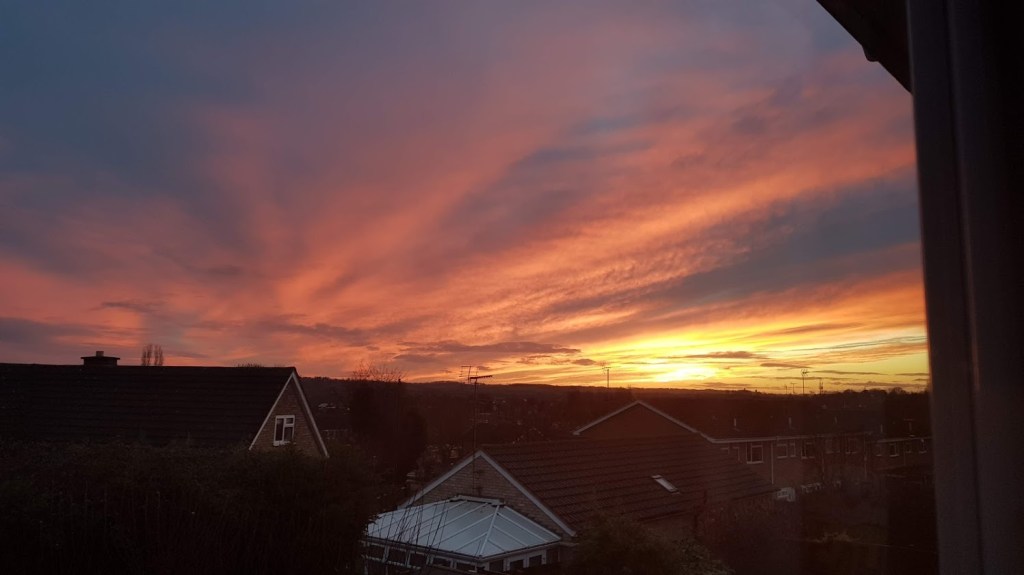
The other day, I was chilling on my computer and my son said, “Mummy, come off that for a minute,” and took my hand. I followed him and he took me to the window and showed me the most beautiful sunset, then he smiled and gave me a kiss. That moment will stick in my memory for a long time, but it’s one I would have missed out on had I stayed glued to my computer.

A sunset outside of one of our windows

It’s not just our relationships with others that are in danger of being extinguished if we don’t take the time to nurture them. We are in danger of losing ourselves. And it can be hard to find again. In fact, it can be so hard to get back, that many people give up and wonder why they’re as unfulfilled or as miserable as they were ten or twenty years prior. 

In trying to impress others or keep up with the constant rush of life, we forget who we are.  We forget our values, what we like, what we dislike, who we love, who we admire, what our dreams are, why we want what or who we do.

We become part of the fast-flowing river, doomed to enter the sea of mediocrity before repeating the same tired old cycle again and again. 

So, instead of worrying that the battery is running out on your phone, worry about your time on Earth running out faster than the sand in an egg timer. Instead of slaving over notifications on your screen, take notice of the real life things right in front of you. Instead of ticking off one task after another, take the time to rediscover yourself and rekindle, build, or make new relationships. 

Make time for today.

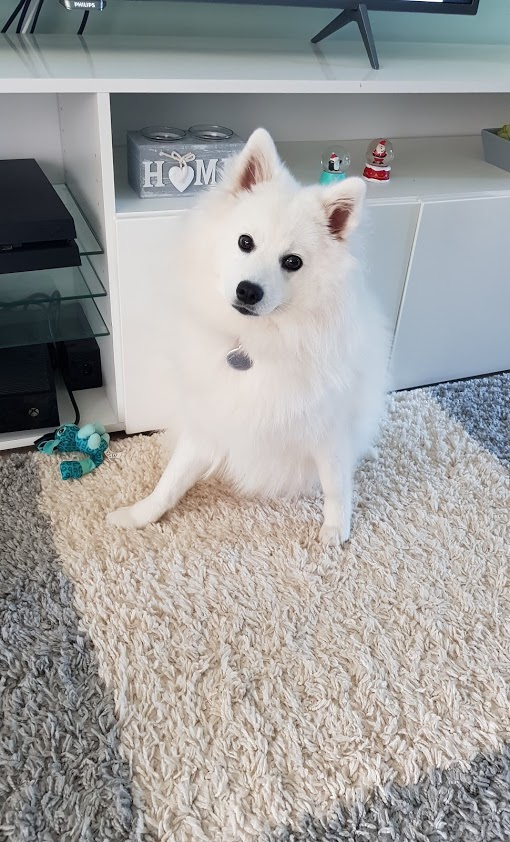
For all you dog lovers out there, here’s a picture of my dog.

Starting from Scratch: How Minimalism Empowers You to Change Your Future and Be True To Yourself

Photo by Tim Foster on Unsplash

One of the greatest things about being a minimalist, is that it forces you to think about the things in your life which are most meaningful to you. That’s no easy feat because at first glance it might seem like everything you own deserves a spot in your heart and your home. 

In the not-so-distant past, I thought the same way. Every keyring, every old party invitation, and every trinket felt significant.

But once I figured out what was causing me to hold on to these relics, I felt lighter than I’d ever felt in my life.  And after moving house a few years later and having to unpack all my stuff from a larger house into a smaller space, I discovered minimalism. 

I thought that I had decluttered all I possibly could, that I had minimised to the max. So imagine my surprise when I was struck with a question which highlighted even more excess in my home. 

My husband and I were sorting out home insurance, but we didn’t want to overpay to cover the cost of our stuff.  We got asked, “If your home and all its possessions got destroyed tomorrow, how much do you think it would cost you to replace?” 

Now, while most people would frantically start estimating the worth of the entirety of their possessions at this point, I altered that question in my mind so it was now asking, ‘If your home and all its possessions got destroyed tomorrow, what would be most important for you to replace?’. Minimalism has trained my mind to ask those questions of myself, but I had only ever asked on a room by room, and drawer by drawer basis.

What would be so important to me that I would have to replace it if it were destroyed? My adult colouring book that I rarely touch? My ornaments which are just there as shelf filler? And if they aren’t that important, should I use up valuable shelf space for these items which I have to clean and worry about being broken? 

If I were to have a fresh start, should I replace every book, every mug, every piece of furniture, every cable, every gift, every utensil?

Photo by Stefan Spassov on Unsplash

Just the other day, a heart with a rhyme on it that was bought for my wedding to remember my nan, went flying to the floor and smashed. I was upset for about ten minutes, then the feeling passed and I realised that it was simply something bought from a store which didn’t represent her, but my feelings about her. And when it broke, my feelings didn’t vanish along with the rubbish bag the heart ended up in.  After all, she resides in my real heart – not some pretty piece of acrylic. 

The item itself was meaningless, but I hadn’t considered that until it smashed. 

Imagining starting from absolute zero is an entirely new and sobering thought process.

It’s an overwhelming question for most, and one which would have shocked and terrified my past self to think about.  When I imagined starting from scratch, I looked around my living room and started noticing things that I wouldn’t waste the time, energy and money replacing. 

Then I noticed the things that were special to me (not including necessities such as our dining table), and they included things like my trusty laptop, and some favourite hardbacks which I regularly revisit. Above all of that was my husband and son. 

When you challenge yourself with the concept of starting from scratch, it’s terrifying, I know. It’s even scarier to consider it as a consequence of some sort of disaster. But it forces us to think about what we really need and what truly makes us happy. That, in turn, makes us think about who we are beneath our stuff.

Photo by Helena Lopes on Unsplash

Are you a party animal like your wardrobe suggests, or more of a Netflix binger? Are you an avid reader like your shelf suggests, or do you find yourself exploring the world instead? Are you really a fitness freak, or someone who classes a trip into town as exercise? 

Once you become clear about who you are and what you stand for, it enables you create space for your true self to shine, and it allows you to easily discern the most important things in your life. This can save you money when it comes to things like choosing house insurance, or when you shop more mindfully. It can even lead to you making big life changes such as career, or relationship. 

Minimalism gave me the space and clarity to think about why I was still in the same job position as ten years ago, despite many opportunities to climb the ladder. I was too comfy, too secure, and too preoccupied with acquiring shinier stuff, instead of listening to what my heart was saying (which was that I’m only fulfilled when I’m writing, growing, helping people with their issues, and inspiring adults to live up to their true potential). 

So, if you could start all over again from now, with nothing but yourself, what would you need? What things would you buy all over again? What would you do with your life? What would you be? Who would you spend your time with?

If you struggle with those kinds of questions, turn them around. What wouldn’t you need? What wouldn’t you buy again? What wouldn’t you do with your life? Who wouldn’t you spend time around?

Feel free to let me know in the comments.


How to Regain Control of Your Wardrobe, Save Our Planet (and look fabulous doing it)

Photo by Sarah Brown on Unsplash

Last weekend, my husband and I went on a major clothes purge. It wasn’t that we hadn’t done so before. We found ourselves revisiting the task after several arguments about me not having washed any of his clothes. The reason? I perceived that he had plenty left because the drawers were always full to bursting with his t-shirts, boxers and socks.

“But I don’t wear any of those!”, he would argue, when I told him he had more than enough.

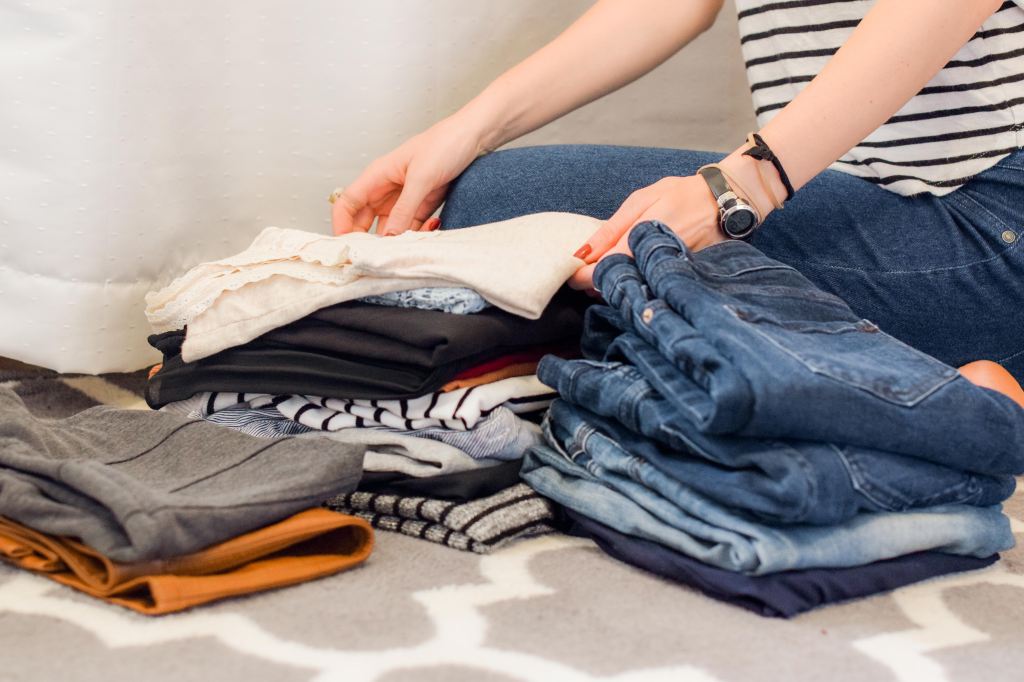
So, after deciding enough was enough, we joined forces and I emptied all the drawers and the wardrobe so it was all laid out on the bed. Seeing the hoard in it’s entirety was even more of an eye-opener than just picking it randomly out of storage.

Even though I mimimised my clothes collection significantly in the past year, I still found myself getting rid of a dress that didn’t feel like me, and a top that I used to wear on drunken nights out (that I have very few of these days). 

The rest was all my husband’s. There were shirts and sweaters he had long since fell out of love with, clothes that he never liked the style of, clothes that were too big or too tight, and those that were seriously worn out. 

In the end it filled three bin bags! One of those bags was destined for the trash, and the rest got put in the donation pile. 

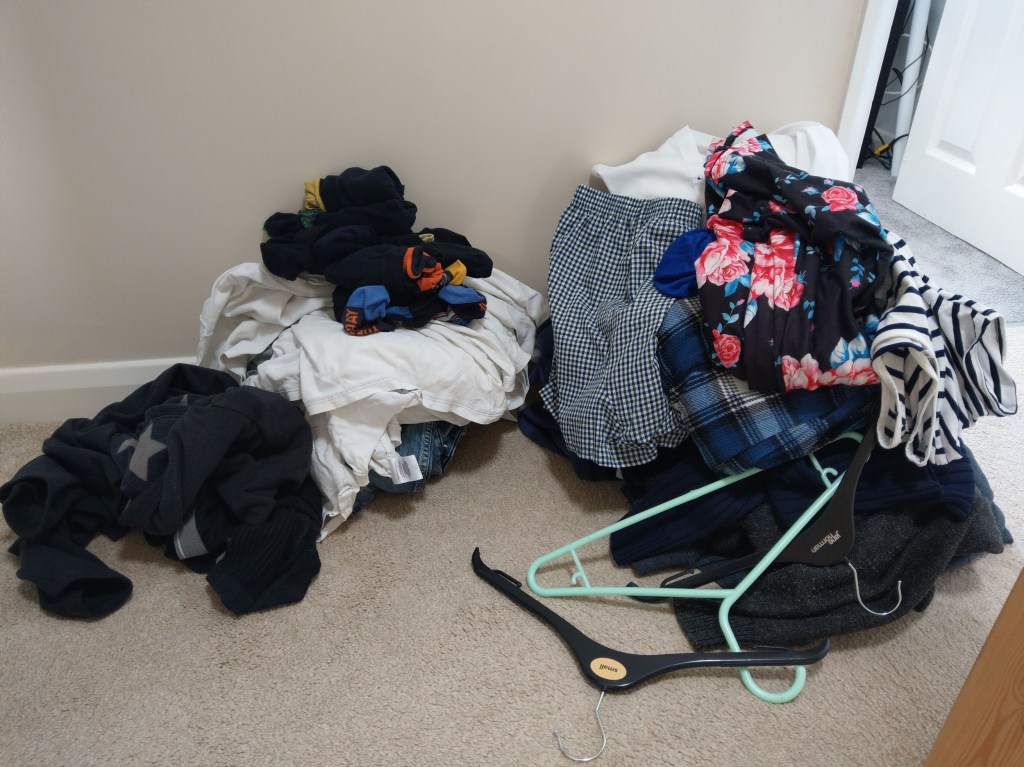
The mass of clothes that piled up in our hallway as we tossed them

You can imagine the difference it made to our storage. 

Clothes in the wardrobe hung freely and were able to breathe again, and the drawers could close without me having to kick them shut or squeeze everything down. And I’ve not been in doubt about when I need to do some washing because everything in our bedroom now only consists of the things we wear often or are fond of. 

Our wardrobe after the session. I wish I had taken a photo of it before it was decluttered.

If you don’t keep a regular check of your wardrobe, it can and will overflow until you find yourself faced with yet another mammoth decluttering session. These sessions take up a huge chunk of time and patience, so it’s always best if you keep on top of it by being mindful of the clothes you purchase, and to immediately donate or trash ones that are worn out or that you fall out of love with. 

That being said, you’re far less likely to fall out of love with your clothes if you don’t fall victim to keeping up with fashion, which changes faster than the seasons themselves. Instead, buy clothes that make you feel fantastic when you wear them, and that resonate with who you are. 

And remember, the person you are now might well be completely different to who you were a year before. 

Buying quality clothes instead of fast, cheap fashion is also guaranteed to last and not lose shape or feel uncomfortable after a few washes. Did you know that an estimated £140 million of clothing goes into landfills every year?

And donating them to charity shops doesn’t necessarily save them from that fate because quite often, charity shops don’t know what to do with your used clothes, or flat-out fail to sell them. 

Buying fast fashion contributes to the issue massively because countless heaps of clothing get worn once, then end up clogging landfill. Not to mention that the people who make them are often severely underpaid and work in dangerous conditions.

If you’re ready to get hardcore with minimising your clothing, you can also try out Project 333 which aims to save you masses of time and space, while still making you look fabulous every day.  Check it out, it’s not half as scary as it sounds!

Decluttering your wardobe will save you precious time and space, and by taking control of your collection, you can also take back control of those stressful mornings.

Photo by Miguel Bruna on Unsplash

Meanwhile, if you’re at a loss with your stuff, and have lost sight of what’s important to you, stay tuned for next week’s post about the importance of stuff.

Breaking Free Of The Smart Trap

When thinking of minimalism, it’s easy to think about everything you own, the things you will keep and space you will create. But there’s something even more suffocating than an excess of physical possessions, which has integrated into every aspect of everyone’s lives: a permanent connection to the online world. 

Social media, in particular, is a major leech on people’s time and energy. 

Photo by Jens Johnsson on Unsplash

I think of social media as being like the world’s biggest mosh pit. Every so often you get hoisted above the crowds and passed along in a viral wave of shares and likes. And when you get dropped, you crave the experience again and again, eager to be seen and heard amidst millions of other voices all vying for validation. 

One day last year, I sat at the window of a city cafe which had a wide view of the shop-lined street. And I was both shocked and saddened to see that there wasn’t a single person outside whose head wasn’t bent over their phone screen. Mothers with pushchairs, businessmen, teenagers, older men and women…

It’s one thing to see someone at a bus stop or in a queue scrolling away, but there’s something profoundly disturbing about seeing an entire street like it.

With a dawning sense of horror, I realised that before entering the cafe, I had been a part of that crowd, so disconnected with the people around me that I may as well have lived on a different planet. 

From that moment on, I decided to apply minimalism not only to my physical life, but my digital one as well.

Photo by Joel Muniz on Unsplash

I had tried many times in the past to regulate my usage of Facebook, including deleting the app from my phone. I thought that if I took extended breaks I could get myself under control. I was wrong. No sooner than I gave it another chance, it ensnared me like a Venus Flytrap, stewing me in likes, love hearts, and bastings of dopamine

But it wasn’t just Facebook I was addicted to. Email notifications and free-to-play games conditioned me to pick up my phone to compulsively tap and scroll my life away. Every time I pulled my phone from my pocket I would check social media, then email, then news, then I’d ask Google some obscure question that popped into my mind.

I vividly remember the time my toddler son was sitting on my lap talking to me, and because he was watching Peppa Pig for the millionth time, I was absorbed in my phone. “Mummy, you’re not listening to me!”, he whined.

I was about to snap back at him, annoyed, but then I saw his eyes swimming and his lips quivering. “What are you doing on your phone, mummy?”,  he asked. To which I had no acceptable answer and replied “Nothing, sweetheart. Mummy should put her phone down. I’m sorry”. 

My son’s voice was being lost amidst an ever-rising crescendo of digital noise. 

In 2018, The Telegraph reported that people are on average online for 24 hours a week, and one in five of all adults spend as much as 40 hours a week on the web.

It doesn’t sound that much to start with, but weeks turn into months which turn into years. Over time, those hours spent tapping, typing and swiping add up to staggering amounts. 

Photo by Kevin Ku on Unsplash

When you consider that so many of us complain of having so little time, imagine what could be achieved if we clawed back the months spent on social media, apps, email, and other attention-sapping services. 

You could write a book, visit a new town or city, see friends and family, discover a new hobby, learn a new skill, learn something about yourself, set your life in a new direction, rekindle a relationship – the possibilities are endless. 

There were a few instances I actually forgot to take my phone out with me, and I can say without a doubt that they were some of the most peaceful, and most productive times.

To my surprise, during those outings, I forgot about my phone. I had no desire to check notifications, know what the news headlines had changed to, or to share what I was seeing with digital strangers.

When I first took a hiatus from social media, I went one step futher and downgraded to a dumb phone for a few months. Like is the case with many addictions, I couldn’t trust myself to not fall back into the clutches of digital dependency. 

The people close to me were shocked and clearly uncomfortable. I got asked “How will I send you photos when I need to?”, “How will we keep in contact as much now that you don’t use Whatsapp?”, “How will I know what you’re up to?”. The funniest thing I got asked was “How will you know where you’re going without GPS?”. Yet I don’t even drive.  

I even got told that I was being ‘unminimalistic’ by having to use a separate camera instead of my phone, missing the point that minimalism isn’t about who owns the least, but is about reclaiming your time and what brings value to your life.

I documented my whole experience of going dumb (which I will share with you some other time), but I can tell you right now that my relationships improved, my stress levels dropped, and my writing sky-rocketed.

There was more to talk about with my friends because I hadn’t already shared everything. And I started to notice what was right in front of me. Not just people, but natural beauty and interesting occurrences.

I discovered a version of myself I hadn’t realised was possible until I looked up from my screen. 

Photo by Karl Fredrickson on Unsplash

Once you leave the cultural norm, people will be shuffle their feet and often try to justify their own habits, or try to tempt you back. A few people told me that although they wanted to, they couldn’t leave social media due to having family many miles away. Yet most of the time, there’s nothing to stop people from writing letters, sending emails, or, even better, making a phone call.  

An over-reliance on social media is rewiring us to fear the intimacy of live, face-to-face conversations, as well as setting us up for a life of comparing ourselves to others, and missing huge chunks of our lives.

I mean, think about it: we’ve been walking the Earth for thousands of years, communicating with each other via grunts and cave drawings, then by spoken language, and later, via books and TV. But all of a sudden, we don’t have to talk face-to face anymore. An app can do that for us. 

We don’t have to be vulnerable in front of others, or share our true feelings, or even our real appearance. Instead, we craft masks online and forget who we really are.

And like any skill that goes unused for long enough, social skills start to fossilise. Then anxiety sets in. But we are still social creatures, so we desperately try to keep the illusion of connection going, all the while getting lonelier and lonelier.

Of course, social media isn’t all bad. 

It can be great for meeting new people, and communicating with people on the other side of the world. It can be invaluable for disabled people who might find it more difficult to meet up with people, and it’s perfect for finding others who share your interests. It can also be a great business platform.


Photo by Blake Barlow on Unsplash

The problems arise when being used as a main source of contact. It’s extremely poor at forming truly deep and satisfying bonds with people. 

Trying to plug social voids with excessive social media usage is like trying to fill a sieve with sand. The sense of connection and satisfaction quickly drains away, so you check and click like again and again and again. 

Services such as Facebook and Instagram, and any other time-wasting app you can think of have been designed to be as addictive as slot machines.  Companies are profiting from our attention, our memories, and the loss of our souls to our screens. 

Currently, I’m back on social media, and back to using a smart device, but with a reversed relationship. I’m the master of my device and the services I use, not the other way around. 

To stay in control, I began by minimising the apps on my phone. 

I deleted everything I rarely used, started to embrace digital minimalism, and cleared everything off my screen that would serve as a temptation to open. I unsubscribed from news apps, turned off all notifications except for texts and phone calls, and started leaving my phone out of my bedroom at night. 

I also started to leave my phone in my bag when talking to people,  instead of in easy reach where it could dampen my conversations and remind them to reach for theirs. 

Photo by Joshua Ness on Unsplash

You don’t have to go as extreme as I did and downgrade to a dumb phone, nor do you have to delete your social media accounts. All you have to do is become more mindful of the time you spend on your phone, or on other devices and services. 

There has been an explosion in apps dedicated to helping you keep track of the time you spend on certain device activities, or to aid you in blocking yourself from distractions. 

Freedom is a popular choice by many, but there are others to choose from.

As you can see, minimalism is no longer just applies to our physical lives, and by integrating it into our digital lives, we can find peace and deep connections in a rushed and distracted world.

Photo by Amy Treasure on Unsplash

How To Simplify And Boost Your Day Before 6AM

Brace yourself for this post because I am about to talk about something which sounds scary, but which could dramatically improve and simplify your life.

Waking up at 5AM (or earlier depending on your job/career status).

If you’re anything like me, and just the thought of removing your blankets makes you want to run a mile, I implore you to stay with me here, because what I’m about to tell you could further enhance your minimalist lifestyle and transform your mindset.

This time last year, I started waking up at 5AM after reading Hal Elrod’s book, The Miracle Morning.  

I was fascinated, although slightly sceptical of what waking up at 5AM could possibly do for someone with chronic illness, but I gave it a go. The trouble was, despite the massive improvements to my life, I only managed to keep it up for a couple of months before the winter months dampened my resolve. 

But the benefits of rising with the sun were so great, that I’m going to reintroduce 5AM back into my life. And I’m going to share with you, exactly why early mornings can be your greatest ally to a better you. 

The reason I tried it in the first place was because I was fed up with the stress of rushing around in the mornings trying to get myself ready for work and my son ready for school.

I loved to write but by the time the evening rolled around, I was too burnt out to hammer a single sentence out on the keyboard and would inevitably get drawn into mindless activities instead. 

Perhaps you can relate?

Things like scrolling down my Facebook newsfeed (which you know turns into an endless time sap), playing videogames, or watching Youtube took over my free time in the evenings. Anything but doing what I really wanted to be doing. 

I’d feel guilty, then the cycle repeated itself. And after rolling out of bed on the weekends, I would go on entertainment binges which was detrimental to my productivity as a writer. 

It was time to make a change.

Photo by Ian Stauffer on Unsplash

Now, waking up at 5AM, (or earlier) isn’t easy if you’re used to hibernating, and you’ll probably have to ease yourself into it by gradually reducing the time you spend in bed. 

I was mad enough to roll out of bed the instant my alarm went off so that I didn’t have time to register how bleary-eyed and zombified I was. I even did what Hal suggested in The Miracle Morning, and found myself an accountability partner. 

As soon as I woke up, I would message my accountability partner, and sometimes she would message back with a picture of a beautiful sunrise from her abode. Living in the UK, I saw more overcast skies than pastel sunrises, but just the feeling of that part of the morning being mine for the taking was enough to motivate me. 

Here’s the benefits I experienced from becoming an early riser:

  • My mornings were quiet and peaceful. I found that I was able to think calmly, and had a burst of ideas for my writing.
  • I could do what I wanted; read a book, write, meditate, or a combination of all. The extra time was all mine. 
  • Because my mind was starting off uncluttered and without the noise of a busy work day, I had far more ideas for my writing than in the evening. This meant I got far more writing done. In fact, I churned out most of the first draft for the book I’m working on.
  • I had the time to journal or write a stream of conscious(getting all of my thoughts down on paper) which made me understand myself on a much deeper level. It also ensured I was starting the day with a positive mindset. 
  • Before it was fully winter, I got to see a couple of glorious sunrises (as many as I was going to see living in the UK).
  • It changed my mindset on what was possible because I achieved so much while everyone else was still in dreamland.
  • I was more organised because I had so much more time on my hands.
  • By the time my husband went to work and took my son with him to school, I was often already dressed, so I formed a new habit of leaving home early and going to my local cafe to write once a week. Not only did that cement a writing habit, but I got to see my town in a tranquil state of awakening, which was surreal. 
  • I was happier throughout the day knowing that I had already got my most important things done.  Therefore, my days ran smoother and were much simpler. 
Photo by J. Kelly Brito on Unsplash

By this point, you’re probably thinking ‘but what about the downsides?’  And I’m not going to lie to you, here. There were downsides to rising so early.

I couldn’t stay up as late which meant that when my toddler son was in bed, I had little downtime before I felt ready to crawl into bed myself. You can’t be a morning person on too little sleep; at least not without risking physical and mental health

That’s it. That was the only downside I discovered.

Admittedly, living in the UK makes 5AM wake-ups much more challenging in the winter months because mornings are cold and dark, the days are short and the days are often overcast. 

That’s enough to make anyone want to hibernate in the beckoning warmth and comfort of bed, and unsurprisingly, people’s vitamin D levels drop to an all time low. 

But as soon as I let the winter beat me and stopped doing the Miracle Mornings,  I noticed that I was back to old habits of procrastination, achieved far less (my book is still in first draft) and am less fulfilled. 

To give you the best chance of success at becoming an early riser, here are a few tips:

Get plenty of sleep. At least 8 hours. It’s more important than you think.

Use a clock which has a gradually increasing light

Use an app like Alarmy which doesn’t let you turn off the alarm until you solve a problem

Have a shower

Have a soothing ritual you look forward to. Mine was a hot cup of tea and free writing.

Life’s too short to be unfulfilled and stressed. 5AM rises will make you feel like you have far more hours in your day, either to de-stress or to start working towards the life you envision. 

Photo by Jared Rice on Unsplash

Why not give your days a boost and start tomorrow? Let me know how it goes in the comments, and watch out for next week’s post on detoxing from social media.