The Helping Hand of Failure – Why I Recover Faster

Photo by Vicky Sim on Unsplash

I’m not perfect. 

Nobody’s perfect. 

Yet there’s this expectation in society that if you don’t have a high-profile job and don’t own the latest and greatest stuff, you’re no good. 

Marketers constantly try to convince you you’re lacking in life if you don’t own the latest phone, celebrity endorsed cologne, or the sexiest sofa.

You’re not a good parent

You’re not a good runner

You’re not beautiful enough

Not smart enough

Not cool enough

Not happy with your life

But that’s OK because if you buy today, you can rest assured that you’ll be the envy of your friends, and you’ll be so much more interesting. 

We rarely realise it, but after a while, those messages add up into an essay about how much we lack,  and life starts to feel intensely unsatisfying. Depressing, even. 

While embracing minimalism definitely made me see that happiness doesn’t come from a delivery van, it certainly hasn’t made me immune to slipping up and making bad decisions. 

On this blog, I talk about achieving goals a lot and simplifying your life so that you can discover what’s really important to you. I even share my successes so that you can hopefully start to realise the potential in you. 

But what I don’t talk about often enough are my failures along the way. The times where I take five steps up the ladder but fall down ten. 

Let’s face it, even though we need failure to grow,  it’s embarrassing to talk about and even scarier to experience. 

First off, here’s a little bit about me so that you get a little bit of context: I’m generally happy and cheerful (sometimes to an annoying degree according to my husband), I have several obsessions including writing, reading, gaming, minimalism, and self-growth.

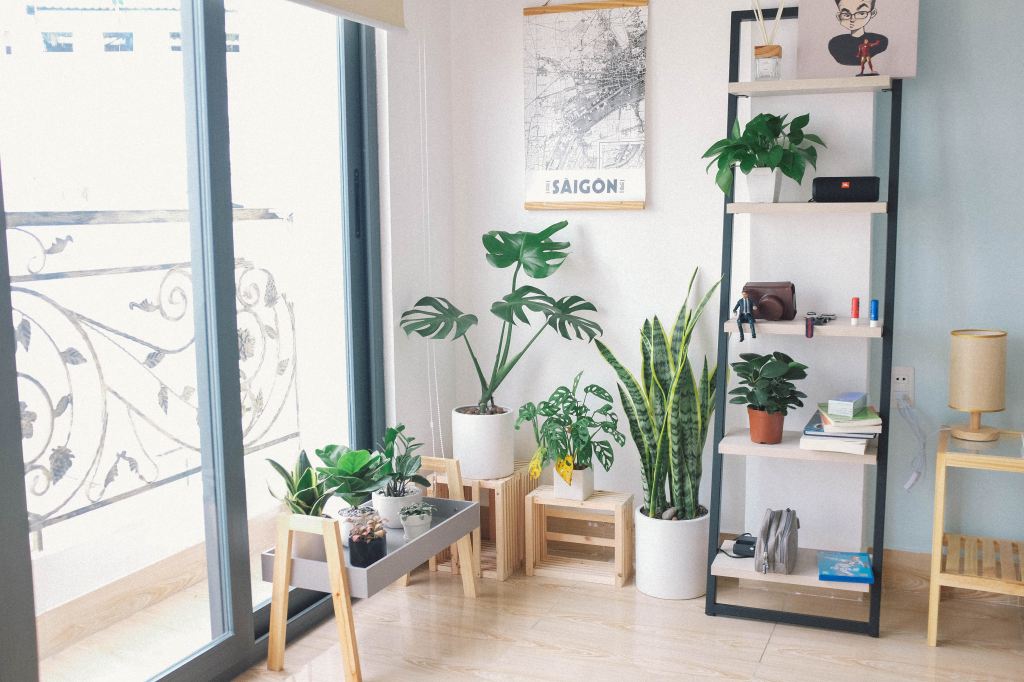
Come into my living room, and you will see that everything is a calming white and pastel green with loads of empty space. I’ve got my future planned out, an incredible family, and quality friends. 

But it wasn’t always like that, and sometimes I fall into the same quicksand I had escaped before, slowly sinking back into old habits and ways of thinking. 

I used to be a hoarder. Not the kind of hoarder you see on those TV shows, but an organised hoarder. I was in serious denial about how much I owned. It caused arguments with my fiance, and allowed me to carry on hiding behind my stuff. 

You can read the story here, but basically, I was keeping it all because I was deeply unhappy, didn’t believe in myself, and identified strongly with my past. 

It took my mum bringing it all down to my house and my husband threatening to bin the lot, for me to finally confront the lonely memories and dusty old beliefs that kept me clinging on. 

Photo by Alex Blăjan on Unsplash

Now, I am living and loving a minimalist lifestyle but although I’m reaping all the benefits, I’m not totally free of my old coping mechanisms. 

You see, minimalism will make your life a hell of a lot calmer and easier, and it will help you to discover yourself, but it won’t solve every problem for you. Especially those that are nestled deep inside. 

It also won’t cure bad habits because they won’t go straight in the trash with your physical clutter. Rather, they get recycled into new, useful habits. 

Sometimes, when things get me down like an argument, symptoms of chronic illness, or even writer’s block, I will find myself clicking over to Amazon and Ebay. Other times, I just feel stale in myself, like a mouldy piece of bread. 

Suddenly, the bag I bought just months before has a fault and I need a new one. I need a new game despite having a mile long list of unplayed titles. I could really do with that lovely looking lunch box as it will ensure my food doesn’t leak in my backpack (despite never having that issue).

Of course, those are all elaborate stories I weave in my mind which will lead to me buying the product of interest. 

As I click ‘buy’ I feel the anticipation of the item’s arrival and start getting rid of things that are relatively new. The dopamine rushes through me, even though I know deep down that two clicks and a parcel won’t bring me satisfaction. 

But my brain doesn’t care about that fact because of the temporary feelings of elation.

Days later, the package comes, and as the packaging goes in the bin, so does my excitement. I realise I didn’t really need it, that I could have saved the money, invested in more skills, or gone on a day trip.

‘Call yourself a minimalist? Ha! You’re a phoney, you’re weak’, my brain chatters. 

Just to be clear, I don’t have a shopping addiction, because these slips ups don’t happen very often. But the shame is no less intense, and the bad decisions can lead to me making other bad choices such as eating a luxurious helping of Nutella on toast when I know I’m gluten intolerant, or having a second glass of wine even though I know I’ve had enough. 

However, unlike in the past, I find that I can get back up from the fall much faster than before. The injury doesn’t go as deep. 

I know that I’m not a phony because I strongly believe in what I practise and what I say. As sickening as it sometimes feels, I acknowledge my mistakes, and that makes me self-aware. 

Experiencing failure makes you feel like masking the feelings that come with it, and all the mean things the gremlin in your brain might be hissing at you. 

But here’s the thing: the more failures you have, the more wise and resilient you become. You grow. You learn. You start to become aware of why you made those bad choices. 

I’ve discovered that, generally, when I’m craving something new and making up stories of validation, it’s not the stuff I’m craving but experiences. 

It’s not a new outfit I’m after, but love and acceptance. 

I don’t want to own new stuff, I want to see new places, learn new skills, walk a new path, blossom into who I know I can be. 

However, even though I’ve taken action and forged a new path for myself, the path is long, sometimes a forest gets in the way, and you know how excruciating it can be when what you want is just a little bit further, and a little bit further. 

But what we often forget is to enjoy that journey. We can get so focused on hacking through that forest that we don’t see the beauty, or notice the undergrowth teeming with life.  

The trick is, to not lurk in that beautiful forest for too long, and if you fall, get right back up. 

Remember who you are and what you stand for, and walk hand-in-hand with failure no matter how scary, because it is your best teacher, and your greatest friend. 
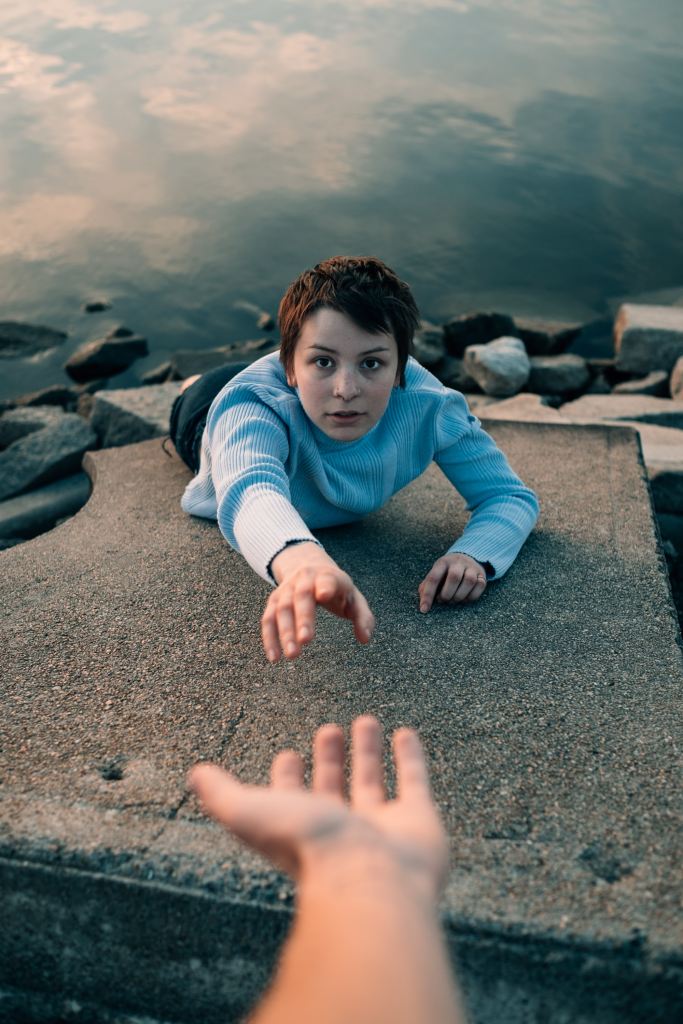
Photo by Noah Buscher on Unsplash

8 Tips to Beat the Post-Christmas Blues and Feel Better Than Ever Before

Photo by Andre Hunter on Unsplash

Post-Christmas Blues; usually characterised by feelings of emptiness, sadness and loneliness, typically sets in days after the festive celebrations have died down. 

The run up to the big day is full of excitement, anticipation and time spent with family. For others, it is a big build up of anxiety. 

Before you can blink, the presents have been unwrapped, the food is almost gone, and so have the excess of visitors. Your wallet is empty, everything is quiet and you’re exhausted and left with your own thoughts and feelings. 

Exactly what shade of blue you feel will depend on if you’ve had a chaotic few days of family bust-ups, spent it alone, are financially broke, or overdid it on the food and wine.

Either way, there are ways you can get back to feeling yourself, perhaps even better than before, with these 8 simple yet effective tips.

1. Gratitude

As humans we are programmed to see the negative much more prominently than the positive. Seeing the negatives is an ingrained survival response so that we don’t repeat situations that might endanger us. As a result, all the good things that happened get buried under a quagmire of sickly emotions and thoughts about things that have happened. 

Write down all the things you are grateful for over the year. They don’t have to be big things, and if you feel that your year has been a total bust, or you suffer from depression, they can be as simple as ‘I am grateful that I had a tasty hot dinner today’,I am grateful for my two best friends’ or whatever it is that suits you. 

Sometimes, when I struggle to think about what’s been good in a day I am grateful for the simple things such as being able to express myself through writing, and having great friends.

You can also write down small good things that have happened even if it was something as small as “I managed to have a shower and get dressed”, or “I managed to go into town”.

Your wins can depend largely on your mental and physical health, so don’t dismiss something just because others might perceive it as insignificant.

2. Positive Connections

Spending time with someone positive who makes you feel good can make a world of difference and change your outlook for the rest of the day or week. If that isn’t possible then a phone call should suffice.

If you often find yourself in contact with ‘toxic people’, limit your time with them if possible, or read how to handle such people and situations in this post.

Don’t just rely on social media, which is a quick fix at best and has you relying on the ‘likes’ and instant responses to feel good.

3. Balance your time spent on social media

Ask anybody what they would do if they had a whole day to do whatever they wanted, and I guarantee you that ‘scrolling through social media feeds’, and clicking ‘like’ won’t even get a mention. 

Further elaborating on the point I made above, social media is a double-edged sword. On one hand it can make you feel temporarily connected with others, but on the other it can make you focus on the lives of other people and on the likes you get on your posts, which will ultimately make you feel much worse. 

Remember, what you see of people online is a mere snapshot, and some of it may be a carefully curated mask that people like to show online, but in no way represents their true life. 

Limit the time you spend online and do something else that makes you glow inside. As if by magic, you will find you have much more time to do such things.

Photo by Timi David on Unsplash

4. Healthy Eating

It goes without saying, but over the festive season, it is astounding just how much food you end up consuming in one day: leftover turkey sandwiches, boxes of sweets, chocolate and biscuits, mounds of cheese on crackers, mince pies, fruit cake and alcohol – and all of it after a big hearty dinner. 

Not only can it leave you feeling lethargic and bloated, it can make you feel guilty. If that’s the case, try swapping the sweet treats for some refreshing fruit instead, and limit the amount of carbs (found in bread, pastry and pasta) which will make you feel tired and sluggish.

 Finally, if you’re known to enjoy a good few drinks as soon as the holidays start, cut it out until at least New Years Eve. This doesn’t mean you can’t enjoy a nice festive drink; have the occasional hot chocolate or steaming cup of herbal tea – whatever takes your fancy.

5. Minimise/declutter your environment

Your environment has a massive impact on how you feel, but it’s one of those hidden things which so many of us don’t consider.

We tend to think about people and situations rather than our stuff, yet your physical surroundings can make you stressed without you even realising it – too much stuff, things that are broken, things that have bad memories attached, gifts and heirlooms with an aura of guilt surrounding them, dust bunnies hiding behind the sofa. 

Try having a deep-clean of the rooms you use the most and getting rid of anything that you don’t use or doesn’t bring you any happiness.

Among all the mounds of novelty Christmas gifts, or knick-knacks bought in winter sales, it can be hard to see the things which you truly love; the things which scream “This is what I enjoy and this is what’s important to me”. 

A clean environment feels fresh, and regained space allows for a calmer mind and new possibilities to take on the things you enjoy instead of spending time thinking about and cleaning around your stuff. 

6. Write some goals for 2019

Everyone seems to be making goals for the New Year: to lose weight, to quit smoking, to go to the gym regularly, to spend more time with family, to get a more fulfilling job.

Your resolutions will be unique to you, but it can feel fruitless if you compare yourself to others or believe that you can’t.

But before you say ‘What’s the point? I can never keep my resolutions’, break your goals down into chunks and start believing that you can. And truly believe it. 

Above all, be specific. Don’t just say “I want to lose weight”, say “I will lose 5lb in X number of weeks by X date”. Don’t just say “I want to spend more time with my family”, say “I will go with my significant other to the seaside this summer, go to the cinema with them next month, and only check my phone after dinner”. 

It’s critically important that you change ‘I want’ to ‘I will’, because ‘I want’ is nothing but dreaming about change whereas, ‘I will’ puts you in the mindset that action must and will be taken. 

And if you stumble along the way, don’t treat it as a failure. Don’t say “I failed to stop smoking today because I snuck one in – I may as well give up”, say “I smoked less than yesterday and will try again tomorrow”. See failures for what they truly are – stepping stones to success. 

Whenever you see a successful person, I guarantee you that they will have failed dozens or hundreds of times before they got where they are now. So see failure as your greatest ally, not something to fear. 

If you happen to believe in the Law of Attraction, you can also think and act as if you’ve already achieved what you want, which will attract success your way. To use this method, your thoughts must be in perfect, positive alignment with what you’re seeking, and you must never back down. 

Keep it manageable, keep it achievable, keep the momentum.  Just don’t underestimate what you’re capable of. 

But why wait until the final bongs of the year? Make a start now and start carving the path to a new, happier you.

Photo by Dale de Vera on Unsplash

7. Greenery

Once you’ve taken the tree, the lights and the other festive decor down, your room can feel incredibly barren. But it doesn’t have to feel that way. You can choose to appreciate the exposed space and bask in serenity, or you can replace the tree with a lovely house plant instead. 

Why not bring some of the benefits of the outdoors, indoors? You’ll be amazed at what some fresh greenery here and there can do to lift your spirits, as well as help purify the air you are breathing.

8. Be kind to yourself

Possibly the most important thing on this list, being kind to yourself is easier said than done. We are our own worst critics. But with daily practice and some self-awareness, you can tame your inner voice to speak to you with respect and positivity. 

Instead of saying “I was useless with my friends today, I didn’t have much to say and I looked a mess”, say “I have good friends who wouldn’t hang out with me if they didn’t enjoy being around me.” 

Start to recognise how amazing you are as an individual and tell yourself on a daily basis over and over until you’re sick of it.  Write it out every day if you have to, stick it on your bedroom ceiling – whatever it is that will remind you of how amazing you truly are.

The Lies You Must See Through to Reach True Happiness

Photo by Rhett Wesley on Unsplash

I used to think I wanted to be rich.

I pictured myself winning the lottery and living in a huge house, hanging out and partying with friends and family. 

There would be so much space that people would be conversing in every room, and there would be so much to do. Video games, sports, a massive selection of alcohol.

I imagined all the stuff I would have in my home: an arcade, a library, a bar, a cinema, a massive kitchen complete with a family chef. 

I’d finally have enough room for all the stuff I wanted and never have storage problems again. 

Nobody would be bored or want for anything, especially not me. And best of all,  I’d be able to enjoy it because I’d never have to work another day in my life. I’d be happy! 

Then I discovered minimalism. 

And I slowly came to realise that what I thought I wanted was a big fat lie. 

Lies that had been sold to me through the media and through every dopamine rush I experienced whenever I acquired something new. 

Despite having so many luxuries and so much stuff, I wasn’t happy.  

Back when I was a child I was spoiled. On Christmas and birthdays, presents would be piled to the rafters, and my parents bought me whatever I desired throughout the rest of the year. 

Photo by Andrew Neel on Unsplash

The trouble was, I always wanted more, and that pattern continued into my adult life. I also had a real problem with letting go of things from my past. 

When I started minimising, I felt an amazing sense of freedom, but something else started to happen as well – I no longer desired the latest smartphone, or a hundred books, or a game room filled to the brim like the collectors I admired on Youtube. 

It’s also become virtually impossible to tell family and friends what I want for Christmas or my birthday because, truthfully, there’s very little I desire.

If you’d asked me that question two years before, I wanted so much that it was hard for me to choose what to ask for. The things I didn’t get, I could find in the January sales. 

But now I realise that I never needed a bigger house, or any of the other luxuries I craved. 

The more I’ve downsized my collections, the more I’ve realised I didn’t need a bigger house or more storage. A bigger house would just mean more maintenance and time wasted. And I’ve never been a party animal.

The reason I was so unhappy was because I wasn’t challenging myself. 

I was living in mediocrity, staying at the same level I always had, doing the same job I’d always done, and was content letting my husband take care of the important stuff. After all, I was looked after and fine, so why change anything?

I soon learned just how dangerous that mindset was. 

One day, he was driving us to work as usual, and we had a near miss with another car who pulled out on us from the left. As he swerved to avoid it, another car was coming at full speed from up ahead. I started screaming and my life flashed through my brain at a thousand miles an hour. 

Mainly all the stuff I hadn’t done. 

If my husband hadn’t had super-sonic reflexes that morning, we wouldn’t be here today and this blog never would’ve started. 

For the rest of the day, I felt shaky and couldn’t stop thinking about what would happen if I died without accomplishing what I wanted in life. I also came to the sickening conclusion that I’ve always been looked after, and if anything happened to him, I would be as helpless as a child. 

Life can be taken away in an instant. Dreams extinguished along with it. 

Minimalism has revealed that I don’t need stuff to make me happy. I need to be able to stand on my own two feet. 

I need to be fulfilled. I need to help others. I need to become a full-fledged author and a successful counsellor.  I need to make an impression on the world – not my stuff.

That’s why when my husband asked what I wanted for Christmas this year, I was delighted when he suggested that he pay some money towards my training rather than something else that will end up forgotten on a shelf.

I was also more than happy when, for my birthday, my mother paid for my hair to be done. She said she would rather get me something useful than something I would shove in a drawer. 

Photo by Kyle Gregory Devaras on Unsplash

After a year of feeling misunderstood as a minimalist, I can’t even begin to express how much that meant to me.

Now, I also want to say that it’s totally OK to enjoy giving gifts at Christmas, or to ask for a physical possession, as long as it’s something that’s well thought out, and will be loved for a long time, rather than something that will give a quick dopamine hit and end up in a charity shop by summer. 

What I want is to invest in my future so that I can be fulfilled and support myself and my family. I want to be of value to others and to enjoy myself in the process. 

Does that mean giving up every physical thing I enjoy? No. Of course not. And I’m not ungrateful when people do buy me things because that would make me into an asshat. Being ungrateful for how others choose to show their love is also a surefire way to end up miserable and frustrated.

What it does mean is being grateful for what I do have, and understanding that what I need for true happiness has always been right in front of me. It’s always been waiting for me to wake up and take action to get it. 

A torrent of constant advertising, comparing myself to others, and wanting what I saw on Youtube was blinding me to that truth.

With that in mind, I ask, are you living a life of blind consumerism? Are you surrounding yourself with stuff, thinking you’ll finally be happy if you unwrap that one thing you always wanted?

What’s your true happiness?

Photo by Edu Lauton on Unsplash


How Rampant Consumerism is Destroying Us

Photo by Marcin Kempa on Unsplash

I’ve been watching a riveting anime called Dr Stone. In it, a mysterious wave of light suddenly washes over Earth and turns everybody into stone. 3,700 years later, the world has reverted back to how it was before humans became advanced, and the humans that break out have to survive and rebuild civilisation. 

So many things in this anime have stood out to me, but one which has stuck in my mind is how quickly everything can be taken away in a flash, whether that’s by natural disaster, or from unfortunate circumstances. 

The humans who found themselves 3,700 years in the future had to start from scratch; foraging for food, hunting, building basic shelter, surviving wild animal attacks, and encountering other humans who’d made their own rules. 

There were no smartphones, no TV, no convenience shopping, no electricity, no doctors, and no medicine. 

Dr Stone shows just how much we take for granted in today’s modern world. 

All humans want happiness, and too often we try to achieve that by buying the things which we believe will make us happy and which marketers have convinced us we need: a new phone, the latest fashions, the latest car, the best smelling cologne, the shiniest, most expensive jewellery, the latest tablet/laptop, the biggest TV, I could go on forever here. 

Another thing which struck me in Dr Stone, was how much vegetation had taken over where entire towns and cities once stood. It made me think about how much damage us humans have actually done to our planet. 

Photo by Nate Johnston on Unsplash

How many trees get chopped down to make new products – many of which we don’t actually need but believe will make us happy? 

How much oil gets consumed just to make the fast fashion that so many of us end up binning?

What really makes humans happy is a sense of community and belonging. Of having some place and meaning in the world. 

In his book’ The Compassionate Mind’, Paul Gilbert talks about how by 2020, depression will be the second most prevalent malady for humans. And guess what? Depression and anxiety has, indeed, skyrocketed.

Gilbert goes on to say that back in the 60’s people had a sense of community, helped each other out, and believed that technology would give us more time to be with the people we love, and to take care of ourselves. 

Instead, technology has been used to increase productivity and place huge demands on people, more so than ever before. We now live in a society where everyone is rushed off their feet and busyness is looked upon more admirably than producing quality or meaningful work. 

We live in a hive rather than a community. Tick boxes in place of what’s really important. Productivity in place of quality. As busyness has become a hidden expectation, it’s become the norm, and so has stress and mental health disorders. 

Photo by Anna Dziubinska on Unsplash

Rush, rush, rush. Tick, tick, tick. Click, click, click. And what for? To make more money to own a bigger house, to afford everything influencers and the media tells us we need, and to fund the vices that helps us to cope in the resulting frantic, consumerist world.

Now, I’m not saying that buying things you need or will actually bring you joy is bad. Of course it isn’t. I’m talking about mindless, frantic consumerism here.  Zombie-like consumption and trying to keep up with the joneses is no good for people, or the planet. 

At the end of the day, everything is just stuff. Some of it makes our lives more convenient, some of it brings us joy, some of it is just there to make us look or feel good in front of others, and some of it we don’t even realise we have. 

That being said, if you’re a fan of anime, go watch Dr Stone – it’s amazing!

How To Minimise the Past And Maximise the Future

Photo by Brian Erickson on Unsplash

If I told you minimalism and self-growth is straight-forward and easy, I would be lying. 

Minimalism requires lots of hard decision-making, consistency, and dealing with memories both good and bad. 

Self-growth requires confronting and accepting hard truths about ourselves and our situations and learning to move forwards while becoming better people in the process. 

Because that’s what it all is. A process. A journey. And a bumpy one at that with twists, turns and long stretches of smoothness.  

I used to be what I call a tidy hoarder (although I didn’t realise I was a hoarder at the time). Candles, mugs, trinkets and figurines lined shelves and window sills while cupboards and drawers were bursting at the seams and collapsing under the weight. Boxes hid under my bed collecting dust and the top of my wardrobe towered with boxes, storage containers, and soft toys. 

My hoarding habits were a source of frequent arguments and discussions about my ‘trash’ in the home.

I kept all sorts. Masses of keyrings collected over the years, old party invitations, old school work, old defunct cables, those little badges you can get with rebellious statements on, old jewellery, old stationary, little notebooks and relics I’d got from cereal boxes as a kid (including a Rugrats flip book). 

I’d even kept a ring from when I was seven years old, simply because I’d worn it at primary school.

As a person I was angry, unfulfilled, lost, and confused, with severe identity issues which caused massive problems in my relationships. Until I discovered minimalism, I didn’t realise that the state of my stuff reflected the state of my mind, and my past. 

Just like with my drawers and cupboards, I kept parts of myself hidden away in dark dusty corners of my psyche, and every so often, bits would burst out and everyone around me would be left picking up the mess, only for it to end up back in the box it all burst from. 

I’d grown up with such a turbulent school life among other things, that by the time I got to college and made the life-long friends I have now, I’d become a master of wearing a mask of silliness and extreme cheer. I was so skilled at this it became a genuine part of who I am today. 

The first time I got confronted with my hoard was a wakeup call for me. I was renting a house with the man who is now my husband, when mum brought over all my old stuff from their attic. Bags and bags of stuff. Bin liners stretching with the weight of the memories inside them I’d carelessly stowed away. 

Photo by Onur Bahçıvancılar on Unsplash

At first, I just saw it as a monumental physical task I needed to work through. I couldn’t escape it because there was nowhere else for it to go. The attic was already rammed with game consoles, Christmas decorations, old memories, and other paraphernalia I’d just shoved up there when we moved in. 

But as I emptied the bags and started to work my way through them, I felt all kinds of emotions, even over innocent things like soft toys.

Sadness, grief, nostalgia, warmth… such a mixed bag of feelings all attached to these objects, many of which I’d owned since I was a child. There were several piles of old school work, even my old school planner, complete with sad, angry scribbles. 

To the people around me, that was all junk. Why hadn’t I put it in the bin ages ago? Why was I storing all that garbage? But to me, they were feelings and parts of me.

That school planner represented the part of me that expressed my feelings when nobody else would listen; proof that I experienced those feelings.

My school work was a trove of teacher praise, writing, and essays which I’d poured my soul into. I’d even kept hilarious pieces where it was clear I hadn’t understood the task or concept. 

I found gifts from people who’d long since left my life, and a tower of children’s books I used to treasure.

By the end of the day, I charity-shopped about 90% of the bag’s contents, and I felt so light that I could have floated a metre above the ground. It was as if those bags had never been stowed in the attic but been tied to me the whole time. 

I also felt emotionally drained. 

That was my first step into self-growth and into what would later reveal itself to be the path to minimalism, but it took a long time for the universe to make me and the concept cross paths. 

Photo by Toa Heftiba on Unsplash

Since discovering minimalism, I’ve not only unearthed many parts of myself that I didn’t realise existed, I’ve discovered and reignited my dreams, and have worked persistently to accept the past and make way for who I’m becoming.

Clearing the clutter in my life was the same as clearing out the drawers of my heart and the closets of my mind. It took a lot of soul searching, confronting parts of myself and re-discovering where I wanted to go.

I had spent a lifetime living in the past, believing that I was worthless, and that the feelings I had were nothing but a lie if I got rid of the stuff I associated with them.

Without going into too much detail, this is because I grew up unable to express my feelings. It was taboo. It was wrong. It was weird. So I ended up attaching them to tangible objects. 

When my heart got too heavy and full, it got emptied into cupboards and boxes, instead. 

Of course, minimalism isn’t a cure-all and I’ve had to do a great deal of self-growth. Self-growth is something which never stops and should never plateau because people are forever experiencing life and taking on new beliefs and values. 

For me, minimalism is the foundation to grow a new successful self. One not weighed down by stuff, the past, and outdated subconscious beliefs. 

It’s my hope to help you on your journey, too, whatever your values or your past may be. It’s deep, hard work, but you can get there.  

Remember, just as you don’t grow from toddler to adult in a day, you won’t change and grow your core values and beliefs overnight, either. 

Since we’re entering the festive season, let’s consider Scrooge from ‘A Christmas Carol’. He changes from a lifetime of being cruel, miserable, greedy and selfish, to jolly, charitable, fun, and caring. All in one night. 

While the story is great and has a powerful message, in reality, Scrooge would have taken years to change because his persona would result from various factors throughout his life; beliefs instilled into him by his parents, the people around him, his circumstances, and his environment. 

Every single person has their own story, background, and beliefs. You can’t change a lifetime of beliefs and behaviours overnight, no matter how much you want to. And while throwing them out with the trash is freeing, you still need to do the emotional work to prevent returning to old habits and circumstances. 

With consistent action, you can and will get to where you want to be!

Photo by Ev on Unsplash

The Key to Staying Motivated and Finding Success

Photo by Ian Schneider on Unsplash

“Get a move on!” my husband raged at the car in front. “You’re already halfway out so you may as well go the whole way!” He was complaining about a car to his left which had half pulled out into the road we were on, but then decided not to go any further.

And this is exactly what happens to so many of us chasing success. We want the pot of gold at the end of the rainbow. We want to go where the grass is greener. To join that exclusive party of awesomeness where people are living their dreams while living it up.

But as soon as things get challenging, we come to a stop or retreat altogether.

I know how great and how easy it is to start something feeling so energised and motivated that the people around you wonder why the hell you’re smiling so much. Whatever project you take on, whether it’s a business idea, a book, or a habit you want to change, starts off easy. It’s new and exciting.

The real challenge is staying committed and keeping that level of motivation, even when the drive has deserted you. Because there will be so many days you want to do anything but what you know you should be doing.

You’ll have a bad day at work, cure it with a Netflix or gaming binge, and miss out on writing the five hundred words you intended for your book.

There will be days where life’s responsibilities have buried you, and all you can think of is that enticing bottle of wine you were trying to quit. 

Or perhaps your kids have worn down the last thread of your patience and that course you started has suddenly fallen to the bottom of your priority list.

Photo by JESHOOTS.COM on Unsplash

You think: I’ll write the chapter tomorrow. I’ll just study an extra two hours next week. I’ll go to the gym again when things have calmed down. I know I was trying to quit, but I’ve worked so hard and surely one drink/donut won’t hurt.

But tomorrow never comes.  Tomorrow becomes the dreaded ‘I’ll get to it one day’. Things never quite calm down enough. Before you know it, you’re back to before you even started. What an exhausting cycle!

To achieve anything in life, you can’t just go at it with a hammer one day and a plastic sword the next. You need to stay consistent. It helps if you have a strong ‘why’. Why is it you want to become a world-class football player, a prolific author, or a famous chef? Why is it you want to declutter your home? Why are you trying to quit drinking? Why are you trying to lose weight?

Once you know your reasons, you’ll want to identify the true culprit behind the never-ending cycle of starting, stopping, and retreating. Quite often, if you look deep enough, you’ll find that it wasn’t your boss, your kids or your house chores that was the problem, but fear.

And fear is a master of disguise, often masquerading as busyness or distraction.

Becoming successful with anything takes dedication, consistent hard work, and winning habits, and even then, you might fail and look stupid.  It’s so much safer and easier to hit snooze one more time on the alarm clock when you could be learning a new skill, or to binge Netflix with pizza when you could be breaking a sweat and losing the pounds you wanted. 

For years, my whole life was governed by fear and inaction – and those two things got together, had a party, got wild, and smashed my vision. I stayed stagnant for a whole decade, dreaming without doing.

It took years to pick the pieces back up and arrange them into something new. Years to change my mindset and transform a lifetime of negative beliefs and self-defeating attitudes.

But fear hates it when you take action, and the more you act, the easier it will become. Fear’s influence weakens and it will sit in the corner of that party, as soon as you unleash your power and take control of the music.

Photo by Miguel Bruna on Unsplash

You can’t half-ass any of this. Like the car at the start of this post, you’re either in or you’re out.

Arnold Schwarzenegger said, in his book ‘Total Recall’, “I was only wild when I was wild. When it was time to train, I never missed a session.”  In other words, his free time was scheduled and not an endless, all-consuming loop. He took himself seriously and went for his dreams at a blistering speed, never dropping his vision.  To him, time was treated as the precious and limited thing that it is.

I’m going to tell you one more crucial thing about keeping your motivation. The despair of staying where you are has to be torturous compared to the initial pain of committing yourself.

Staying in your 9-5 job must be infinitely more painful than the discomfort you would feel from getting up at 5am every morning to study for a new career. 

Putting on five more pounds from eating pizza and donuts must be a hundred times more agonising compared to the initial pain of changing your diet.

You need to decide that enough is enough. You can’t and won’t tolerate more of the same.

Before I became a minimalist, I was fed up of my drawers collapsing with the weight of the junk I kept. I couldn’t stand the organised chaos I had created for myself over the years.

And after a decade of flat-lining in my current career and lifestyle (despite many opportunities for growth) I decided to stop dreaming and take a big leap. I became a student again in order to change my direction and my life, this time, studying something I am passionate about instead of what I thought would be easy.

I take online courses and study almost every day. I read every day. I write every day. Because I am dedicated, because it’s exciting, because I’m obsessed, and because just one more year of waking up to the same old me is, quite frankly, unthinkable.

One thing to keep in mind, however, is that dreams and goals can change and that’s completely normal. It doesn’t mean there’s something wrong with you, it just means you’re a living, breathing, human.

Some people (like me) have always known what they wanted to do, but also stumble upon something else along the way which ignites their soul. That’s also completely normal.

Everyone has their own definition of success so just go for whatever your heart tells you to do, and if you haven’t found your calling yet, don’t worry. Just take the time to be still, carry on living, try new things, and one day you will find it.

Once you find it, don’t let go. Don’t half-ass it. You have endless potential! The question is, are you in or out?

Photo by Form on Unsplash

The Minimalist War – What Minimalism Is and Isn’t

Photo by John Mark Arnold on Unsplash

Last week, I talked about how success isn’t about wearing a suit and carrying a briefcase. This week, I will be applying that same concept to minimalism. It isn’t all about sparse furniture, zero belongings, and white rooms. 

I’ve lost count of the times people have said things to me like, “But you own all these books, that isn’t minimalistic!”, or “How come you’ve bought another game? I thought you were a minimalist!”

But here’s the thing: minimalism isn’t about depriving yourself of having the things that make you happy or bring value to your life. It’s not about white furniture and empty shelves. And it’s absolutely not a competition.

Minimalism is about living a simple and clutter-free lifestyle. It’s about finding what’s important to you and minimising the less important things so that you can maximise your time on the most meaningful.

For me, that’s family, friends, writing, reading, relaxing, watching anime, and gaming. For you, that might mean baking, working out, creating, hosting parties, or spending less time online.

Everybody is different. That’s what makes the world so interesting. 

Photo by Ali Yahya on Unsplash

Telling someone they can’t be minimalist if they own a certain thing is as crazy as saying to someone, “You play sports? No you don’t because you’re a tennis player, not a footballer. Football is the only real sport!” 

See how silly that sounds? 

I’ve also seen, in several minimalist groups, people posting a photo and asking “Should I get rid of this?”, or posting a photo of a room in their house and asking, “Is this minimalist enough?”

But there’s no such thing as ‘minimalist enough’. Nobody else can tell you to get rid of or keep that penguin figurine collection because nobody else knows the significance of them in your life. 

Only you can answer those questions because only you know the story behind your stuff. Only you know what holds meaning in your life and why. Only your heart can tell you when you’ve reached that level of satisfaction. 

If you rely on others to tell you what to keep and what to throw, or what looks ‘minimalist enough’, you can’t grow as a person because you won’t be developing those crucial decision making skills that come with minimising and decluttering. 

And if the decisions don’t come from you, you will end up living someone else’s version of minimalism. Someone else’s life. 

I once shared an image of my minimalist living room. Some loved it, some thought I had too many books, some thought I had too many photos, some people found it inspirational, and some went as far as to say they what pieces of furniture they would change.  

None of the people who commented were either right or wrong. What I got what a diverse snapshot of other people’s visions for their own lives. 

What you need to ask yourself when minimising or simplifying is, “Is this perfect to me?”  Not, “Will my uncle Pete like it?” And certainly not, “Does my house look better than Amy’s on Instagram?”

Minimalism isn’t a war. It is a means to live a simple, more peaceful, and more intentional life. 

Photo by Alex Ortlieb on Unsplash

Comparing your minimalism, or your home to others will not do you any favours unless you’re using it purely for inspiration. In fact, it will drain you and make you miserable and resentful.

Once minimalism becomes a competition it loses its meaning. You become no better than you were when you were subconsciously, or consciously, comparing possessions or status, which is as far from minimalist as you can get. 

So, minimise in a way that feels right for you. Inspire others by becoming genuinely happy and satisfied with your own life. Be simply you. 

The Treasure Map of Minimalism

Photo by Michael Dziedzic on Unsplash

Decluttering is good for the soul. Not only does it create more space and lessen stress, sometimes you can find unexpected treasure. 

One of my closest friends was telling me how they were having a decluttering session, and that it made them feel so good that they were going to carry on the next day. But what they didn’t expect was to find was a soft toy that used to be cuddled by a much-loved relative who had passed.

Coincidentally, during one of these sessions, my friend happened to be having a terrible day. Finding this toy brought them a lot of comfort and found a new special place in their heart. 

If it wasn’t for decluttering, that treasure might have remained hidden for many more years, unable to offer the comfort that was so desperately needed. 

How many times have you tidied or had a spring clear out, only for your jaw to drop and you to shout , “So that’s where that went!”

How many times have you discovered something which warmed your heart, but was found among meaningless objects?

When was the last time you felt guilt for finding something special tucked away in a cold, dark place or buried under piles of clutter?

That’s because through minimalism, you can discover what’s important to you, which can, in turn, help you realise that maybe those other things aren’t as important as you first believed.  Sometimes, the recovered space might be your treasure.

On the flip side of the coin, you might also find objects which trigger pain or sadness: a letter or gift from an ex, for example. If you find anything which makes you feel bad, consider letting go to carve a path to the future rather than treading back over the past.

Photo by Hari Panicker on Unsplash

If thoughts about finding and dealing with such objects make your stomach churn, then this post on decluttering sentimental objects is for you.

In the meantime, here’s a simple list of things you can start decluttering today. Perhaps you will find a hidden treasure…

Living room/Office/Junk drawer

  • Old paperwork
  • Junkmail
  • Old magazines (unless you happen to be collecting a certain one)
  • An excess of books – keep only the ones you love or are definitely going to read. Beware of ‘someday’. If ‘someday’ creeps into your mind, donate. 
  • Pens – they multiply like rabbits, disappearing and reappearing in random places seemingly at will. 
  • An excess of notepads 
  • Old receipts

Bathroom/Bedroom

  • Out of date medicines
  • Out of date makeup
  • An excess of cleaning supplies or half-used ancient products.
  • Half-empty but unused toiletries
  • Freebies that never got used
  • Out of date toiletries

Bedroom/Clothes storage

  • Jewellery you’ve fallen out of love with
  • Clothes you’ve fallen out of love with or that no longer fit
  • Handbags – do you really need one for every outfit? 
  • Shoes – too many lead to decision fatigue and lack of space. My shoes are nice enough to be useful both for evenings out, and for a casual summer day in town. I also have a pair of Vans I use purely for casual wear. 
  • Coats and other outerwear (if you’re one of those people who has a coat for every outfit in their wardrobe and at slightly different thicknesses for every type of weather)

Electronics/Technology

  • CD’s you no longer listen to or that you own digitally
  • DVD’s you no longer watch or prefer to just watch digitally
  • Videogames you no longer play, or that you own digitally (unless you’re a collector)
  • Cables – do you really need 20 USB cables?
  • Broken or extremely outdated technology that’s useless

Kitchen/Dining area

  • Plates and dishes
  • Cutlery and other utensils – watch for duplicates 
  • Cups and glasses. These tend to build up over the years until you could run your own cafe/bar
  • Out of date food and condiments, or food that people don’t seem to eat. Certain types of food can be donated to foodbanks as long as it’s all in date and unopened. 

Airing cupboard/Under bed

  • Old towels – animal centres often need these 
  • Old bed sheets, or an excess of bed sheets- once again, an animal centre or homeless shelter could make use of them. 

Miscellaneous

  • Old school work 
  • Old toys your children outgrew
  • Gifts that you’ve never used or secretly didn’t want or need
  • Photos – ones that trigger bad memories, are bad quality, or have a hundred duplicates
  • Anything broken that you said you would fix ‘someday’ 
  • An excess of tools such as screwdrivers, hammers, spare screws etc. Watch for duplicates. 
  • Souvenirs from holidays that mean little to you (often, it’s the actual memories that bring you joy, not the mug with the landmark or country on)
  • Keyrings (I used to have about 6 on my house key, plus a few more to choose from). Now I have one for my key, and another on my favourite bag. That’s it. 
  • An excess of ornaments and trinkets. These can be a source of hidden stress without you even realising. They take up loads of space and make cleaning tasks take double or triple the time than if that surface was clear.

I talk about some of these things in more detail here

But what if I actually want to refill my space, or bring life to that empty corner?, I hear you panic. In that case, let me tell you; It’s far more uplifting to get plants, instead. House plants give you a sense of being in nature and will help to filter and oxygenate the air. Just don’t be like me and forget to water them.

Photo by Huy Phan on Unsplash

Have you found any hidden treasure from decluttering? Let me know in the comments. 


How To Level Up Your Life By Taking Time Out

Photo by Anton Darius | @theSollers on Unsplash

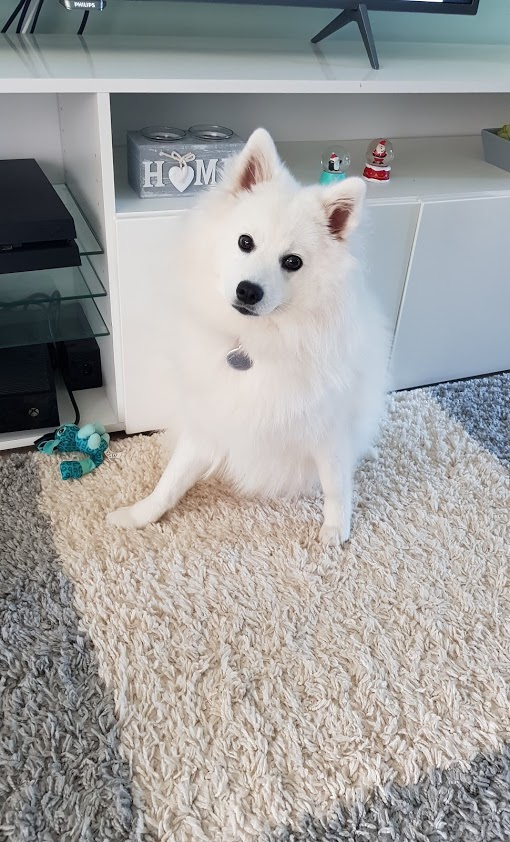
It was a sunny Sunday at the tail end of summer. I was at home on my computer, when my husband suggested we walk our dog, Yuki, together. We’d already been to town earlier, but something made me say yes. And I’m glad I did. 

As we walked in the sun we talked about our desires for the future, our goals in life, and things we wouldn’t have spoken about at home where responsibilities often get in the way and then, exhausted, we go off to do our own thing. 

Anyway, we walked to the field that is usually overgrown with grass and wheat. I call it The Blackberry Field. It holds a special place in my heart because it’s where dad used to take me blackberry picking as a child and is also where we used to walk the family dog I grew up with. 

This time, the grass and wheat had been cut down, leaving a wide, open expanse of rolling hill on which the blackberries were still growing down one side. The view from the top was breathtaking; all greens, yellows and browns topped with the crystal-blue sky.

You see, we live in a town that is undergoing heavy development. Everywhere you go there are new buildings springing up and huge cranes looming over the streets. Hammering, clanging, and sweating.  But here, in The Blackberry Field, there was none of that.

The sky was clear, save for a few interestingly shaped clouds that seemed to stretch to infinity. From the top of the hill, we could see rows of trees, a village in the distance, and other fields that were miles away. I watched as the shadow of a cloud passed over one of those fields like a curtain. I’d seen nothing like it before. I’d never taken the time. 

Photo by Sam Knight on Unsplash

It was such a relaxing, and awe-inspiring sight that we sat down at the top of the hill and took in the feeling of complete freedom. It was as if time didn’t exist. 

And here’s the important part. We hadn’t taken our phones or even a watch.

Everything was just as it was in the moment. 

Just us and nature. 

We let Yuki off the lead and she ran around the field like a wind-up toy while the grass blew gently around us in the breeze. It felt like we had entered a dimension cut off from the hustle and bustle of the world. All we could hear were the birds tweeting from the surrounding bushes, and Yuki as she panted her way back up the hill towards us.  

We were present. We were at peace. And we were connecting with each other. 

Seeing the fields stretching before us and houses the size of thumbnails made me feel like I was part of something much bigger. A tiny person in this massive world of infinite possibility.

My mood sky-rocketed. I felt happy and at peace, even when I had to go home and prepare dinner (I hate cooking). When you consider the tonne of scientific research which shows how beneficial and therapeutic nature is to humans, it’s no surprise that I returned home feeling renewed. Being in nature also has positive effects on depression and stress, as well as being a great way to practise mindfulness.

Photo by Priscilla Du Preez on Unsplash

Too many of us fly through life not stopping to feel the ground beneath our feet or experience the surrounding calmness. We’re used to infinite busyness, the endless buzzing of notifications, and hurried conversations. Rinse and repeat.

Before we know it, we’ve gained a few more grey hairs and have accomplished nothing. Relationships are strained and people are more stressed than ever before .

There’s pressure to always be available online, to perform at work, to check our notifications, to look a certain way, to be a perfect parent, to be more successful, to make more money, to own the latest stuff, to keep up with the hottest trends and all the latest news. Feel exhausted yet?

There’s only so much of us to go around, and we can only focus on the most important things in our lives.

But if we learn to stop. If we take the time out to enjoy the present, even if it’s only on a weekly basis, it will boost mood, alter perceptions, and give way to clarity for the direction we are heading in life.

You will find yourself thinking about things you probably didn’t think about in the chaos of everyday modern life. See things in a way you had, perhaps, never considered before.

I’m sometimes guilty myself of being so focused on cooking dinner, cleaning the house, and being eager to escape at the end of the day, that I barely look at my husband when he gets in the house from work.

I cook dinner straight away, wash the pots, get my son ready for bed, then we’re exhausted and anticipating more of the same the next day. On days where both of us are working, we can both end up too eager to escape to distractions instead of each other. 

It’s too easy to pass each other by like cars on a motorway.

In the field where time stood still, I remembered why we put rings on each other’s fingers.

Photo by Ryan Franco on Unsplash

But I also remember back when we were renting a house together for the first time. We were a very close couple for years, but somehow got into a routine of getting home from work and completely ignoring each other. I thought living together would strengthen what we already had. I was wrong.

I got immersed in writing or playing a game while he was busy playing an online game with friends. Then I would get up to cook dinner, and somewhere along the line we stopped eating at the table together, eager to get back to whatever distraction we were at before. We started arguing about silly little things and before we knew it; we were talking about calling it a day. 

Our once perfect relationship was almost destroyed, all because we didn’t take the time to connect with each other. Away from technology and away from ‘busyness’. Away from our own self-absorption. 

Know what fixed it?

Spending time at the dinner table again. Putting down the distractions to talk face to face.

The more we talked, the more we realised that conversation was moving away from hints about splitting up, and more about what we loved about each other, and where we wanted to be in life. 

We realised what had happened and decided from that moment on to always eat at the table together, and to go on occasional dates, whether that be a walk into town, an evening at the pub, or a night spent watching our favourite anime together – no phones or tablets within arms reach

I’d be so confident as to say our relationship became even stronger than before. 

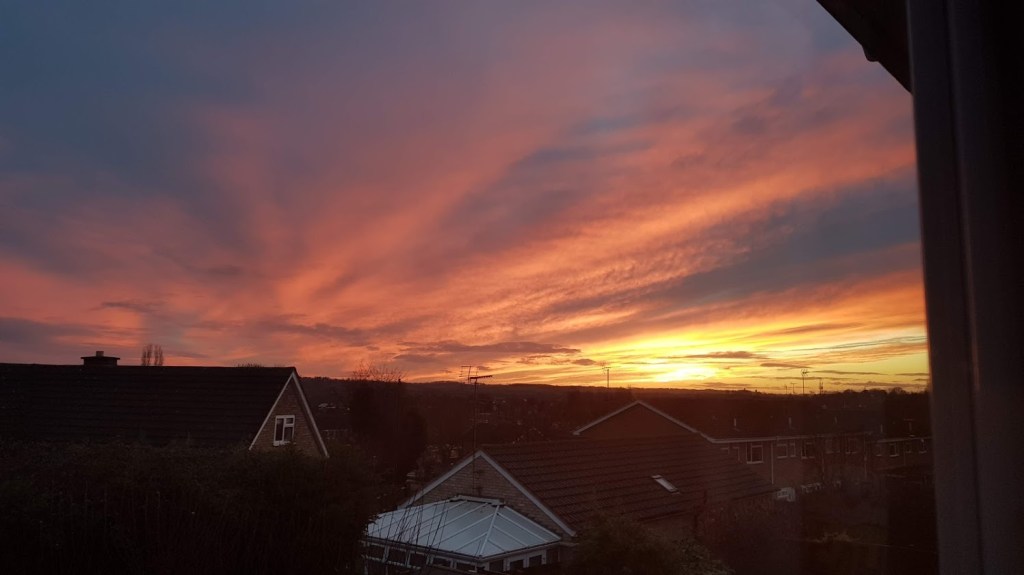
The other day, I was chilling on my computer and my son said, “Mummy, come off that for a minute,” and took my hand. I followed him and he took me to the window and showed me the most beautiful sunset, then he smiled and gave me a kiss. That moment will stick in my memory for a long time, but it’s one I would have missed out on had I stayed glued to my computer.

A sunset outside of one of our windows

It’s not just our relationships with others that are in danger of being extinguished if we don’t take the time to nurture them. We are in danger of losing ourselves. And it can be hard to find again. In fact, it can be so hard to get back, that many people give up and wonder why they’re as unfulfilled or as miserable as they were ten or twenty years prior. 

In trying to impress others or keep up with the constant rush of life, we forget who we are.  We forget our values, what we like, what we dislike, who we love, who we admire, what our dreams are, why we want what or who we do.

We become part of the fast-flowing river, doomed to enter the sea of mediocrity before repeating the same tired old cycle again and again. 

So, instead of worrying that the battery is running out on your phone, worry about your time on Earth running out faster than the sand in an egg timer. Instead of slaving over notifications on your screen, take notice of the real life things right in front of you. Instead of ticking off one task after another, take the time to rediscover yourself and rekindle, build, or make new relationships. 

Make time for today.

For all you dog lovers out there, here’s a picture of my dog.

Starting from Scratch: How Minimalism Empowers You to Change Your Future and Be True To Yourself

Photo by Tim Foster on Unsplash

One of the greatest things about being a minimalist, is that it forces you to think about the things in your life which are most meaningful to you. That’s no easy feat because at first glance it might seem like everything you own deserves a spot in your heart and your home. 

In the not-so-distant past, I thought the same way. Every keyring, every old party invitation, and every trinket felt significant.

But once I figured out what was causing me to hold on to these relics, I felt lighter than I’d ever felt in my life.  And after moving house a few years later and having to unpack all my stuff from a larger house into a smaller space, I discovered minimalism. 

I thought that I had decluttered all I possibly could, that I had minimised to the max. So imagine my surprise when I was struck with a question which highlighted even more excess in my home. 

My husband and I were sorting out home insurance, but we didn’t want to overpay to cover the cost of our stuff.  We got asked, “If your home and all its possessions got destroyed tomorrow, how much do you think it would cost you to replace?” 

Now, while most people would frantically start estimating the worth of the entirety of their possessions at this point, I altered that question in my mind so it was now asking, ‘If your home and all its possessions got destroyed tomorrow, what would be most important for you to replace?’. Minimalism has trained my mind to ask those questions of myself, but I had only ever asked on a room by room, and drawer by drawer basis.

What would be so important to me that I would have to replace it if it were destroyed? My adult colouring book that I rarely touch? My ornaments which are just there as shelf filler? And if they aren’t that important, should I use up valuable shelf space for these items which I have to clean and worry about being broken? 

If I were to have a fresh start, should I replace every book, every mug, every piece of furniture, every cable, every gift, every utensil?

Photo by Stefan Spassov on Unsplash

Just the other day, a heart with a rhyme on it that was bought for my wedding to remember my nan, went flying to the floor and smashed. I was upset for about ten minutes, then the feeling passed and I realised that it was simply something bought from a store which didn’t represent her, but my feelings about her. And when it broke, my feelings didn’t vanish along with the rubbish bag the heart ended up in.  After all, she resides in my real heart – not some pretty piece of acrylic. 

The item itself was meaningless, but I hadn’t considered that until it smashed. 

Imagining starting from absolute zero is an entirely new and sobering thought process.

It’s an overwhelming question for most, and one which would have shocked and terrified my past self to think about.  When I imagined starting from scratch, I looked around my living room and started noticing things that I wouldn’t waste the time, energy and money replacing. 

Then I noticed the things that were special to me (not including necessities such as our dining table), and they included things like my trusty laptop, and some favourite hardbacks which I regularly revisit. Above all of that was my husband and son. 

When you challenge yourself with the concept of starting from scratch, it’s terrifying, I know. It’s even scarier to consider it as a consequence of some sort of disaster. But it forces us to think about what we really need and what truly makes us happy. That, in turn, makes us think about who we are beneath our stuff.

Photo by Helena Lopes on Unsplash

Are you a party animal like your wardrobe suggests, or more of a Netflix binger? Are you an avid reader like your shelf suggests, or do you find yourself exploring the world instead? Are you really a fitness freak, or someone who classes a trip into town as exercise? 

Once you become clear about who you are and what you stand for, it enables you create space for your true self to shine, and it allows you to easily discern the most important things in your life. This can save you money when it comes to things like choosing house insurance, or when you shop more mindfully. It can even lead to you making big life changes such as career, or relationship. 

Minimalism gave me the space and clarity to think about why I was still in the same job position as ten years ago, despite many opportunities to climb the ladder. I was too comfy, too secure, and too preoccupied with acquiring shinier stuff, instead of listening to what my heart was saying (which was that I’m only fulfilled when I’m writing, growing, helping people with their issues, and inspiring adults to live up to their true potential). 

So, if you could start all over again from now, with nothing but yourself, what would you need? What things would you buy all over again? What would you do with your life? What would you be? Who would you spend your time with?

If you struggle with those kinds of questions, turn them around. What wouldn’t you need? What wouldn’t you buy again? What wouldn’t you do with your life? Who wouldn’t you spend time around?

Feel free to let me know in the comments.