I’ve done it! I’ve gone and written a script ready for my first Youtube video on minimalism and simple living. I don’t even have a channel name just yet but I’ve taken the first step.
My hope is to share the benefits of a minimalist life with a wider audience, and with a Youtube channel, hopefully this will become possible.
It’s also a challenge for me going into 2021, to do something I have never done before so that I can grow and, in turn, help others to.
All that is left now is for the video to be filmed and edited, which my husband has kindly offered to help with. I will be keeping you all posted on here, and am hoping that pretty soon one of my upcoming posts will be a link to my channel.
Of course, I’m terrified. My heart’s pounding harder just thinking about the camera pointing at me. But that’s part of the challenge. So even if my videos come to nothing, I’ve still taken a step closer and done something my old self would never have even considered.
After the crazy year that 2020 has been, I’m really looking forward to having something new and positive to jump into and learn.
If there’s anything you’ve been putting off doing, go ahead and take the first step. Even if it doesn’t work out, at least you can say you started.
It’s almost Christmas, and although it’s different to previous years, what isn’t so different is the mad panic to buy, buy, buy, either to show love to friends and family, or out of sheer obligation.
But as I’ve turned minimalist over the past couple of years, dramatically reducing my possessions and experiencing endless self-growth, I’ve come to realise that stuff isn’t the key to love or happiness. In fact, an excess causes untold stress, financial hardship, damage to relationships, and to the Earth.
As a child, I’d physically always had everything I wanted, never going without the latest console, latest games, or best toys. The walls of my bedroom were lined with toy boxes, but even back then, I was never satisfied. There was always a new toy I wanted, a new book, or a new video game.
From my teens to my early 30s, I was what you’d call an organised hoarder. I had so much stuff that it was breaking my bedroom drawers, had filled up several storage boxes under my bed and on top of my wardrobe, stuffed every cupboard and lined every shelf. But no matter how much I had, I wanted more, more, more.
No matter how many games, consoles, books and trinkets I had, it wasn’t enough. I often dreamed of owning a bigger house, certain that if I only had more space to keep everything and entertain my friends, I’d finally be happy.
It didn’t matter whether I’d just acquired an entire wishlist of stuff for Christmas, either, come January I’d hit the sales to fill the hole inside me. You see, I didn’t realise at the time that one of the sources of my unhappiness was the sheer amount of stuff in my life. Greed and excess.
Another reason was low self-esteem which was further exacerbated from going down the path people expected of me rather than what I really wanted. Stuff was acting as a bandage for the trauma in my past, and as a smokescreen for decisions I had made that I wasn’t truly happy with.
I hated myself with a passion, but as long as I didn’t face it and kept the smokescreen going, I convinced myself I’d be fine.
Except I wasn’t. I was as far from fine as one could get. All of this hoarding and consuming caused countless arguments between me and my fiance, Leighton (now my husband), and I was forever in overdraft with my bank due to spending splurges. I was also a hot mess inside.
Then, one day, my mum had a declutter of the attic at her house. A huge amount of the stuff, she said, was mine, and she was bringing it to me to sort through.
When she arrived, I was stunned. It took her several trips back and forth between my house and the car to bring the bags and boxes. Years of my childhood and school life bulged at the seams and was dumped on the living room floor for me to sort.
At first, I wanted to put it all in our attic, but Leighton stopped me. “No way!”, he said, “That attic is rammed as it is with your crap and we aren’t having any more. Either you sort this or it goes in the trash!” So, with that, I was forced to confront some of my hoard, and the past I had been clinging onto.
And 75% of it was trash.
This experience didn’t instantly turn me into a minimalist, but unbeknownst to me, it was the first step.
Fast forward to the present day and I can tell you with a hundred percent certainty that freeing yourself from the burden of your excess physical possessions is one of the most freeing things you can do.
The second most freeing thing you can do is to free yourself from the desire to own more, and the pressure to buy more for others ‘just because it’s the norm’.
Free yourself from the expectations of marketers and focus on being grateful for everything you already have, especially the people and experiences in your life. Advertisers would have you believe that to ‘give her the best Christmas ever’ you should buy their latest scent or designer handbag. That to be a true friend you should buy any number of random seasonal gifts.
Not true.
Instead of buying your friend yet another pair of socks and a novelty gadget from the gift aisle, why not connect with them and get them something that aligns with who they are and what they want for the future? Maybe they want nothing at all, in which case you should believe them. After all, most people are already drowning in a sea of clutter and years of unwanted gifts.
Why not spend time with them or donate to a charity of their liking instead?
Not only will this be lighter on your wallet and your stress levels, but will help people (or animals) in need, and give you both a far longer lasting glow than any physical possession can.
According to Nationaldebtadvice.org.uk, over 16.9 million people borrow money to pay for Christmas gifts, and one in twenty will skip paying a bill over Christmas because they can’t pay it.
That’s madness.
We’re falling prey to marketing and trying to buy love and connection – things which cannot ever be bought. And when you think about it, would your loved ones want you to go into debt for them? Would you want your loved ones to go into debt for you?
When there are so many people in need, this is a troubling figure; not to mention the damage done to our planet.
I shocked myself last Christmas when I found there was nothing I wanted my family to buy me. I had minimised so much and had been practising gratitude whenever I could, so I felt grateful for what I already had. I also didn’t want to add potential clutter back into my home, undoing years of decluttering and emotional work. Instead, my husband gifted me money to put towards the counselling course I had applied for.
Rather than short-lived pleasures from receiving physical gifts, I invested in myself. As it turns out, taking that course was one of the best decisions I ever made.
Since then I’ve also bought a photography course because I love taking nature photos and want them to be the best they can be. Without minimalism, I’d never have discovered any of these passions or invested in them because I’d be too busy organising my stuff and looking for more. I’d be too broke.
It wasn’t easy to reach this mindset, especially as I was used to always receiving piles of presents and spending beyond my means for everyone else. Most likely, it won’t be easy for you either, but I can assure you it will all be worth it.
If you’re new to this I suggest starting off with small steps and changes, which will gradually snowball into huge life transformations if you let them.
With that, I wish all of you, my amazing readers, a Merry and stress-free Christmas. You deserve it.
It’s been a few months since my last post, and in that time I’ve become a mum again to a gorgeous little girl.
I’ve also got back to minimising and simplifying, which is now more important than ever with a family of four, even more so because my six-year-old son has just received an autism diagnosis. I know that simplifying his life and routines can help make a difference in his stress levels and sensory overload, but the same can be said for any child, and of us adults.
Since having a new baby to take care of and settling into the new rhythm of sleepless nights, exhausting daytime hours when she refuses to sleep, and making my son still feel loved and valued, it’s forced me yet again to look at how I spend my time.
Because all my time in the week is now spent on changing nappies, doing endless feeds, keeping up with the laundry, and other household chores, the time I get has to be used intentionally whether that’s an intentional hour of rest, half hour of gaming, reading a book, or decluttering.
The past week I’ve spent a good chunk of my time decluttering the attic, not just because I love the sense of freedom and satisfaction I get, but because I’ve been thinking a lot about the future of my kids. And that involves me facing a prospect many of us don’t like to acknowledge – death.
One of the many reasons I live a minimalist lifestyle is because when I’m gone, whether that be when I’m a hundred years old, or even next month, the last thing I want is to burden my loved ones with sorting through my stuff, deciding what to keep, what goes in the skip, what gets donated, feeling guilty if they don’t keep something, trying to figure out what best represented me, and frankly, wasting hours of their remaining time on this Earth.
When I pass, the last thing I want is for people to look for me in my stuff. I want to be remembered for the life I lived, for my personality, for the things I said and how I made people feel; not the figurines I owned, the shoes I wore, the limited editions I collected, or the phone I had.
You may be thinking this all sounds a bit too much on the morbid side, but hear me out.
When I gave birth to my son six years ago, I lost 4 litres of blood when my placenta got stuck to the walls of my uterus. I almost died and one of the nurses told me how lucky I had been to have pulled through. Before that, I’d never really considered the life I was living or the impact my stuff was having. Soon after, it struck me that I wasn’t following my dreams, either. Rather, I was just floating along in life with no clear direction, buying more and more stuff to fill the sense of emptiness.
Back then I was still living as an organised hoarder, and to think back on it now, it’s sad how much stuff my family would have had to go through. Trinkets, old toys, old letters, old party invitations, tonnes of gaming paraphernalia, old stationary, overflowing boxes, relics of my past, painful memories, stuff I clung to because I thought ‘I wasn’t me without my stuff’.
As it turned out, the ‘me’ I was clinging to was the biggest piece of clutter of all, and the real me was waiting to be discovered in empty spaces, free of the hoard that weighed me down, free of the physical weight of my past, and with more free time that wasn’t wasted on organising and acquiring more.
We all have limited time on this planet, and that also goes for our children (if we have any).
Why keep a bunch of stuff for them, for our partners, for our parents or siblings, to have to spend hours, days or weeks going through our stuff when we pass on? As uncomfortable as it is to realise, it’s not like we can take our stuff with us when it’s our time. Instead, the weight of our life cascades onto family and friends. Sadly, that stuff sometimes even harbours the power to cause heated arguments and family rifts. Families get divided for decades over an antique vase, a china collection, or money, which, ironically, would probably be spent on acquiring more stuff. Stuff that won’t even matter when we’re gone.
Remember, we can’t take our stuff and whoever deals with it all can’t get back their time. Time which is so important and passes in the blink of an eye.
But enough about death, let’s go right back to the very beginning.
We’re born owning nothing. Blank slates of endless potential. All we want is the love and attention of our caregivers, and whatever we need to survive. Then suddenly, at some point along the line, we accumulate stuff. Stuff to speed up our development, stuff to teach us about the world, stuff to entertain us, stuff to distract us, stuff to show us how much we’re loved.
We grow up and we want more. More toys, more gadgets, more games, more clothes, more, more, more. Where once we were happy with love and experiences of the world, we’re taught by the people close to us, and through endless advertising, that we can’t be happy without the latest toy, the fullest wardrobe, the biggest game collection, or the trendiest coat.
We’re taught that we’re not enough, that if we don’t receive more, we aren’t loved or not worthy. Our ‘self’ gets hidden by the sheer amount of stuff, and that pattern continues through life until we break it or we die.
Let me give you an example of how too much stuff affects us as children.
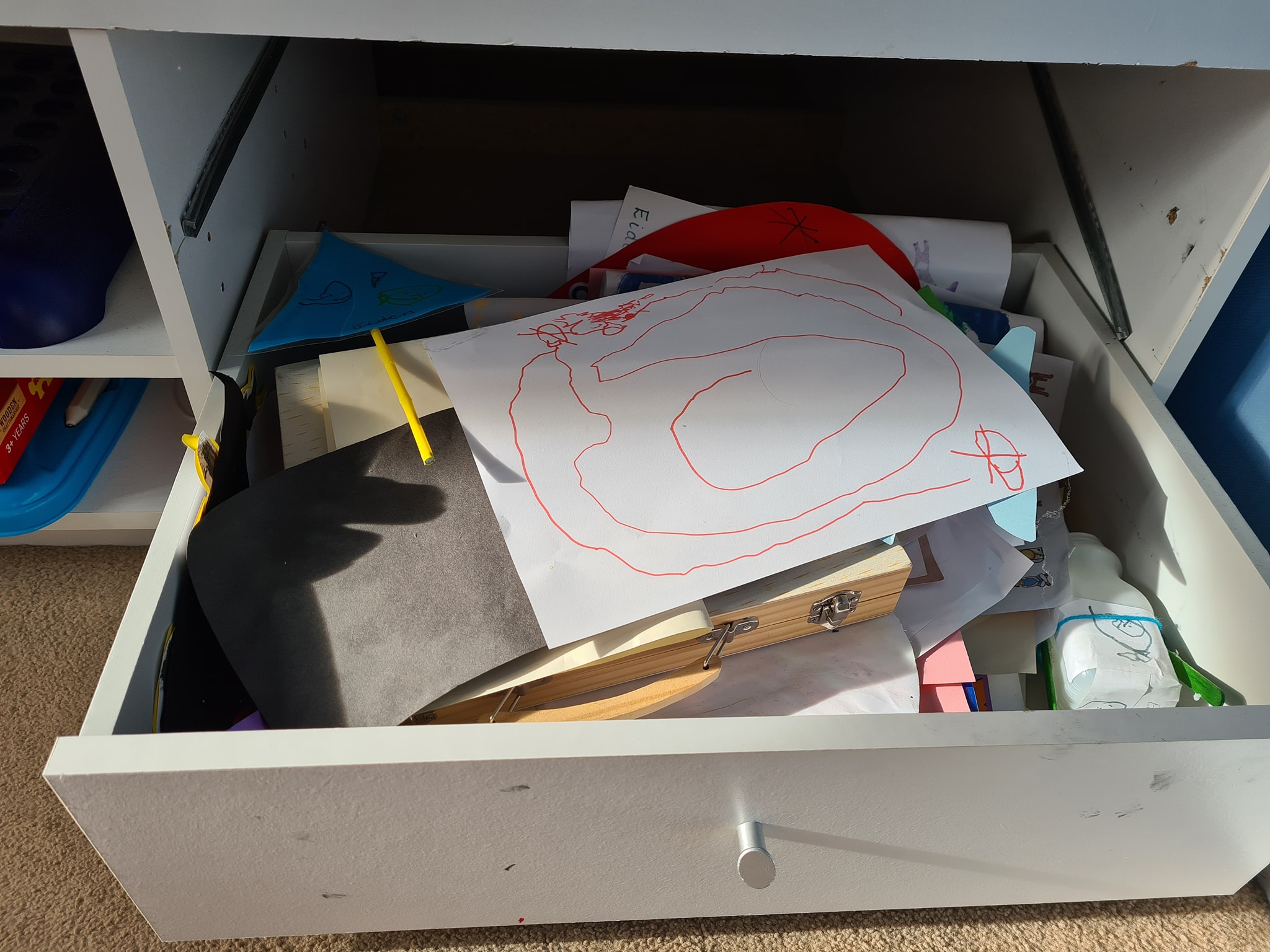
Recently, I was forced to declutter my son’s room. He struggles to let go of things regardless of how many years it has been since he last played with that teddy bear or can no longer fit in that favourite t-shirt. Finally, the drawer under his bed broke under the weight of years of artwork and plastic toys that he never played with. Yet despite it all, he complained he was ‘bored’ or would roll around on the floor in a state of overwhelm. Whenever he wanted a particular toy, he always came crying to me or his dad that he couldn’t find it. I’d go to his room and it would look like a hurricane had passed through it on his hunt.
At bedtime, he couldn’t even decide what book he wanted me to read to him; he either made me choose or constantly chose ‘The Very Hungry Caterpillar’. Even though it’s one of his favourite books, I realized he wasn’t even listening to it anymore, and had become bored with it. He was simply choosing it every night because there were far too many books on his shelf for him to process.
So, I got to work removing most of the plastic McDonald’s toys, Kinder Egg junk, and things he never touched. I also removed a pile of books he’d either outgrown, or seemed to hold no interest for him. Then, I went through all his artwork, discarding the damaged pieces, paper with hardly anything on it, or pieces I knew he didn’t care for as it was something he had done when he was two. I’m ashamed to say that most of the artwork clogging his drawer wasn’t even his doing; it was pieces I hadn’t been able to let go of because I was still clinging to his toddler stage. Most of those went in the bin once I had taken a few photos.
Before and after decluttering my sons art drawer. As you can see, the drawer above had snapped off its runners
Bear in mind, instead of instantly donating the toys and risking upsetting him, I put the bags of his stuff into the attic to be sorted at a later date. That way, if he wanted his jingly bells back, or the teddy he had picked up that time he went to hospital when he was 2, he could have them.
Now, here’s the surprising thing.
He’s never once asked for any of it back, nor seems to have noticed that 70% of it is missing. And he’s started choosing books other than ‘The Very Hungry Caterpillar’ all by himself. There’s also been fewer instances of him crying because he can’t find his Nerf gun bullets or other favourite things.
Quite often, we think we need more, and we assume the same for our children. Whenever we’re bored or unfulfilled, we might order something new on Amazon or go shelf-browsing until we spot something we like.
And when they’re bored, we rush to buy them another toy or download yet another app.
Instead, we need to rediscover simplicity, then do the same for our children.
We need to reconnect with loved ones, and claim back the time that is so precious, and we need to remind ourselves that we’re worth it, despite what marketing would us believe.
Hi all! After a lengthy hiatus, I’m glad to say I’m back. I’ve been exhausted through pregnancy, and now as a mother to an almost 5 week old baby girl. It’s certainly been challenging to settle into the new rhythm of life as a family of four. I’d forgotten just how chaotic life can be with a tiny baby who relies on you for survival and comfort around the clock, but it’s so worth it!
Anyway, earlier I found the time to write my latest thoughts on simplicity, and how clutter affects ours and our children’s lives not just now, but far into the future.
I will publish this in the next few hours when I find a moment, but I look forward to writing more often again and sharing my minimalism journey with you all.
I realise it’s been a really long time since I posted on this blog. I can’t deny I feel guilty about that because I was going to post an article on being extraordinary. While I do have the article, I couldn’t bring myself to post it because in the current climate, it just doesn’t feel right, and I’ve been sorting out elements of my own life, and thinking about my future, as well as battling pregnancy fatigue.
I’m now 28 weeks pregnant, and what I have been focused on is minimising and simplifying my life more than ever before.
This post is a little catch up for this blog about my minimalist journey since the lockdown started, and to share my thoughts about where I am now.
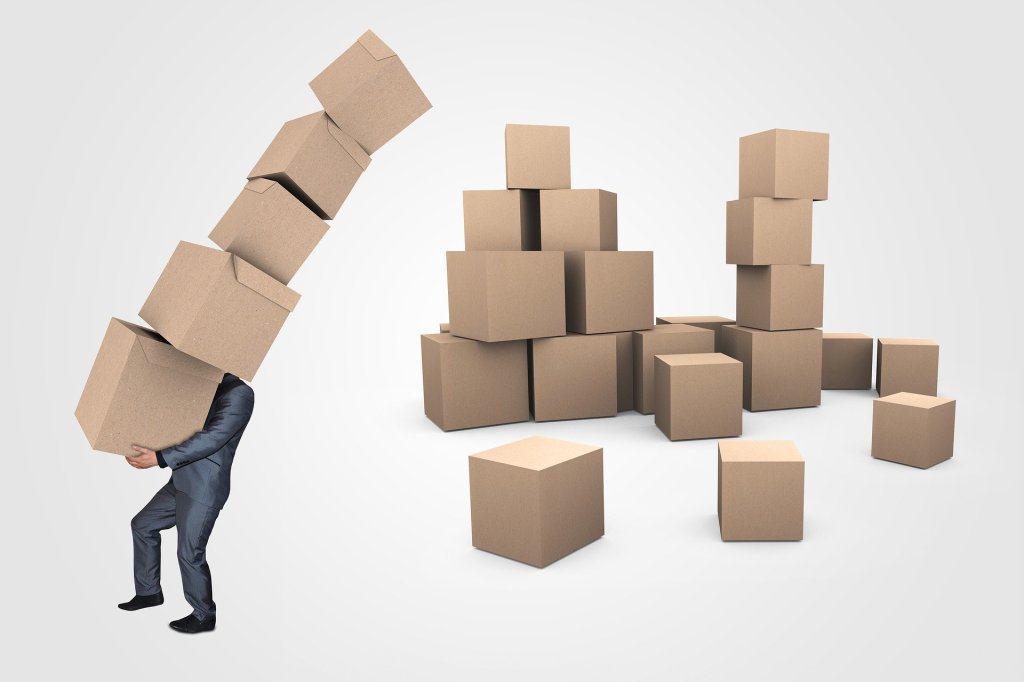
One way I’ve been thinking about my stuff is the sheer weight of it in my life, both physically and metaphorically.
I often read about people on decluttering journeys who load their cars with bags upon bags of clutter they’re casting off from their lives, and how many trips it takes to the charity shop.
Since I can’t drive, whenever I donate anything and as I decide to let go of even more stuff, I walk to town with the weight of those bags. As I walk and the bags weigh me down and cut into my hands, I can’t help but think about the sheer weight of my life.
All that heaviness. The stagnant energy that clings to it. The burden of guilt and old memories.
I welcome the relief once the weight is gone, and it often feels as if my arms are floating. Better than that, is the feeling of lightness in my home. There’s more space for energy to flow, space for potential in the future. Not potential new stuff, but opportunities and beliefs that serve me.
The more I cast off, the less weighed down by the past I feel, and the more hope for the future. It’s true that less really is more.
Speaking of the future, since I get so much joy from decluttering and love to help others with it, I had a sudden profound idea to look into becoming a professional declutterer – something which wouldn’t have occurred to me had I still been weighed down by stuff.
Clutter really is something that always lurks at the back of your mind, taking up space and valuable energy. Like a computer with an error message warning you its storage is getting too full, the brain is pretty much the same, and lightening your physical load will massively lighten your mental load.
Being 28 weeks pregnant has made the effects of minimising even more apparent. At a time when I find myself needing more rest than ever, I’ve been able to do just that because there’s no mess, surfaces are clear, and it’s quick and easy to vacuum and dust (our new dishwasher has simplified things even more – especially because my parents live with us).
I’m not having to worry about having enough space for the upcoming new addition to our family, because there’s now more than enough space to accommodate.
In fact, having a new baby on the way is making me think of the stuff in my life even more. For example, my husband and I have been massively attached to our gaming room. It’s the place we go to chill out and play videogames, display our games, and even use as a workspace.
But ultimately, we decided we could give up that luxury so that our second child has a room of their own (more essential because it is a girl and she’s going to be 6 years younger than my son who’s growing up way too fast).
With that in mind I started minimising the gaming room quite early on, and while it started off hard, it’s now got to the point where I no longer feel attached and could happily pass it on , safe in the knowledge that most of it hasn’t been played in years, is realistically never going to get played again, and that most games are now available digitally.
I also realise that I don’t need to have a Youtube worthy gaming display to prove that I love gaming. The way I do that is by actually playing them and letting them bring me hours of joy and excitement.
Sitting on a shelf, they do nothing but take up space, look pretty, and add decision fatigue. The digital streaming services available now on all platforms have helped teach me that. And if I don’t play them while they’re available, I was never going to get around to doing so in the first place.
Another hard thing I’ve done in the past few days is put my wedding dress and accessories up for sale. Initially, I felt sad, but when I brought the huge storage case down from the humid attic, I saw the space that had been created, and reminded myself that it would be far better bringing that same joy to somebody else than it sitting in less-than-ideal storage conditions, taking up valuable space.
Some people are curious why the whole journey has been a process which has taken a couple of years.
Before I was a minimalist, I was what you’d call an organised hoarder. At first glance, I lived in a tidy environment, but it was bursting at the seams and I was forever organising and wishing for a bigger house so I could store more. Window ledges, cubby holes, shelves, cupboards, drawers and storage spaces were rammed with relics of my past, and things I thought I needed, and it was causing heated arguments between me and my husband (who was my fiance at the time).
I also reacted to every whim for something new, be it a new phone, a new bag, a new journal, or another games console. These whims came all the time because deep down, I wasn’t happy and the satisfaction never lasted longer than a few days at most.
That hoarding and the constant buying was a result of years of deeply ingrained beliefs and trauma, and it’s taken a few years to get to where I am now with the mindset and beliefs I now have. Another factor is the seasons of life we all go through.
What’s useful in one season of life may no longer serve in the future, so the minimalist journey never really ends. There will always be times where life needs a mindful reevaluation of where you’re going and what may no longer be serving you, although once you’ve done the main bulk of decluttering, it should never be as stressful or as time-consuming again, provided you stay mindful and vigilant of what comes into your life and why.
Next time I post, I’d like to share with you all, our experience of having a brand new minimalist kitchen, and how it has changed our lives for the better. I feel it is a perfect example of the negative effects clutter can have on an entire family, and the unbelievable change in energy when clutter is dealt with.
Being locked down during the Coronavirus has allowed me the time and extra energy to do some deep cleaning. Last week, I decided to go crazy on my living room.
I mopped the floor, took everything off the shelves and dusted them, vacuumed the blinds, vacuumed the whole room, dusted the insides of the cupboards, and cleaned the mirror. Oh, and there were too many cobwebs where spiders had set up home and weren’t paying rent.
The whole process took much longer than expected, and the next day I had a pain flare up from hell that lasted days. One of the many reasons I simplified my life in the first place was to manage my fibromyalgia and ME, just like Courtney Carver, author of Soulful Simplicity, who simplified her life to manage her MS. But this pain was a wake-up call that I could do more.
Once again, I find myself thinking about the role of minimalism in my life.
I’ve also got another child on the way, and it’s made me think about how to best simplify my life for the sleepless nights and mad days ahead. Do I really want to be wasting so much time cleaning under and around things when I will need that time with my baby, and for my sanity?
Many people would advise leaving the mess be, and that it’s perfectly understandable as a new parent, but I simply can’t stand chaos or disorder. Especially if I know there’s something I can do about it.
When you’ve been minimalist for long enough, it becomes as natural as breathing. You don’t really think about it because you’ve trained your mind so well and the habits you adopted don’t require a second thought.
The problem with that is that you can fall back into a rut without realising. It seems like I’ve been ready to move onto the next stage of minimalism for a while, but not realised as the days have rocketed by or merged into each other.
Since my minimalism journey started, I’ve got rid of so much stuff, that my room cleaning time was dramatically cut. I unearthed parts of myself I never knew existed and started on the path to a new career.
At the time, I was satisfied with the progress I made, but the pain of that flare up taught me differently.
I thought my living room was minimal enough yet was surprised to find that a vast majority of the deep clean was spent moving my collection of books and the decorative objects and photos from the room divider, all of which are mine. Then, of course, having to dust every object and put it back, even though it would all be dusty again within days.
I no longer have the huge collection of books that I had. What once took up four shelves, now takes up one. There’s a few books on my ‘to read’ list that I intend to donate once I’ve finished with them, but the rest are mainly non-fiction hardbacks that I turn to again and again.
When I thought about what I was getting out of the rest of that unit and its decorations, the answer hit me: nothing. It’s just there to stop our long, narrow living room resembling a bowling alley, and to look pretty doing it.
Is it attractive? Yes. Is it worth the extra cleaning and maintenance time? No.
And who doesn’t want more time and relaxation in their day?
After cleaning the living room, I went upstairs to do a quick dust of the gaming room. I say a quick dust because the gaming room is the hardest to downsize for me, and would take forever to clean efficiently.
There’s stuff in there which is close to my heart as a gamer, plus a collection of manga and geeky books which I don’t keep with my main collection.
Not so long ago, I was convinced that having shelves crammed with games, consoles, and figures like my favourite youtubers would satisfy me . I’d always dreamed of having a gaming room packed to the gills, and of having my own arcade full of my favourite cabinets.
But for me, the reality of such a dream has surprised me. Games and hardware require proper storage and cleaning, and it’s all such hard work to maintain. Not to mention the space it takes up.
There’s also the possibility that we will need to give the room up for an extra bedroom a few years down the line if our baby is a girl.
The thought of leaving it be, then having to deal with all that stuff at once fills me with horror.
Despite downsizing my collection last year, I rarely clean the room because it’s so exhausting and time-consuming. Two hulking shelving units with games, figurines, and books, and another medium shelving unit holding more games and my videogame soundtrack collection.
Then there’s the fact that my husband, my son, and I, each have a PC. Phew!
I’ve been considering going digital with as many games as possible and possibly using a powerful laptop over a desktop. But it’s a costly endeavour to digitise all the games I own, so I have to really think, which games do I love and really can’t live without? Why do these deserve to take up shelf space and cleaning time? How often do I play them?
When you look at your stuff in terms of the time it takes up, and not just the space it requires, the answer will become clear, even if it’s uncomfortable.
It makes me squirm to think about not having my physical games on show. Why? It doesn’t make me less of a gamer. But it does show the money I’ve spent just on showing this hobby off instead of purely experiencing the joy it brings me.
To be honest, I don’t even get around to playing or finishing half the games I buy, even when they’re digital. The same goes for any hobby that requires a lot of equipment or collecting. There’s only so much you can enjoy.
It shows that, for me, playing games isn’t enough. I have this need to show everyone in the house, and anyone who visits, my love of games and the characters in them, as if my identity is at stake if I don’t.
But, of course, that’s ridiculous.
I frequently find myself dreaming about the kind of life the more extreme minimalists live. Fumio Sasaki, author of, ‘goodbye things’ is a well-known extreme minimalist living in Japan, and is one whose book I’ve returned to several times, because of the feeling of peace it gives me, and the wisdom in its pages.
What I find particularly inspiring is that he’s just a regular guy who decided that enough was enough and to do something about the miserable life of excess he was living. He doesn’t claim to have all the answers to achieve happiness and success, but he discovered that minimalism was a good start.
It’s not just me who dreams of simpler living; my husband has spoken to me a few times about how he’d love to be so free of stuff and obligations that he could live and work wherever he desired and not remain tied to one place. At first, that thought terrified me, but the more I thought about it, the more appealing it sounded.
Realistically, I know I can’t live like the more extreme minimalists I admire so much, because not only do I have a growing family, we share a home with my parents. Therefore, there’s only so much I can do, especially regarding shared rooms such as the kitchen and bathroom, and storage spaces such as the shed.
We’re also not the home-schooling type, so a life of travelling and completely letting go is something that would be far off in the future.
But I can take control of my own stuff, and I’d rather do that than have it control me and sap hours from days, and days from months.
Unfortunately, due to the current situation with coronavirus, charity shops are closed, and selling things on Gumtree or Facebook is a no-no.
Instead, I’ll use the time to list what’s currently bringing me joy and what isn’t.
Life changes all the time, and with it, the stuff that we need to enrich our lives or bring us joy.
Almost everybody has an inner critic, that snide, sniggering, scoffing voice at the back of your head that says you aren’t good enough, pretty enough, smart enough, strong enough, or deserving enough.
And let’s face it -with all the ways we have to compare ourselves to everyone around us nowadays, as well as intense marketing designed to reinforce beliefs that you’re lacking in some way unless you buy their product, is it any wonder that those internal insults become ever louder?
“I’ll never be able to live like him/her”
“My writing’s crap compared to this”
“I’m not smart enough to go for the job I want”
“I’ll never be disciplined enough to achieve that because I’m a loser”
“I can’t”
“I’m not”
“I’ll never be…”
“I’m (insert insult here)”
Even the most successful and confident people out there struggle with that quiet, doubtful voice most of the time. The difference is, they’ve learned how to control it, and even use it as motivation.
You’ve probably read and heard that a thousand times, and thought, ‘Well good for them for being born with that ability’.
But it’s not an inborn ability that people either have or they don’t. It’s all about training and rewiring your brain to think and react differently. That takes time and inner work. A lot of it.
Granted, some people might find it a little easier than others, depending on their past, their circumstances, the people they hang around with, and their mental health.
My inner critic, which I refer to as my inner gremlin, used to be like a raging tsumani. All- consuming, all-powerful, endlessly destructive. And hungry for more.
It never used to be like that. When I was a small child, I had boundless confidence and curiosity. I’d sit and write on my typewriter on the living room floor, or write a story in my notebook and race to show anyone who would read it.
Like most young children, I truly believed I could be anything I wanted; an archaeologist, a TV presenter, a weather reporter, a famous author.
What happened?
Circumstances growing up, plus being bullied throughout my whole school life, fed the inner gremlin that had started to emerge once all the other children started forming cliques and showing off their own unique personalities.
I wasn’t like everyone else. I was inappropriate, loud, wore baggy, unfashionable clothes because everything else irritated me, and didn’t understand social jokes or cues. I wasn’t interested in the things others were interested in, or in talking about relationships.
It wasn’t until early adulthood I got diagnosed as being somewhere on the autistic spectrum.
Anyway, the older I got and the more insults were thrown at me, the more I believed them. The more I saw the other people around me, the more inadequate I felt. I didn’t need to be told I was ugly and worthless by other kids because my own inner bully had grown vicious and gigantic by that point.
I’d tell myself I was vile and worthless. All the while, my inner gremlin fed and grew.
Eventually, I stopped showing off my writing outside of school. I went through periods of self-harming, and my self-esteem was as low as it could get.
As a young adult, I still had my dreams from childhood – my main one to be an author – but I had serious issues with my identity and with extremely defensive and angry behaviour in my relationships.
Where did all this come from? My inner gremlin which had been gorging itself quite happily over the years on all of my negative thoughts and beliefs.
I was a hoarder, you see. But at the time I didn’t realise because I kept everything crammed out of sight or neatly lined up.
Confronted with years of my own mess, I realised I had a serious issue with letting go of the past. In many ways, I was still living in it.
I may have been an adult with a child and renting a home, but inside I was still that angry child pining for acceptance.
That day, I let go of so much stuff, and when I did, I physically felt like this huge spiritual weight had been lifted from my shoulders. Years of attachments, sad memories, and old work finally where it belonged – in the trash.
Something got sparked in me that day that triggered years of self growth, and opened the gate to minimalism.
Because I was forced to question why I had been holding onto all that stuff, I started to ask myself deeper things, like where my beliefs came from, and why I felt the way I did.
I started reading every self-help book I could get my hands on that appealed to the specific issues I had identified. Books about overcoming trauma, writing, confidence, self-improvement, and later on, minimalism.
I didn’t just read these books once. I read them over and over, completing all the exercises inside them until I knew them off by heart and looking inside myself until it started to feel natural.
It’s safe to say that those books, alongside the action I took, went a significant way in helping me to change who I had become, and started me on a path of acceptance and becoming my true self.
For those of you who are interested, I will list some of those books at the end of this post, but keep in mind, your needs and what works for you might well be different, and that’s OK.
Fast forward to the present and I’ve made this blog, started training to become a counsellor, taken some Udemy courses, written part of a book, and made a new friend (who is also a writer). I’ve also become brave enough to enter a couple of writing competitions.
How did I silence my inner gremlin? I didn’t. Instead, I got strong enough to fight back and to co-exist with it in a healthy way. It’s nowhere near as big or as consuming as it was, and it certainly doesn’t stop me from writing or going for my dreams.
It’s highly unlikely you will completely silence your inner critic because for the most part, its job is to try to protect us from pain and humiliation. That’s why so many of us remain stuck in jobs we hate, lives that are going nowhere, and relationships that don’t serve us.
At its least destructive, it tells you to stay where you are, in comfortable waters, with everyone else. It halts and destroys dreams.
At its most destructive, it becomes like mine did. A seething mass of hate, doubt, and negativity.
The trick is to not feed it, and to gain power over it by fighting the inner demons that allow those beliefs to cement in your heart and mind.
Let me give an example of the occasional things my gremlin will rasp, and the things I now say back. Perhaps some of it will resonate with you.
Gremlin:
You’re dreaming if you think you’ve got a chance.
Just look at this article – no readers. You’re rubbish, may as well give up now.
You lead a rubbish uneventful life, people don’t care what you have to say.
What qualifies you, of all people, to think you can help others?
Me
Oh shut up, everyone started from zero.
But I’m doing something I love. Which is more than what you can do.
You’re just my inner critic, what do you know about writing and having fun? Nothing!
Inner Gremlin, you’d never get anywhere with an attitude like that. You suck. You’re mediocrity itself.
I can do what I want with my life, unlike you who can only criticise.
I am qualified to help people because I desire to, have been through things which could be valuable to others, and am training. You don’t know a thing about helping – just critisising.
I dare get my words out there regardless, and that’s awesome and more than most people will continue to do.
And you know what? Time after time of practising inner dialogue like that has turned the balance of power.
I’ve taken its energy source, cut off its supply, and shrank it down by doing the thing it hates the most – taking action.
Try it today. Argue back with your inner gremlin. Do it time and time again until it becomes nothing more than a minor annoyance.
Wage a war and confront your inner demons. Cut off its food supply.
Don’t let your inner gremlin decide your future.
Oh, and here are the books I said I would link, but before I do that I would also like to give a mention to Anthony Moore on Medium whose stories and articles help keep me going even through the tough times.
Sometimes, no matter how much you minimise, or how much space you’ve cleared in your home, clutter creeps back.
The drawers you so carefully curated are back to looking as if an animal has ransacked them.
The dining table has become a dumping ground once again.
And you don’t know where all those scattered clothes have come from.
It’s enough to drive you to despair and wonder why you bothered decluttering in the first place.
If you’re silently nodding your head in agreement while reading this, fear not, I’ve been there myself and you can get back to that place of serenity. Permanently.
Often, the reason our homes become clutter magnets again is because we’ve stopped being mindful about what we buy and what comes through our front door.
In the bustle of everyday life, good habits might also fall by the wayside. Perhaps you’ve had a busy period and find it difficult to keep up with the influx of paperwork and laundry.
When you’re tired and stressed, all that mindfulness and the good habits you picked up can seemingly poof out of existence.
The trouble is with letting go of good habits, is that instead of dealing with paperwork immediately, you let it pile up on your dining table until that becomes its function.
Instead of putting away your clean laundry, you allow it to chill out in the basket forever, foraging for your clean clothes out of that every morning (I’ve been there, too).
The washing up might stay on your draining board for several days (yup, I’ve done that many times, and believe me, it makes meal times more stressful than they need to be).
You see, in the end, putting those little tasks off doesn’t make your life any easier. All it does is serve to be a constant reminder in the back of your mind about the things that need doing.
If your home has sneakily re-accumulated clutter, visually it can take up all of your energy and attention.
For example, I’ve seen posts in groups where people have decluttered a shelving unit, only to still feel like something is still off. Sometimes, the issue is lots of photos.
They will have decluttered all the random trinkets but kept all the photos displayed for personal reasons, so all of them are vying for their visual and mental attention instead of just one or two special ones.
If you’re struggling to get back on track, here’s some things you can do to bring calm back into your home.
Put washing up anyway either after the meal or before you go to bed.
It’s more stressful than you realise to have to search for a plate or utensil, only to realise it’s among the craziness of the drainer which still has the dishes from two nights before.
A common problem which can prevent you from adopting this good habit, is kitchen cupboards and drawers bursting with clutter.
How rage-inducing is it when you want to put your plates and pots away, but fitting them back in their spots is like a real life game of Tetris?
Similarly, when you want to bring them out, it’s pot luck if everything else doesn’t cascade out. Yes, I know, terrible pun.
Rather than using the draining rack as another storage solution, the trick is, to declutter your kitchen storage and keep only what you need and use often.
Once you make the space, you’ll find it hundreds of times easier, and much more satisfying to both access things and put them back where they belong.
Keep surfaces clear at all times.
I know this is easier said than done if you live with others who are naturally messy, but if you adopt the habit and the rules that the dining table is purely for eating (and maybe for the kids to do their homework etc) others are likely to follow suit eventually.
You also want to keep hallway console tables free of clutter because it’s one of the first things that greet you when you leave the house and when you return home.
The last thing you want is to be reminded of all the stuff that needs sorting when you’ve just got in from work, or before you even start the day.
Kitchen surfaces should definitely be kept clear because it’s often the most functional room where people like to chat, and to cook meals.
If you’ve got all kinds of stuff over the counters, you’re not going to feel much like cooking or being creative, and it’s not even going to be a pleasant place to hang out.
Put laundry away immediately
I used to be horrendous at putting away laundry. I’d let weeks of clothes just pile up in the clean linen basket, and rifle through every morning for what I wanted to wear.
Not only did my clothes come out crumpled, I couldn’t even find things half the time because they’d be bunched up in the sleeve of a jumper or hidden in the leg of a pair of jeans.
It also took up loads of time when I finally did decide it was time to put them away.
When you put clothes away as soon as they’re dry, not only is it off your mind until next time, it saves you time in the mornings, your clothes are neat, and it’s easy to find what you need.
Deal with paperwork the same day
When you have paperwork come in through your door, sort through it right there and then.
Junk mail should go in the recycling instantly, and bills should be filed into action piles for you to deal when you have time.
That takes all of five minutes, sometimes not even that.
Of course, it helps to get rid of any old documents you no longer need.
Nothing is more stressful than trying to find some important information, only to have to search through hundreds of older papers that are no longer relevant.
If you struggle with containing paperwork, you could also go digital where possible. Many companies now offer the option to receive emails instead of paperwork, and some shops will send receipts via email rather than physically, to save paper.
Never leave things over floors and seating
It’s easy for floors and chairs to become a landmine of tripping hazards and shoes, especially if you’ve got kids.
The trick is to never let things stay on the floor, and to train others (especially children if they’re old enough) to pick up after themselves.
Chairs can also become a dumping ground if you aren’t vigilant and can collect random toys and clothes.
Make sure that chairs are always free of clutter because they’re a place to relax and unwind, not to mess and stress.
Make your bed every morning
This one is simple, but it’s far too easy to stumble out of your room and leave the bed a rumpled mess for when you next go to it.
Why is that a problem? Because it makes a calm room look chaotic, and it can also make you feel lazy and unproductive.
It’s also probably the last thing you want to be doing before you go to bed at night.
Stay mindful whenever you go shopping
We’re surrounded by so many advertisements, and shops lay out their aisles in a way to capture your attention.
It’s why you can go into a store looking for some cereal and toilet roll, only to come out with two new tops and a fancy new glass.
When you go shopping, it’s always helpful to take a list with you, and anything you’re tempted to buy that’s not on the list, ask yourself why you’re buying it.
Do you really need it?
Do you have something similar at home?
Is it because you’re bored?
Because it’s on sale?
Also, it’s never a good idea to go on random shopping trips for fun because there’s nothing you can buy that will make you happier.
As Fumio Sasaki talks about in his book ‘goobye things’, your happiness levels will always return to whatever its normal baseline is for you.
Let go of the old
There’s a reason so many minimalists follow the one-in-one-out rule. It keeps clutter from growing, and your spaces serene.
For the longest time, whenever I bought something new like a new bag or stationary, I would always hang on to the old.
This meant that not only did I run out of space, but my stuff was owning me. I certainly wasn’t any happier from holding on to the old, and the ‘one day’ I kept telling myself I might need them never came.
So if you get a new jumper, get rid of an old one you no longer enjoy wearing.
If you get a new toolset, get rid of the old ones that no longer serve you.
If you get a new bag, get rid of the ones that no longer bring you joy or suit your lifestyle.
Sometimes, we hold onto things because we haven’t realised how much our lives have changed since we originally got the item.
You might hold onto that hiking backpack, even though you no longer hike.
You might hold onto your old work clothes, even though you now work from home.
Take the time to evaluate your life as it is currently, and make your home reflect the present, not what was or what might be.
Take time to meditate or be silent
You don’t need to sit there cross legged, in a state of bliss if that’s not your thing, but simply taking the time to be silent and present is something that is long lost in today’s world.
Phones constantly buzz and ding, emails fill inboxes every second, and the world loves to make you feel that busy is best.
After all, everyone’s doing it. It seems people barely have time to chat in the street anymore, so rushed their lives are.
Busyness might make you feel productive and on top of things, but let me ask you, how is your life beneath those superficial tasks? How are your relationships?
People who pride themselves on always being busy, may seem to be super-productive, but their lives underneath are most likely unhappy and unfulfilled.
When you prioritise being busy and ticking checkboxes, the tasks never stop coming. You will attract more and more.
Meanwhile, you’ve inadvertently drifted from your partner, and your child’s suddenly a foot taller without you realising.
Maybe you’re not happy with your life the way it is anymore, but without slowing down to realise it, you don’t see it until you’re at death’s door.
Some people use endless tasks or hours at work as a way to escape the realities of their lives, or to run away from negative thoughts.
Others throw hours and hours of their lives into their careers to climb the corporate ladder and afford more stuff, only to realise that their happiness never comes. Joshua from The Minimalists was a perfect example, and spoke about it in their books.
When you slow down and live peacefully, it’s amazing what you discover.
Only by slowing down and prioritising the important things can we realise what we already have to be grateful for, and the things that will make us content.
Only by slowing down and being present with our loved ones, can our relationships blossom and be the best they can be.
When you’re glued to a screen, people and moments pass you by until the day comes they’re not there anymore.
You’d give anything to go back to the time they were there, but realise you spent most of that time sitting with them, but clicking ‘like’ on a stranger’s post. I’ve also been there myself, and believe me, it’s the most awful thing to realise when it’s too late.
Taking the time to be silent and present, allows you to declutter your mind and see yourself for who you really are, what people mean to you, and what your life truly is.
Take the time to re-simplify your life today. Get back on track and make serenity a part of your everyday life.
Are you struggling in a never-ending cycle of buying things you don’t need? Do you feel lost if you’ve not got a parcel on the way? If so, stay tuned for this week’s upcoming post which is all about what keeps us stuck in the cycle, and why you might feel the need for more, even when you know you have enough.
With this post, I won’t just be talking about the usual ‘marketers want to keep us buying’ but am going to focus on the emotional and deep-seated reasons that can cause us to compulsively click ‘buy’.
Minimalistmojo recently turned a year old and I just want to say a big thank you to my readers and followers.
It’s been a strange and intense year of growth to say the least, and I’ve learned so much, not just about minimalism, but about who I am and what I stand for.
I want to keep this blog going to help as many as possible on the road to minimalism and self-discovery, and am thinking about some fresh new looks for the blog, as well as expanding my reach.
This week’s post is late coming, but will be about authenticity, and how we sometimes wear a mask without even realising.
Once again, thank you to all of my readers; I appreciate all of you.














 Minimalist Moments